
A whetstone is the one sharpener that works on every knife you own, from a soft German chef’s knife to a hard Japanese gyuto to the folder in your pocket. Pull-through gadgets grind a fixed angle with carbide or ceramic slots. A stone lets you choose the angle, removes very little steel and leaves a cleaner edge. The catch is that you supply the steady hand.
The number on a stone is its grit. Low numbers (120 to 400) are coarse and fix chips or a badly neglected edge. Around 1000 is where real sharpening happens, and most home knives need nothing coarser. Fine stones (3000 to 8000) polish the edge so it glides through tomatoes and stays sharp longer. That’s why a 1000/6000 combination stone covers most kitchens: one side sharpens, the other refines.
For most people I recommend the Sharp Pebble 1000/6000 whetstone, because it comes with a stable base and an angle guide that makes the first few sessions far less frustrating. If you’d rather have a stone made in Japan, the KING 1000/6000 starter set is the traditional choice.
My Top 7 Whetstone Picks

The right two grits for a home kitchen, a base that doesn’t wander on the counter and a clip-on guide that holds the angle while your hands learn it. It’s the stone I’d hand someone who has never sharpened before.

A long-standing Japanese combination stone from a long-established maker. This set adds an angle holder, a plastic base and a cloth, so you get the classic stone ready to use.

Splash it with water and start. A hard, fast-cutting ceramic stone for regular touch-ups on good knives, with a case that doubles as a stand.

Diamond cuts any steel quickly and never dishes, so it’s my choice for hard super steels, badly chipped edges and outdoor knives.
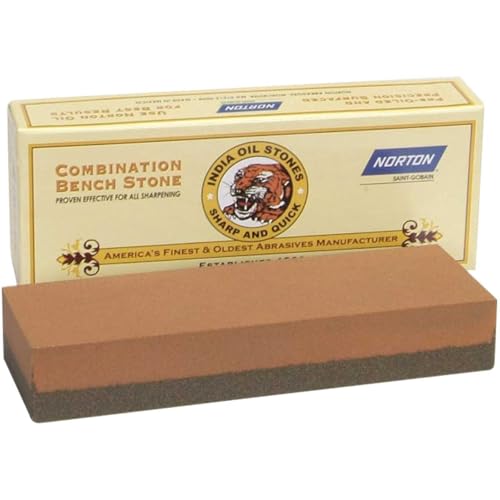
The old workshop standard. A tough aluminum oxide stone for hunting knives, pocket knives and tools, used with honing oil instead of water.

Four grits, a flattening stone, a leather strop and an angle guide in one box. A good way to get every step of the process at once.

Water stones wear hollow with use, and a hollow stone rounds your edge. This keeps any of the stones above flat.
Whetstones Compared
| Stone | Type | Grits | Use with | Best for |
|---|---|---|---|---|
| Sharp Pebble 1000/6000 | Combination water stone | 1000 / 6000 | Water | First whetstone, kitchen knives |
| KING 1000/6000 starter set | Combination water stone | 1000 / 6000 | Water | Traditional Japanese stone |
| Shapton Kuromaku #1500 | Ceramic water stone | 1500 | Splash of water | Quick touch-ups |
| SHARPAL 156N | Diamond plate | 325 / 1200 | Dry or water | Hard steels, repairs, outdoor knives |
| Norton India IB8 | Oil stone | Coarse / Fine | Honing oil | Hunting knives and tools |
| Intelitopia set | Two combination water stones | 400 / 1000, 3000 / 8000 | Water | Complete starter kit |
| Sharp Pebble flattener | Flattening stone | 120 / 320 | Water | Keeping water stones flat |
1. Sharp Pebble Whetstone 1000/6000: Best Overall
Who it’s for: anyone learning to sharpen kitchen knives on a stone, and anyone who wants one stone that handles both sharpening and polishing.
Most beginners don’t fail because of the stone. They fail because the knife rocks between strokes and the angle changes every pass. The Sharp Pebble kit attacks that problem directly: the bamboo base keeps the stone steady and the angle guide clips onto the spine so the blade sits at a consistent height. After a few sessions you can drop the guide, and by then your hands know what the right angle feels like.
The grits are the sensible pair. The 1000 side does the actual sharpening on a dull knife; the 6000 side cleans up the scratch pattern and leaves a smooth, keen edge. That’s enough for German and Japanese kitchen knives alike. You only need something coarser when an edge is chipped.
What I’d change: like every soft water stone, it wears into a dip, so plan on a flattening stone eventually. The guide also suits straight-spined kitchen knives better than small curved pocket blades.
Key specs
- Grits: 1000 (sharpening) and 6000 (finishing), dual-sided
- Use with: water, no honing oil
- Included: non-slip bamboo base, angle guide, instructions
Pros
- Angle guide shortens the learning curve
- Stable base keeps the stone still
- The two grits most kitchens need
Cons
- Wears hollow over time, needs flattening
- Guide fits small curved blades poorly
My verdict: the safest first whetstone for a home cook. Skip it only if your knives are chipped and need a coarse stone first.
2. KING 1000/6000 Combination Whetstone Starter Set: Best Made in Japan
Who it’s for: cooks with Japanese knives who want the stone Japanese home cooks have used for decades.
KING is a long-established Japanese whetstone maker, and the 1000/6000 combination is its most familiar stone. It’s a soaking stone: give it time in water before you start so the surface stays wet and the abrasive keeps working. The 1000 side feels a little muddy because it releases slurry as you go, and that slurry is part of how it cuts.
This listing is the starter set, which matters. A bare KING stone sits on a rubber base and leaves you to work out the angle; here you also get an angle holder, a sturdier plastic base and a wiping cloth. That’s most of what the Sharp Pebble kit offers, with a stone made in Japan.
The 6000 side is softer than the 1000 side and scratches if you press hard or drag the tip into it. Light strokes only on the fine side.
Key specs
- Grits: 1000 / 6000 combination, made in Japan
- Use with: water (soaking stone)
- Included: knife angle holder, plastic base, wiping cloth
Pros
- The traditional Japanese combination stone
- Complete set, ready to use
- Works on any kitchen knife steel
Cons
- Has to soak before every session
- Fine side is soft and gouges easily
My verdict: buy it if you like tools with a long track record and own Japanese knives. If you want to start sharpening within a minute of deciding to, the Shapton is quicker.
3. Shapton Kuromaku #1500: Best No-Soak Stone
Who it’s for: cooks who already sharpen and want a fast stone for keeping good knives keen between bigger sessions.
Shapton’s Kuromaku line is known as splash-and-go: wet the surface, sharpen, rinse and put it away. No soaking, no waiting. That changes how often people actually sharpen. When a stone takes 15 minutes to prepare, most of us put it off; when it’s ready immediately, a two-minute touch-up on a Sunday becomes a habit.
The #1500 grit sits between a sharpening stone and a finishing stone. On a knife that’s only a little dull, it brings the edge back and leaves it fairly refined in one step. On a truly dull or chipped knife it’s slow, and you’d want a coarser stone first. The plastic case works as a stand, so you don’t need a separate holder.
It’s a single grit, so it’s a second stone rather than a first one for most people.
Key specs
- Grit: #1500 ceramic, single sided
- Size: 210 x 70 x 15 mm (8.3 x 2.8 x 0.6 inches)
- Use with: a splash of water, no soaking; case doubles as base
Pros
- Ready the moment you wet it
- One grit gives a sharp, fairly refined edge
- Hard stone stays flat longer than soft ones
Cons
- Too fine for repairing chips
- Single grit, no finishing side
My verdict: the touch-up stone I’d add once you’ve learned on a combination stone. Not the right first purchase for a drawer of dull knives.
4. SHARPAL 156N Diamond Sharpening Stone 325/1200: Best Diamond Plate
Who it’s for: owners of hard pocket-knife steels, anyone with chipped edges, and people who sharpen outdoor knives and tools.
A diamond plate isn’t a stone in the traditional sense. Industrial diamonds are bonded to a flat steel plate, and diamond is harder than any steel or carbide in a knife. That’s why I point people to diamond when their folder uses a modern super steel that laughs at ordinary stones, or when a kitchen knife has a chip that a 1000 grit stone would take an hour to grind out.
The 325 side removes steel fast and reshapes damaged edges. The 1200 side refines that coarse edge into something that cuts cleanly. The plate never wears into a dip, so it also works as a flattener for soft water stones in a pinch. SHARPAL includes a storage box that turns into a non-slip base and an angle guide with four settings.
Two cautions. Diamond is aggressive, so press lightly, especially on thin Japanese edges. And a 1200 finish is toothy, fine for outdoor knives but less polished than a 6000 stone on a kitchen knife.
Key specs
- Grits: coarse 325 (45 micron) and extra fine 1200 (12 micron)
- Size: 6 x 2.5 inches, diamonds electroplated on a stainless steel base
- Use with: dry or water; storage box doubles as non-slip base
- Angle guide: 14, 17, 20 and 25 degrees
Pros
- Cuts any steel, including super steels
- Stays flat for life
- No soaking, no oil
Cons
- Easy to remove too much steel
- Finest side is still fairly coarse for kitchen knives
My verdict: the stone for hard steels and repairs. Pair it with a fine water stone if you want a polished kitchen edge.
5. Norton India Combination Benchstone: Best Oil Stone
Who it’s for: hunters, campers and workshop users who sharpen pocket knives, hunting knives and tools rather than thin kitchen knives.
Before Japanese water stones caught on in the West, many American knives were sharpened on oil stones like this one. The Norton India is an aluminum oxide stone with a coarse side and a fine side, and you use it with a thin honing oil that floats the steel particles away. It’s hard and slow wearing, so it stays flat far longer than a soft water stone.
The edge it leaves is toothy rather than polished. On a hunting knife or a pocket knife that cuts rope, cardboard and game, that bite is what you want. On a gyuto, it’s not. The stone is also thick and small, 6 by 2 inches, which suits shorter blades better than a 10 inch chef’s knife.
One rule: once a stone has had oil on it, keep using oil. Water won’t wet an oiled surface properly.
Key specs
- Type: India aluminum oxide combination stone, coarse / fine
- Size: 6 x 2 x 1 inches, in a box
- Use with: honing oil
Pros
- Very durable, slow to dish
- Toothy edge suits outdoor knives
- Works for tools as well as knives
Cons
- Oil is messier than water
- Small surface for long kitchen knives
My verdict: a buy-once stone for the garage or the hunting bag. Kitchen-only sharpeners should stay with water stones.
6. Intelitopia Complete Whetstone Set: Best Complete Kit
Who it’s for: beginners who want coarse, medium and fine grits plus a strop and a flattener without buying each piece separately.
This kit is popular for an obvious reason: it covers the whole process. The 400 grit repairs chips and very dull edges, 1000 sharpens, 3000 refines and 8000 polishes. A flattening stone keeps the water stones true, the leather strop removes the last trace of burr, and the angle guide and bases make it usable from day one.
The trade-off is quality per piece. These are corundum (aluminum oxide) stones from a mass-market brand rather than a sharpening specialist, and the 8000 side is softer than a KING or Shapton finishing stone. Most beginners won’t notice. Experienced sharpeners will eventually want one better stone to replace the grit they use most.
Key specs
- Stones: 400/1000 and 3000/8000 combination water stones (corundum)
- Included: flattening stone, leather strop, bamboo base, 3 non-slip rubber bases, angle guide
- Use with: water
Pros
- Every grit a beginner needs
- Flattener and strop included
- Coarse 400 side handles chipped knives
Cons
- Softer stones wear faster
- More grits than most kitchens use
My verdict: the easiest way to own a full sharpening setup. If your knives aren’t chipped, the single Sharp Pebble stone is simpler.
7. Sharp Pebble Flattening Stone 120/320: Best Flattening Stone
Who it’s for: anyone who owns a water stone and has never flattened it.
Every soft stone wears unevenly because the middle gets the most strokes. After a few months it’s slightly hollow, and a hollow stone quietly changes your angle and rounds the edge you’re trying to sharpen. A flattening stone grinds the whetstone’s surface back to level.
This one is silicon carbide with grooves that carry the slurry away. Use the 120 side on coarse stones (below about 1000 grit) and the 320 side on medium and fine stones. At nearly 8 by 2.8 inches, it covers a full-size stone so you can work the whole face evenly. Draw pencil lines across the whetstone first; when they’re gone, it’s flat.
It doesn’t work on diamond plates, and it wears too, just much more slowly than the stones it fixes.
Key specs
- Grits: 120 / 320, black silicon carbide
- Size: 7.99 x 2.79 inches
- Grooved surface clears slurry
Pros
- Restores worn stones in minutes
- Two grits for coarse and fine stones
- Large enough for full-size whetstones
Cons
- Not for diamond plates
- Wears slowly over time itself
My verdict: not exciting, but the accessory that keeps every other stone on this list working properly.
Which Grit and Which Type of Stone?
Start with a 1000/6000 combination stone
For kitchen knives, a 1000/6000 stone is the right first purchase. The 1000 side does almost all the sharpening on a normally dull knife; the 6000 side refines it. Buy a coarse stone (220 to 400) only when you have chips or a badly neglected edge, and skip grits above 8000 unless you enjoy polishing.
Water, oil or diamond
Water stones cut fastest and give the finest edge on kitchen knives, but they wear and need flattening. Oil stones are slow, durable and leave a toothy edge that suits outdoor knives. Diamond plates cut every steel, stay flat forever and are the right tool for hard super steels and repairs.
Soaking or splash-and-go
Soaking stones (KING, most budget stones) need several minutes in water first. Splash-and-go stones (Shapton Kuromaku) only need wetting. That sounds minor, but stones you can use immediately get used more.
Size and base
A stone around 7 to 8 inches long and 2.5 to 3 inches wide suits kitchen knives up to about 10 inches. Smaller stones are fine for pocket knives. Whatever you buy, it must not slide: a rubber or bamboo base, or a damp towel underneath.
Your knives decide the angle, not the stone
Western kitchen knives are usually sharpened around 15 to 20 degrees per side, Japanese knives lower. Shun and Miyabi have their own recommended angles; I cover them in how to sharpen Shun knives and how to sharpen Miyabi knives. For a Japanese chef’s knife specifically, see sharpening a gyuto on a whetstone.
How to Use a Whetstone, Step by Step
1. Prepare the stone
Soak a soaking stone until the bubbles stop (usually 10 to 15 minutes); splash water on a splash-and-go stone. Set it on its base with the 1000 side up, on a damp towel if the counter is slick. Keep a cup of water nearby to rewet the surface.
2. Find the angle
Lay the blade flat on the stone, edge facing away, then lift the spine until the edge touches. For most kitchen knives that’s roughly the height of two stacked coins under the spine. An angle guide or a felt-tip marker on the bevel helps: if the marker wears off evenly, your angle matches the existing edge.
3. Sharpen one side until you raise a burr
With light, even pressure, push the blade across the stone edge first, like shaving a thin slice off its surface, working from heel to tip in sections. Keep going on the same side until you can feel a tiny rough lip (the burr) along the opposite side of the edge, from heel to tip. No burr means you haven’t reached the edge yet.
4. Switch sides
Repeat on the other side until the burr flips back. Then alternate single strokes with lighter pressure to shrink the burr.
5. Refine on the fine side
Turn the stone to 6000 and repeat with fewer, lighter strokes. This polishes out the scratches from the 1000 side. Finish with a few edge-trailing strokes on a strop or newspaper to remove what’s left of the burr; my guide on how to strop a knife shows the motion.
6. Test, clean and flatten
Slice paper or a tomato. If it snags, find the spot and touch it up. Rinse the knife and stone, let the stone air dry before storing it, and flatten it every few sessions. My guide to checking whether a knife is sharp enough covers the best quick tests.
Whetstone FAQ
What grit whetstone do I need for kitchen knives?
A 1000 grit stone for sharpening and a 3000 to 6000 grit stone for finishing. A 1000/6000 combination stone covers both. Add a 220 to 400 grit stone only for chips or very dull knives.
Do I need to soak my whetstone?
It depends on the stone. Traditional soaking stones like KING need several minutes in water until bubbles stop. Splash-and-go stones like Shapton Kuromaku only need wetting, and soaking them can damage them. Diamond plates work dry or with a little water.
Can I use oil on a water stone?
No. Oil clogs a water stone and stops water from wetting it. Use oil only on stones sold as oil stones, such as the Norton India, and once a stone has had oil, keep using oil on it.
How often should I sharpen on a whetstone?
Most home cooks need a whetstone every two to four months. In between, hone the edge with a ceramic rod, which realigns it without removing much steel.
How do I know when to flatten a whetstone?
Draw a grid of pencil lines on the stone and rub it on a flat surface or flattening stone. If the lines in the middle stay longer than the ones at the ends, the stone is hollow. Flatten lightly every few sessions rather than heavily once a year.
Can I sharpen serrated knives on a whetstone?
Not properly. A flat stone only touches the tips of the serrations. Use a tapered ceramic or diamond rod for serrated knives, and sharpen only the flat back lightly on a stone to remove the burr.
Final Verdict
For most kitchens, the Sharp Pebble 1000/6000 stone is the one to buy: the right two grits, a stable base and a guide that makes learning easier. If you want a stone made in Japan, the KING 1000/6000 starter set is the classic. And if your knives use hard pocket-knife steels or carry chips, the SHARPAL 156N diamond plate gets through them where ordinary stones struggle.
For more sharpening help, see my guides to sharpening a ceramic knife with diamond and using a Smith’s sharpener.

Gary Portman founded knivesadvice.com in 2019. He learned to cook in his family’s kitchen as a kid and has used kitchen, pocket and outdoor knives ever since, from paring and fillet knives to survival blades he carries camping and hiking. He writes the site’s buying guides, brand reviews and sharpening how-tos to help readers find the right knife for the job. More about Gary.