
A bread knife is a long kitchen knife, usually 8 to 10 inches, with a serrated (toothed or wavy) edge. The teeth saw through a hard crust while the blade barely presses on the soft crumb, so the loaf keeps its shape. So what is it used for, and is it a necessity in your home? The truth is that every household should own one of these knives because they do much more than just slice bread.
Bread knives come with a serrated edge that makes your job of cutting bread much more effortless. It’s also long enough for you to cut a variety of fruit, vegetables and will do a lot to help you in the kitchen. If you were wondering what is a bread knife used for and why you need to own one, this article is here to answer all your questions.
Why You Need a Bread Knife
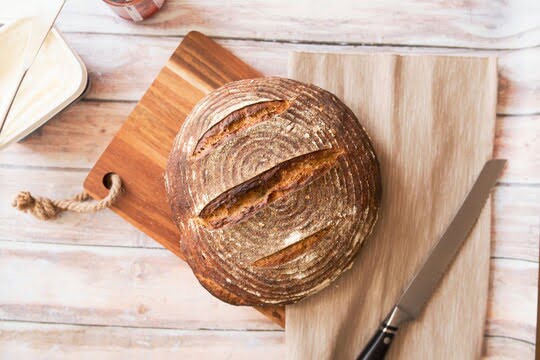 Bread knives have a serrated blade that helps you cut the perfect slice of bread. Although many people don’t see the importance of owning one of these knives, we’re here to change your mind. Here are the reasons why you need a special knife to cut bread:
- Bread knife cuts thin slices without a problem;
- This knife will cut the bread without pressing on it and squishing it;
- It’s not only used for cutting bread but also pastry, fruits, vegetables;
- You can cut through thick crust without squishing the bread because of the serrated blade.
Types of Bread Knives
Like all other types of kitchen knives, the ones meant for bread come in many sizes, shapes, materials. Below you can see some of the factors that come into play when choosing one of these knives.
Size
The knife size or length that you’ll choose mainly depends on the size of your hands and your preference. The optimal size is somewhere between 8” and 10”. These knives usually come in sizes between 6” and 14”. The blade should be a little longer than your widest loaf: 10 inches covers most home bread, and 12 inches helps with big round sourdough loaves. If you have small hands, a shorter blade is easier to control.
Shape
Serrated knives can either come with a straight edge and blade or a curved blade. Both shapes will do a great job and will cut cleanly as long as the knife is longer than the loaf. An offset blade (the handle sits higher than the edge) keeps your knuckles off the board on the last few slices.
Serrations
A knife can have many or just a few serrations. If a knife has bigger gullets, it will glide smoother through the bread. This means that you should opt for deeper but fewer serrations.
Material
These knives are produced in various materials, including ceramic, stainless steel, high-carbon steel, and more.
Electric
If you hate cutting bread with a regular knife, you can get an electric knife. These days there are so many cordless electric knives to choose from that will be easier to use for some people.
Bread Knife Uses
Bread
If you want to cut the perfect slice of bread with your serrated bread knife, follow these steps:
- Place the loaf of bread on a cutting board.
- Saw back and forth with long strokes that use the whole length of the blade.
- Keep the pressure light and let the teeth do the work; pushing down squashes soft bread.
- On a thick, hard crust, start the cut with a few short strokes until the teeth catch, then go back to long, light strokes.
Fruits And Vegetables
Some of the fruits and vegetables that you can use bread knives for are: tomatoes, melons, pineapple, citrus fruits, and more.
For soft fruits and tomatoes, you need to use a cutting board and use the proper pressure downwards. These knives are serrated, which gives them enough strength to go through soft fruits and vegetables without squishing them.
For melons, it’s best if you use this knife to remove the stem, then the rind. Once you’re done with that part, you can continue slicing the fruit into cubes or whichever shape you prefer.
Pastries And Sweets
Cakes and pastries can be pretty tricky to cut through. Thankfully, these knives are long enough to be able to cut a perfect slice. The serrated blade allows the knife to go through the surface of pastries and sweets without leaving too many crumbs.
Another pro tip is to start cutting chocolate with one of these knives. It will be a life-changing decision.
How to Maintain and Sharpen a Bread Knife
Maintain
The care for these knives is simple, but still, there are some tips you should use to prolong the life:
- Wash the knives right after you’re done using them with water and soap;
- Use a soft cloth or a non-scratch sponge;
- Avoid scouring pads and steel wool that scratch the blade and wear down the points of the teeth;
- Keep it out of the dishwasher, where it knocks against other metal;
- Dry the knife entirely before storing them in the kitchen.
These might be fundamental tips, but they will keep your serrated knives healthy for a very long time. Now, let’s see how you should sharpen these knives.
Sharpen
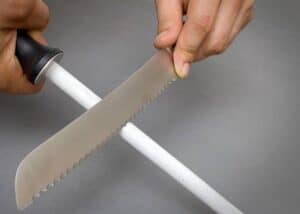
A bread knife needs sharpening far less often than a straight edge, because the points of the teeth do most of the cutting and the hollows between them hardly touch the board. When it does start to tear the crust, a flat stone or a regular pull-through sharpener won’t reach into the serrations. Use a tapered ceramic or diamond rod instead, and pick one whose taper fits the size of your serrations.
- Find the beveled side. Most bread knives are ground on one side only; the other side is flat.
- Lay the rod in the first serration on the beveled side, at the same angle as the bevel.
- Push the rod through the serration a few times, sliding it in or out so the thicker part of the taper fills the whole hollow.
- Sharpen one serration at a time until you can feel a small burr on the flat side, then move to the next one.
- Remove the burr with one or two light passes of the flat side against a fine stone, held completely flat.
With an inexpensive bread knife, replacing it every few years is often easier than sharpening it. For a good one, a professional sharpening service is a fine option too.
Conclusion
‘What is a bread knife’ is a common question that people have in mind because they’re under the impression they can cut a loaf with any knife they own. Well, that’s not quite the case, because each household should own a special knife for cutting bread. These knives come with a serrated edge that goes through the loaf with easiness, barely leaving any crumbs. Bread knives can be also used for various fruits, vegetables, pastry, cakes, cheese, and much more. These knives are not hard to maintain and don’t need sharpening frequently. If you are shopping for one, my first bread knife pick is in my guide to the best kitchen knives under $100. Buying a block instead? Check that it includes a bread knife (some popular sets leave it out); my knife sets under $100 guide notes which ones do, and here is which knives are usually in a knife set.

Gary Portman founded knivesadvice.com in 2019. He learned to cook in his family’s kitchen as a kid and has used kitchen, pocket and outdoor knives ever since, from paring and fillet knives to survival blades he carries camping and hiking. He writes the site’s buying guides, brand reviews and sharpening how-tos to help readers find the right knife for the job. More about Gary.