
Ask a cook how to spend a hundred dollars on knives and you’ll usually hear “one good chef’s knife.” I agree, and I’ve covered that in my guide to the best chef’s knives under $100. But the chef’s knife is a poor tool for a crusty loaf, an apple you want to peel in your hand, a holiday ham or a mountain of cabbage. Those are the jobs where a second, cheaper knife earns its drawer space.
So this page skips chef’s knives entirely. Each pick is the knife I’d buy for one specific job, all under $100 and most of them inexpensive. Buy only the ones that match how you cook. Most kitchens need two or three of them, not all seven.
If I could add just one, it would be the Victorinox Fibrox 7″ Santoku, because it can stand in for a chef’s knife on most nights and pair with one on the rest. The knife I’d buy second is the Victorinox Swiss Classic Paring Knife, which costs very little.
My Top 7 Kitchen Knives Under $100 (By Job)

A santoku is the friendliest all-rounder I know for cooks who find an 8-inch chef’s knife too long. This one is light, sharp, easy to hone and has the grippiest handle in its class. It’s the knife I’d hand someone who mostly chops vegetables and slices boneless meat.

Cheap paring knives are usually dull and flimsy. This one is cheap and good, which is rare. It’s the knife for peeling, coring, trimming strawberries and every small job a big blade is clumsy at.
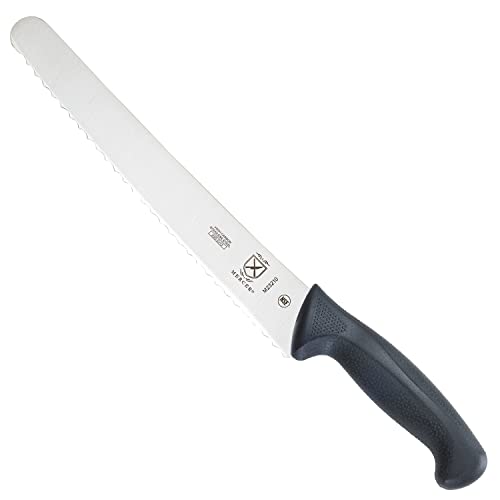
If you buy sourdough, bake bread or slice tomatoes, I’d put this knife ahead of almost anything else here. The long, wide wavy edge gets through hard crust without squashing the crumb, and it costs very little.
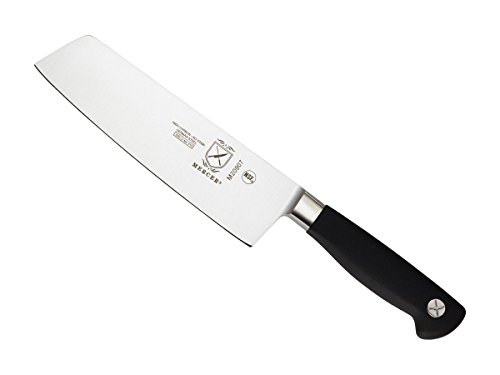
For vegetable-heavy cooks, a nakiri makes chopping feel almost effortless: a flat edge that meets the board along its whole length, so slices come out clean and separated. Mercer’s forged Genesis version is the one I’d pick for a first nakiri.

A Chinese cleaver looks scary and turns out to be one of the most useful shapes in a kitchen. The tall blade chops, scoops food to the pan and smashes garlic. Shi Ba Zi Zuo is a long-established Chinese maker, and this is a sensible first cleaver.

The utility knife is the one you grab for a sandwich, a block of cheese or a few limes when the cutting board is already busy. HENCKELS’ Classic line gives you a heftier, more substantial feel than most knives this size.
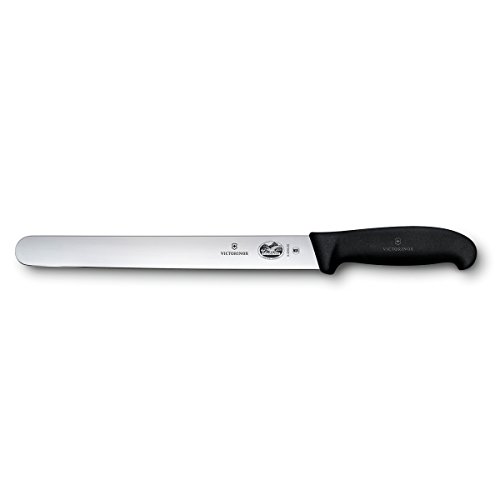
Roast chicken, a ham, a pork loin: a long, narrow slicer turns ragged hacking into clean slices in one stroke. This one is the no-fuss choice for cooks who carve a few times a year and don’t want to think about it.
Kitchen Knives Under $100 Compared
| Knife | Type | Blade | Handle | Best for |
|---|---|---|---|---|
| Victorinox Fibrox Santoku | Santoku | 7″, Granton edge | Fibrox (textured) | Everyday chopping and slicing |
| Victorinox Swiss Classic Paring | Paring | 3.25″, straight edge | Textured plastic | Peeling, coring, trimming |
| Mercer Millennia Bread Knife | Bread | 10″, wide wavy serrations | Textured plastic | Crusty bread, tomatoes, cake |
| Mercer Genesis Nakiri | Nakiri | 7″, forged German steel | Non-slip | Vegetables |
| SHI BA ZI ZUO Cleaver | Chinese cleaver | 8″, clad 80Cr13, non-stick finish | Rosewood | Chopping, scooping, smashing garlic |
| HENCKELS Classic Utility | Utility | 6″ | Synthetic, riveted | Sandwiches, cheese, small prep |
| Victorinox Fibrox Slicer | Carving/slicing | 10″, round tip | Fibrox (textured) | Roasts, poultry, ham |
1. Victorinox Fibrox 7″ Santoku (Granton Edge): Best Overall
Who it’s for: cooks who want one easy, all-purpose knife that’s shorter and less intimidating than a chef’s knife, or a partner for the chef’s knife they already own.
A santoku is a Japanese-style all-rounder with a flatter edge and a blunter, rounded tip than a chef’s knife. That shape suits an up-and-down chopping motion instead of rocking, and the shorter 7-inch blade feels more controllable on a small board. I explain the trade-offs in more depth in my santoku vs chef knife comparison, but the short version is that neither shape is better; it’s about how you like to cut.
This Victorinox is the version I’d recommend to most people. The Granton edge (the row of shallow scallops along the blade) leaves small air pockets so potato and cucumber slices stick less. The Fibrox handle is textured plastic that stays grippy with wet or oily hands, which matters more in daily cooking than any steel spec. The steel itself is a softer Swiss stainless that’s easy to bring back with a honing rod, and Victorinox gives a lifetime guarantee against defects.
My reservations are the usual Victorinox ones. It looks plain, the light blade has little heft for people who like a heavy knife, and the rounded tip is less precise for fine point work than a pointed chef’s knife.
Key specs
- Blade: 7 inch Swiss stainless steel, Granton (fluted) edge
- Handle: Fibrox, non-slip
- Made in Switzerland
- Lifetime guarantee against defects in material and workmanship
Pros
- Easy, controllable all-round shape
- Handle grips even when wet
- Food sticks less to the Granton blade
Cons
- Plain, utilitarian looks
- Light for cooks who like heft
- Rounded tip is less precise than a chef’s knife point
My verdict: the best single kitchen knife under $100 that isn’t a chef’s knife. If you already love your chef’s knife, start with the paring or bread knife instead.
2. Victorinox Swiss Classic 3.25″ Paring Knife: Best Paring Knife
Who it’s for: every kitchen. If you own only a chef’s knife, this is the most useful small upgrade you can make.
Paring knives do the jobs you do in your hand rather than on the board: peeling an apple, coring a tomato, hulling strawberries, deveining shrimp, scoring a ham. They need a sharp point, a thin blade and a handle that won’t slip when your fingers are wet with fruit juice. The Swiss Classic has all three, at a price that makes it almost disposable. If you want a forged, serrated or bird’s beak version instead, I compare them in my best paring knife guide.
The straight-edged 3.25 inch spear point blade is thin and easy to sharpen. The handle is textured plastic that Victorinox says stays non-slip even when wet, and the knife is NSF approved, the same standard used for commercial kitchens. It comes in lots of handle colors, which sounds trivial until you realize it’s an easy way to keep one for raw meat and one for fruit.
The trade-off for the low price is a thin, flexible blade that won’t stand up to prying and a handle that feels light and basic. The label says dishwasher safe, but like every knife I recommend, it will stay sharper if you wash it by hand.
Key specs
- Blade: 3.25 inch stainless steel, straight edge, spear point
- Handle: textured, non-slip plastic
- NSF approved
- Many handle colors
Pros
- Sharp and precise for very little money
- Non-slip handle
- Easy to buy two or three for different jobs
Cons
- Thin blade flexes under force
- Feels lightweight and basic
My verdict: buy it, whatever else you buy. There’s no better value on this page.
3. Mercer Millennia 10″ Wide Wavy Bread Knife: Best Bread Knife
Who it’s for: anyone who buys or bakes crusty bread, and anyone tired of squashing tomatoes.
A straight edge, no matter how sharp, tends to skate on a hard crust and then crush the soft inside. A serrated bread knife’s teeth bite into the crust first and then saw cleanly through, which is why it’s the one specialty knife I think almost every home needs. If you want the background, my explainer on what a bread knife is covers serration types and length.
The Mercer Millennia is a culinary-school favorite for good reason. The 10 inch blade is long enough for a big boule in one or two strokes, and the “wide wavy” serrations are broad, rounded scallops that cut crust well and tear soft bread less than pointy teeth do. Mercer makes it from one piece of high-carbon Japanese steel, and the textured handle has finger points for grip.
What I’d warn you about: the plastic handle is purely functional, the blade is thin enough to flex if you push hard through a frozen loaf, and serrated edges are tricky to sharpen at home. At this price, many people simply replace it after a few years. Mercer recommends hand washing, and I’d follow that.
Key specs
- Blade: 10 inch one-piece high-carbon Japanese steel, wide wavy serrated edge
- Handle: ergonomic, textured with finger points
- Hand wash recommended
Pros
- Long enough for big loaves
- Wide serrations cut crust without crushing
- Very low cost
Cons
- Basic plastic handle
- Serrations are hard to sharpen at home
My verdict: the bread knife I’d buy first. Spend more only if you care about a nicer handle; the cut won’t be much better.
4. Mercer Genesis 7″ Nakiri (Forged): Best Nakiri
Who it’s for: vegetarians, vegetable-heavy cooks and anyone who preps big batches of onions, carrots and greens.
A nakiri is a Japanese vegetable knife with a straight, flat edge and a squared-off tip. Because the whole edge meets the board at once, every push cut goes all the way through: no accordion of onion slices still joined at the bottom. It’s not a knife for meat or bone, but for produce it’s wonderfully efficient. I compare more nakiri options in my best nakiri knife guide.
Most nakiri are thin Japanese knives that need careful handling. The Genesis is a German-style take: forged from high-carbon German steel, a little thicker and more forgiving, with a taper-ground edge. Its handle is one of the grippiest you’ll find on a forged knife, so it’s comfortable for long prep sessions with wet hands. That combination makes it a great first nakiri.
The downsides: it’s heavier and thicker than a traditional Japanese nakiri, so it won’t glide through dense squash quite as easily as a thin laser, and it has no point for detail work. Mercer says to hand wash and dry it right away, and I’d do the same.
Key specs
- Blade: 7 inch precision-forged high-carbon German steel, taper-ground edge
- Handle: ergonomic, non-slip even when wet
- Hand wash recommended
Pros
- Clean, complete vegetable cuts
- Forgiving German steel
- Very grippy handle
Cons
- Thicker and heavier than Japanese nakiri
- No tip for detail work
- Vegetables only
My verdict: the safest way to find out whether a nakiri suits you. If you fall in love with the shape, my nakiri guide has thinner Japanese options.
5. SHI BA ZI ZUO 8″ Chinese Cleaver: Best Chinese Cleaver
Who it’s for: stir-fry cooks, big-batch vegetable preppers and anyone curious about the knife that millions of home cooks in China use for nearly everything.
Despite the name, a Chinese cleaver (caidao) is mostly a vegetable and boneless-meat knife, not a bone chopper. The tall, rectangular blade does things no other knife can: you slice, then turn it flat to scoop everything into the wok, or press down with the side to smash garlic and ginger. Once people get used to it, many reach for it more than their chef’s knife.
Shi Ba Zi Zuo has been making knives in China for a long time, and this 8 inch model is a good introduction. The blade is three-layer clad steel, a harder 80Cr13 core for the edge wrapped in softer outer layers for toughness, with a non-stick finish so slices fall away. The rosewood handle is shaped to fill the hand, and the blade is full tang.
My reservations: it’s big and top-heavy at first, which takes a week or two to feel natural. Keep it away from bones and frozen food, which can chip a thin cleaver edge (a heavy bone cleaver is a different tool). The wooden handle also needs drying after washing; never leave it soaking.
Key specs
- Blade: 8 inch three-layer clad stainless, 80Cr13 core, non-stick finish
- Handle: rosewood, full tang
- Suitable for vegetables and boneless meat
Pros
- Chops, scoops and smashes in one tool
- Food releases easily from the coated blade
- Good value from an established maker
Cons
- Takes time to get used to
- Not for bones or frozen food
- Wood handle needs careful drying
My verdict: a brilliant second knife for anyone who cooks a lot of vegetables and stir-fries. If you want something smaller and less intimidating, the nakiri does the vegetable part in a friendlier size.
6. HENCKELS Classic 6″ Utility Knife: Best Utility Knife
Who it’s for: cooks who want an in-between knife for sandwiches, cheese, shallots and fruit, when the paring knife is too small and the chef’s knife too much.
A utility knife is the kitchen’s sidekick. It’s about the size of a large paring knife stretched to 6 inches, narrow enough for close work and long enough to halve a bagel or slice a block of cheddar. In many homes it gets used more than anything except the main knife, because it’s quick to grab and quick to wash.
I like the HENCKELS Classic version because it feels more substantial than most small knives. The satin-finished German blade is finely honed, and HENCKELS says it stays sharp with minimal care. It’s also rated dishwasher safe and rust-free, which is convenient, though I’d still hand wash it to protect the edge and handle.
What I don’t love: if you already own a santoku or a small chef’s knife, a utility knife can feel redundant. And the heft that I like on a cutting board makes it a little less nimble for peeling in the hand than the Victorinox paring knife.
Key specs
- Blade: 6 inch German stainless steel, satin finish, plain edge
- Handle: synthetic, riveted
- Dishwasher safe per HENCKELS (hand washing still recommended)
Pros
- Handy in-between size
- Solid, substantial feel
- Stain- and rust-resistant blade
Cons
- Overlaps with a santoku or small chef’s knife
- Less nimble than a paring knife for in-hand work
My verdict: worth it if you make a lot of quick snacks and sandwiches. If your knife roll already has a santoku and a paring knife, you can skip it.
7. Victorinox Fibrox 10″ Slicing Knife (Round Tip): Best Carving Knife
Who it’s for: anyone who roasts a chicken, turkey, ham or pork loin and wants neat, thin slices instead of shredded meat.
Carving is mostly about length. A knife that’s longer than the slice is wide lets you cut in one smooth pull rather than sawing back and forth, and that’s what keeps slices tidy and juices in. A 10 inch slicer covers poultry, roasts and hams; for whole briskets you’ll want 12 inches or more, which I cover in my brisket knife guide.
This Victorinox has a long, narrow blade with a straight edge and a round tip, which keeps it from snagging and makes it safer to use near your carving fork. Victorinox grinds it so the blade gets thinner toward the edge (the company calls it conical ground) and ice-tempers the high-carbon stainless steel. The Fibrox handle grips well even when the meat juices start flowing.
My honest reservations: a carving knife is a once-a-week tool at most, so it may sit in a drawer between holidays. The round tip also means it’s useless for anything that needs a point, like boning a chicken. And like all Fibrox knives, it’s utilitarian rather than handsome on a holiday table.
Key specs
- Blade: 10 inch high-carbon stainless steel, straight edge, round tip, conical ground, ice tempered
- Handle: Fibrox Pro, non-slip
- NSF certified; lifetime guarantee against defects
Pros
- Clean, single-stroke slices
- Round tip is safe and doesn’t snag
- Grippy handle with greasy hands
Cons
- Occasional-use knife
- No point for boning or detail work
- Plain looks for the dinner table
My verdict: a smart buy if you roast or carve more than a couple of times a year. If you only carve at Thanksgiving, your chef’s knife will cope.
Which Knives Does Your Kitchen Actually Need?
Start with what you already own
Most kitchens already have a main knife of some kind. Before buying anything, ask what job it does badly. If it crushes bread, get the bread knife. If you’re always fiddling with small fruit, get the paring knife. Buying to fill gaps beats buying a full lineup you’ll never use.
A few single knives or a knife set?
For most home cooks, a main knife plus a paring knife and a bread knife handle 95 percent of daily cooking. Add a nakiri or cleaver if you cook mostly vegetables, a utility knife if you make lots of snacks, and a slicer if you roast often. If you’d rather buy everything at once, my guide to the best knife sets under $100 compares bundled options.
Grip comes before steel
At this price, the biggest difference between a pleasant knife and a frustrating one is the handle. Textured, non-slip handles like Victorinox Fibrox and Mercer’s are safer with wet hands than polished wood or bare steel. Steel differences under $100 are smaller than marketing suggests.
German style or Japanese style
Softer German-style steel, like the Mercer Genesis and HENCKELS, is tougher and easy to straighten with a honing rod. Harder Japanese-style steel takes a finer edge and holds it longer, but can chip if twisted or used on bone. Neither is better overall; choose German style if you want low-maintenance knives.
Serrated or straight
Serrated edges are best for crust, tomato skins and anything that’s hard outside and soft inside. Straight edges are better for nearly everything else and are far easier to sharpen. One serrated knife (the bread knife) is usually enough.
Keeping Cheap Knives Sharp
- Hone, then sharpen. A quick pass along a honing steel before cooking keeps a soft-steel edge straight; real sharpening is needed only every few months.
- Use a wood or soft plastic board. Glass, stone and ceramic boards dull edges fast.
- Hand wash and dry right away. Even knives labeled dishwasher safe last longer this way.
- Store them protected. Edge guards, a block or a magnetic strip stop blades from banging into each other in a drawer.
FAQ
What’s the most useful kitchen knife after a chef’s knife?
For most people, a paring knife, followed by a serrated bread knife. Together they cover the small, in-hand jobs and the crusty or squishy foods a chef’s knife handles poorly.
Is a santoku better than a chef’s knife?
Neither is better; they’re different shapes. A santoku is shorter with a flatter edge, good for up-and-down chopping and smaller hands. A chef’s knife has more curve and a sharper point, good for rocking cuts and point work.
Do I need a nakiri if I have a santoku?
Not really. A nakiri is more specialized and better for pure vegetable work, but a santoku already does vegetables well. Buy a nakiri only if most of your prep is produce.
Can a Chinese cleaver cut through bones?
A thin Chinese vegetable cleaver like the Shi Ba Zi Zuo shouldn’t be used on bones or frozen food; its edge can chip. Heavy bone cleavers are a separate, much thicker tool.
Are cheap kitchen knives worth buying?
Yes, from the right brands. Victorinox and Mercer make professional-grade knives that cost very little. What you give up is looks and premium materials, not real cutting ability.
Final Verdict
If you want one knife beyond the chef’s knife, or one that can replace it on most nights, the Victorinox Fibrox 7″ Santoku is my pick. Next on the list should be the Victorinox Swiss Classic Paring Knife, which costs almost nothing and gets used daily. Bake or buy crusty bread? Add the Mercer Millennia Bread Knife and you’ll have a kitchen trio that does almost everything well.
Not sure what each blade shape is for? My overview of the types of kitchen knives explains them all.

Gary Portman founded knivesadvice.com in 2019. He learned to cook in his family’s kitchen as a kid and has used kitchen, pocket and outdoor knives ever since, from paring and fillet knives to survival blades he carries camping and hiking. He writes the site’s buying guides, brand reviews and sharpening how-tos to help readers find the right knife for the job. More about Gary.