
A diamond plate is the sharpener people buy after a whetstone has let them down. Maybe the stone dished in the middle and started rounding their edges. Maybe it barely scratched a knife in S30V or another hard powder steel. Or maybe they just got tired of soaking, flattening and cleaning up slurry.
Diamond fixes all three. The abrasive is a layer of industrial diamonds bonded to a steel plate, and diamond is harder than any knife steel, ceramic blades included. The surface doesn’t wear into a dip, so it stays flat for years, and most plates work dry or with a splash of water. The trade-offs are a scratchier edge than a fine water stone leaves and a surface that can be damaged by heavy pressure, so a diamond plate rewards a light hand.
The plate I’d point most people to is the SHARPAL 162N, a two-sided 325/1200 plate with a case that doubles as a base. If you’d rather have a single continuous surface made in the USA, get the DMT D8F Dia-Sharp.
My Top 6 Diamond Sharpening Stone Picks

Coarse and extra-fine on one plate, an 8 x 3 inch surface, and a storage case with a non-slip pad you sharpen on. Everything a first diamond plate needs, nothing extra.
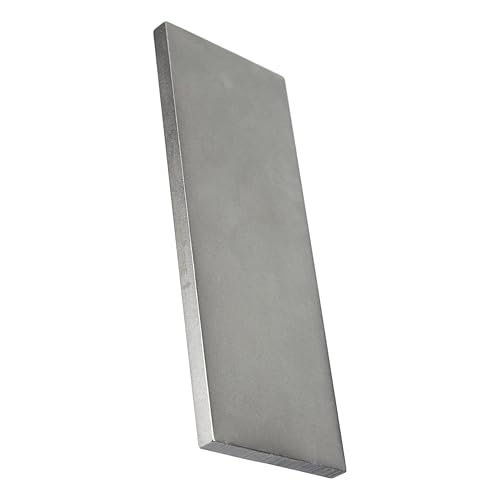
DMT has made diamond sharpeners in the USA for over 50 years, and the Dia-Sharp is the classic: a continuous diamond surface that won’t snag a fine tip.
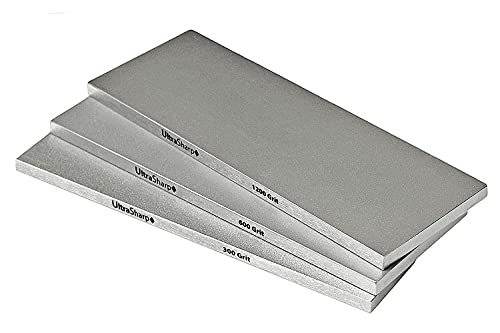
Three full-size plates and a holder: 300 for repairs, 600 for sharpening, 1200 for finishing. The set to buy once and never outgrow.

A two-sided plate with a cleaning block, non-slip mat and pouch included. The coarse side has clearance channels so small blades and points don’t catch.
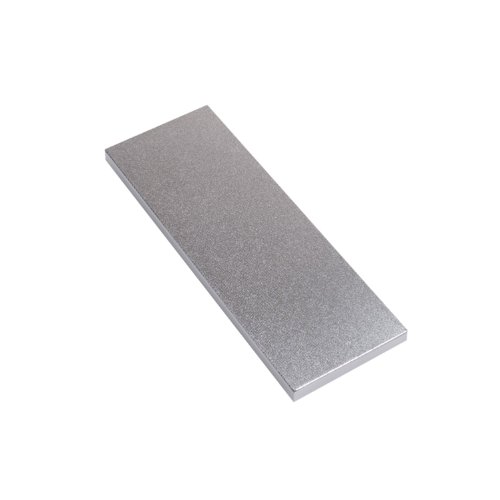
The plate Japanese-knife sharpeners keep beside their water stones: it flattens them fast and sharpens hard steel in between.

A small coarse/fine diamond stone in a handle with a thumb guard. Lives in a pack or tackle box and does fish hooks too.
Diamond Sharpening Stones Compared
| Stone | Grits | Size | Surface | Best for |
|---|---|---|---|---|
| SHARPAL 162N | 325 / 1200 | 8 x 3 in | Two-sided plate | Most knife owners |
| DMT D8F Dia-Sharp | Fine | 8 x 3 in | Continuous, one side | Kitchen knives and fine points |
| Ultra Sharp Set | 300 / 600 / 1200 | 3 plates, 8 x 3 in | Three single-grit plates | Sharpening every kind of blade |
| Trend Kit | 300 / 1000 | 8 x 3 in | Two-sided plate | Knives and woodworking tools |
| Atoma #400 | 400 | 8 x 2.77 in | One side | Flattening water stones |
| Smith’s DCS4 | Coarse / fine | 4 in | Two-sided, in handle | Field and fishing |
1. SHARPAL 162N Double-Sided Diamond Stone 325/1200: Best Overall
Who it’s for: anyone buying a first diamond plate for kitchen and pocket knives, including hard steels.
Two grits cover most knives, and SHARPAL picked a good pair. The 325 side (45 micron) sets a new edge on a dull or slightly chipped blade. The 1200 side (12 micron) refines it into a clean working edge. For a kitchen knife that’s still in decent shape, the 1200 side alone is often enough.
The diamonds are electroplated onto a stainless steel base 0.35 inches thick, which keeps the plate rigid and flat. The 8 x 3 inch surface gives a chef’s knife room to move, and the storage box has a non-slip rubber pad that you use as the sharpening base, so there’s nothing else to buy. SHARPAL includes an angle guide with 14, 17, 20 and 25 degree settings and backs it with three years of after-sale support.
My reservation is the finish. 1200 is a working edge, not a polish. If you like a refined edge on a Japanese knife, follow it with a fine water stone or a strop; my guide on how to strop a knife covers that last step.
Key specs
- Grits: 325 (45 micron) / 1200 (12 micron)
- Size: 8 x 3 inches, 0.35 inch stainless steel base
- Use: dry
- Includes: storage case with non-slip pad (used as base), angle guide (14, 17, 20, 25 degrees)
- Support: 3 years
Pros
- Useful grit pair for repair and sharpening
- Case doubles as a non-slip base
- Angle guide included
Cons
- 1200 isn’t a polishing grit
- Coarse side scratches deeply if you press hard
My verdict: the diamond plate I’d recommend first. If you want to buy American and only need one grit, the DMT is the alternative.
2. DMT D8F Dia-Sharp Bench Stone, Fine: Best Made in USA
Who it’s for: cooks who keep their knives in good shape and want one reliable sharpening surface, made in the USA.
DMT is the best-known name in diamond sharpeners, and it says its sharpeners have been made in the USA for over 50 years. The Dia-Sharp is its continuous-surface line: a solid sheet of monocrystalline diamond with no holes or pattern. That matters for fine work. The tip of a paring knife or a pointed tool can’t drop into a gap and catch, and DMT says the surface is designed not to hollow or groove.
This is the fine grade, which on DMT’s scale is 25 micron (600 mesh). That’s a sensible single grit for a knife that’s dull but not damaged: it sharpens reasonably quickly and leaves an edge that bites well into tomatoes and onions. Four rubber feet keep it still, and it works dry or with water.
One grit has limits. A chipped or very neglected blade will take a long time on fine, and you’ll want something finer to refine afterwards. DMT sells other grits in the same size if you want to build a set.
Key specs
- Grit: fine (25 micron, 600 mesh on DMT’s scale)
- Size: 8 x 3 x 0.38 inches
- Surface: continuous monocrystalline diamond, one side
- Use: dry or with water; 4 non-skid rubber feet
- Made in: USA
Pros
- Continuous surface doesn’t snag fine tips
- Made in the USA by a long-running maker
- Works dry or wet
Cons
- One grit only
- Slow for chips or very dull blades
My verdict: the plate for keeping good knives sharp. Start with the SHARPAL if your knives need repairs as well as upkeep.
3. Ultra Sharp Diamond Sharpening Stone Set 300/600/1200: Best Three-Grit Set
Who it’s for: people who sharpen for the whole family, or own a mix of kitchen, hunting and pocket knives plus some tools.
Three separate plates make a proper progression. The 300 grit takes out chips and reshapes a broken tip, 600 sharpens a normal dull knife, and 1200 finishes the edge. With single-grit plates you also get the full 8 x 3 inch surface for each step, rather than flipping a two-sided plate on the counter.
Each plate weighs 2.2 pounds, and the set includes a holder that takes stones from 6 to 9 inches long. That weight is part of the appeal: heavy plates don’t move around. Ultra Sharp also lists ceramic knives among the blades it sharpens, which matches what I’d expect from diamond.
It’s the most expensive pick here and heavy to store, at 8.5 pounds packed. If you only sharpen kitchen knives, two grits on the SHARPAL do the job.
Key specs
- Grits: 300, 600 and 1200 (three plates)
- Size: 8 x 3 inches each, 2.2 lb each
- Includes: stone holder for 6 to 9 inch stones
- Sharpens: all knives and tools, including ceramic knives (per listing)
Pros
- Complete coarse-to-fine progression
- Full surface for every grit
- Heavy plates stay put
Cons
- Costs the most of these picks
- Heavy and bulky to store
My verdict: the one set that handles every blade in the house. Overkill for a kitchen drawer of German knives.
4. Trend Diamond Sharpening Stone Kit 300/1000: Best Kit
Who it’s for: knife owners who also sharpen chisels and plane irons, or who want everything in one box.
Trend is better known in woodworking shops than kitchens, and this kit reflects it. The 8 x 3 inch plate has electroplated diamond set in nickel, with laser-engraved grit markings so you never mix up the sides. The 300 side has diamond-shaped clearance channels that stop small and pointed blades from catching, and the 1000 side hones the edge.
What sets it apart is the extras. A cleaning block keeps the diamond surface clear of steel dust, which is what slows a diamond plate down over time. A non-slip mat and a carry pouch round it out. Trend recommends its own lapping fluid with the plate; water works too.
For knives, the 300 to 1000 jump is a little wide, so a hard steel can take a few extra strokes on the fine side. The channels on the coarse side also make it less ideal for wide flat work like flattening other stones.
Key specs
- Grits: 300 / 1000
- Size: 8 x 3 inches
- Surface: electroplated diamond in nickel; clearance channels on the 300 side
- Includes: non-slip mat, cleaning block, storage pouch
Pros
- Cleaning block and mat included
- Grit sides clearly marked
- Good for knives and woodworking tools
Cons
- Big jump between grits
- Channelled side isn’t for flattening stones
My verdict: the kit for a shared workshop and kitchen. For knives alone, the SHARPAL’s grits suit better.
5. Atoma Diamond Sharpener #400: Best for Flattening Water Stones
Who it’s for: water stone users with Japanese knives who need a fast way to keep their stones flat.
Water stones wear into a dip with use, and a dished stone puts a curve into your edge. Flattening them is a chore with sandpaper or a cheap lapping plate. The Atoma is the diamond plate many Japanese-knife sharpeners keep for exactly this job: a few passes over a soaked stone and it’s flat again.
At 400 grit, it’s also a useful coarse sharpening surface for hard steels between flattening sessions. The plate measures 8 x 2.77 inches and 0.32 inches thick, a close match for most water stone sizes, and Atoma sells replacement diamond plates, so a worn surface can be renewed.
The listing gives almost nothing beyond grit and size, so I can’t say more about construction from it. It’s also a single coarse grit: as a knife sharpener on its own, you’d still need a finer stone to finish.
Key specs
- Grit: #400 (medium coarse)
- Size: 8 x 2.77 x 0.32 inches
- Type: diamond plate, one side
Pros
- Flattens water stones quickly
- Doubles as a coarse plate for hard steel
- Replacement sheets available
Cons
- Single coarse grit
- Listing gives very few details
My verdict: buy it if you own water stones; it’ll keep them working properly. If you don’t, one of the dual-grit plates is more useful.
6. Smith’s DCS4 4″ Diamond Combination Sharpener: Best Pocket-Size
Who it’s for: hikers, hunters and anglers who want a real diamond stone in a pack or tackle box.
Bench plates stay home. The DCS4 is a 4 inch two-sided diamond stone, coarse on one side and fine on the other, that slides into its own rubber handle for storage. To use it, you pull the stone out and fit it to the handle, which has a thumb guard so the edge can’t reach your fingers.
Smith’s uses an interrupted surface that collects steel dust in the gaps, which keeps the diamonds cutting. Each side also has a small pad and a groove for fish hooks and pointed tools, and there’s a lanyard loop. I’ve covered Smith’s other sharpeners in my Smith’s sharpener guide; this is the one to learn freehand on.
Four inches is short for a kitchen knife, and freehand on a small stone takes practice. For field touch-ups on a pocket or hunting knife, it’s ideal.
Key specs
- Grits: coarse / fine, color coded
- Length: 4 inches
- Surface: interrupted, monocrystalline diamond
- Extras: hook groove and pad, rubber handle with thumb guard, lanyard loop
Pros
- Packs small, with a protective handle
- Sharpens fish hooks and points too
- Costs very little
Cons
- Too short for kitchen knives
- Freehand only, no angle guide
My verdict: the diamond stone to carry. At home, any of the 8 inch plates gives far more control.
How to Choose a Diamond Sharpening Stone
Grit: coarse to repair, fine to sharpen
Pick grits by the job. Around 300 to 400 repairs chips and reshapes tips, 600 sharpens a normal dull knife, and 1000 to 1200 refines the edge. Diamond grit numbers don’t match water stone numbers exactly, and a diamond plate leaves a toothier edge than a water stone of similar grit.
Continuous or interrupted surface
A continuous surface (DMT Dia-Sharp) is best for fine points and small blades because nothing can catch. Interrupted or channelled surfaces collect steel dust and cut a little faster on wide blades but can snag a fine tip.
Size: 8 x 3 inches for kitchen knives
Choose 8 x 3 inches for kitchen knives. Smaller plates work for pocket knives but make long strokes on a chef’s knife awkward.
Diamond vs whetstone
Choose diamond for hard steels, ceramic knives, flattening stones and no-fuss use. Choose a water stone for the finest polish on Japanese knives and a more forgiving feel when learning. Many sharpeners use both: diamond to set the edge, water stone to finish it. My best knife sharpener guide compares diamond with the other sharpener types.
Ceramic knives need diamond
If you own ceramic knives, diamond is the only practical home option, because ceramic is harder than ordinary stones. My guide on how to sharpen a ceramic knife covers the gentle technique it needs.
How to Use a Diamond Plate
- Wet it or use it dry: most plates work dry; a few drops of water help carry away steel dust. Never use oil unless the maker says so.
- Press lightly: diamond cuts fast. Heavy pressure wears the diamonds off and gouges the edge.
- Expect a break-in: new plates feel aggressive for the first few sessions, then settle down.
- Hold a steady angle: about 20 degrees for German knives, 15 for Japanese. An angle guide helps.
- Raise a burr, then go finer: sharpen on the coarse side until you feel a burr along the whole edge, then switch to the fine side.
- Rinse and dry: clean the plate with water and a brush or cleaning block after each session, and dry it before storing.
Then check the edge: my guide on how to tell if a knife is sharp enough has quick tests.
FAQ
Are diamond sharpening stones better than whetstones?
For hard steels, ceramic knives and low-maintenance sharpening, yes: diamond cuts faster and stays flat. Water stones give a finer, more polished edge and are more forgiving to learn on, so many people use both.
Do diamond stones need water or oil?
Most diamond plates work dry or with water. Water helps carry away metal dust. Don’t use oil unless the maker recommends it, and some brands sell their own lapping fluid.
What grit diamond stone do I need?
A 325/1200 or 400/1000 combination covers most knives: coarse for dull or chipped blades, fine for the working edge. Add a finer water stone or strop if you want a polished edge.
How long do diamond sharpening stones last?
With light pressure and regular cleaning, a good diamond plate lasts years. Heavy pressure is what wears the diamonds off early, and some makers, like Atoma, sell replacement plates.
Can you sharpen a ceramic knife on a diamond stone?
Yes. Diamond is one of the few abrasives harder than ceramic, so it’s the right home tool. Use very light pressure and stop as soon as the edge is restored, because ceramic chips easily.
Can a diamond plate flatten a whetstone?
Yes, a coarse diamond plate like the Atoma #400 is one of the fastest ways to flatten a dished water stone. Rub the soaked stone over the plate until a pencil grid drawn on it disappears evenly.
Final Verdict
The SHARPAL 162N is the diamond stone I’d recommend to most knife owners: two useful grits, a flat 8 x 3 inch surface and a case that works as a base. For a made in USA plate with a continuous surface, the DMT D8F Dia-Sharp is the classic choice, and the Ultra Sharp three-plate set covers every blade from a chipped hunting knife to a fine kitchen edge.
Sharpening pocket knives on a plate like these? My guide on how to sharpen a pocket knife walks through it step by step.

Gary Portman founded knivesadvice.com in 2019. He learned to cook in his family’s kitchen as a kid and has used kitchen, pocket and outdoor knives ever since, from paring and fillet knives to survival blades he carries camping and hiking. He writes the site’s buying guides, brand reviews and sharpening how-tos to help readers find the right knife for the job. More about Gary.