
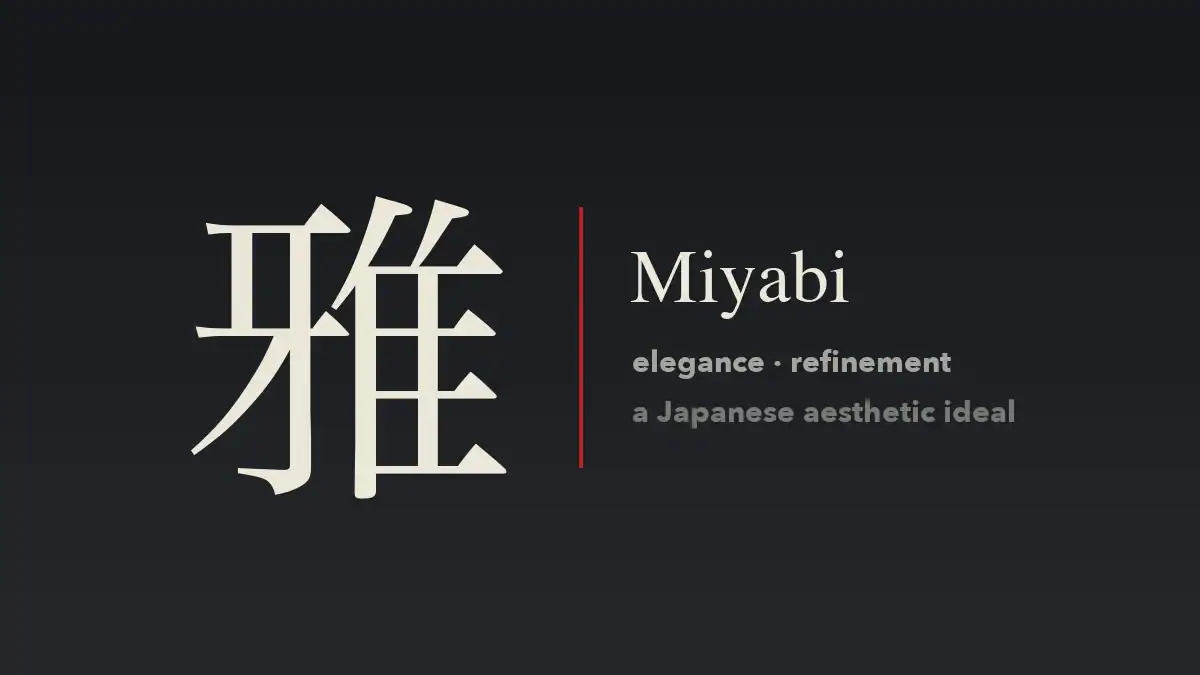
Miyabi (雅) is a Japanese word that means elegance or refinement, the polished, graceful taste of the old imperial court. It is also the name of a knife brand: ZWILLING’s Japanese line, made in Seki. Below I explain where the word comes from and why the knife maker chose it.
Miyabi knives cost a lot more than most kitchen knives, so it’s fair to ask what the fuss is about. After all, it’s just a knife. That’s where you’re wrong. Miyabi blades are so much more than just a knife. The difference between a Miyabi knife and the piece of stainless steel you have sitting in your kitchen drawer is the difference between something good and something great.
The Miyabi Ideal
Hailing from Japanese tradition, Miyabi is a concept that describes the aesthetic model of refinement. It was a popular aesthetic ideal during the Heian period in Japan. In translation, it is often synonymous with elegance and refinement and closely relates to removing all impurities to achieve precision. In other words, it is holding your work to the highest standard. This concept is the inspiration behind the name of the famous knives. Each knife exudes the traits of precision and grace.
Miyabi Knives
The knife brand is renowned for the quality, elegance, and durability of its blades. According to Miyabi, more than 100 steps go into making a single knife, and the whole process can take up to 42 days. The brand belongs to one of the largest and oldest knife-making companies, ZWILLING J.A. Henckels, and the knives are made in Seki, a city in Gifu Prefecture in central Japan. For centuries, hundreds of people have honed their swordsmithing craft in the streets of Seki, owing to its proximity to natural resources like iron sand. You can check my guide on which are the best Miyabi knives, or my honest take on whether Miyabi knives are worth it.
As one of the largest cutlery-producing areas in the world and often called the city of blades, Seki is home to some of the few traditional bladesmiths licensed to produce katanas. However, production has certainly reduced since swordsmiths settled in Seki around 800 years ago. Yet, to keep the craft alive and stay in business, these bladesmiths have turned their skills into making some of the most beautiful knives in the world.
In this way, the traditional method of making katanas has been preserved. Modern machines do much of the shaping, but every Miyabi knife is finished by hand, including a traditional hand honing of the edge (Miyabi calls it Honbazuke). On the Damascus lines, the layered pattern makes each blade look slightly different.
One of the steps behind that cutlery is hardening. Miyabi uses an ice-hardening process (CRYODUR) that cools the blades far below freezing, which makes the steel very hard and helps it hold a fine edge. Hard steel has a trade-off: it can chip if you twist it or cut bone. Additionally, the makers are confident enough to back each knife with a lifetime warranty against manufacturing defects.
Just like a katana, Miyabi blades are graceful as well as sharp, and the brand’s whole pitch is that a kitchen knife can feel special to hold. If you are weighing one against its closest rival, see my Shun vs Miyabi comparison.
Conclusion
One of the most coveted pieces of cooking equipment you could possibly own is a Miyabi blade. It is nothing short of a piece of art in your hand, with an edge that glides through vegetables, fish and boneless meat. Inspired by the elegant aesthetic of the Miyabi movement during the Heian period in Japan, Miyabi knives are the embodiment of refinement. Treat one as a precise tool (no bones, no frozen food, whetstones for sharpening, as I explain in how to sharpen Miyabi knives) and it can last you a lifetime.

Gary Portman founded knivesadvice.com in 2019. He learned to cook in his family’s kitchen as a kid and has used kitchen, pocket and outdoor knives ever since, from paring and fillet knives to survival blades he carries camping and hiking. He writes the site’s buying guides, brand reviews and sharpening how-tos to help readers find the right knife for the job. More about Gary.