

Knife oil isn’t one product. A carbon steel kitchen knife needs a thin film that keeps rust off and is fine near food. A folding knife needs a lubricant that stays in the pivot. An oil stone needs a light oil that floats metal dust away. Most bottles do one of these jobs well.
So I picked by job. For kitchen blades, my first choice is Kurobara Tsubaki Camellia Oil. For a pocket knife pivot, I’d reach for Knife Pivot Lube Original.
My Top 7 Knife Oil Picks
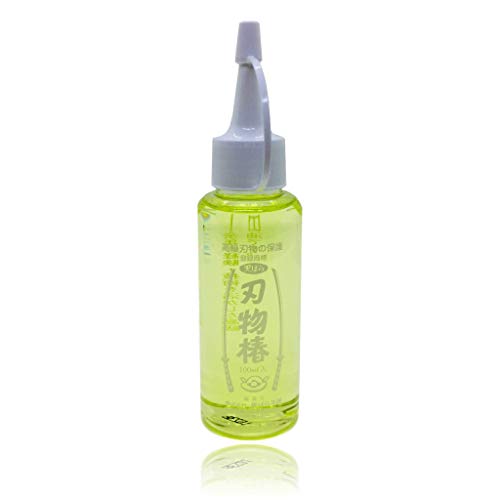
The traditional Japanese answer to rusty carbon steel. A few drops on a cloth after drying the blade, and the knife sits happily on the magnet until next time.

One cheap bottle that protects blades, conditions wooden handles and doubles as board oil. The listing states NSF certified food grade, which is what I want on kitchen tools.
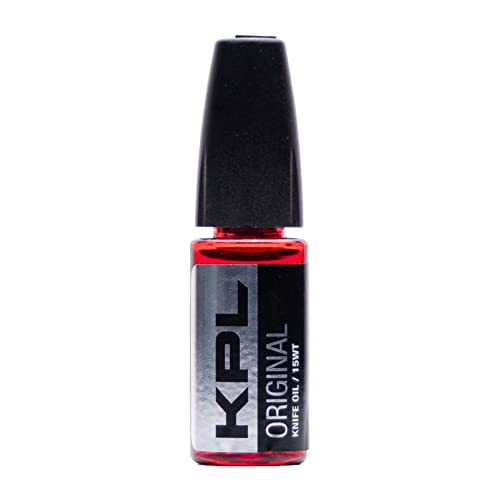
Made for folding knife pivots, with a needle tip that puts one drop exactly where it’s needed. It keeps flippers smooth and grit from grinding the washers.

A food grade synthetic oil for pivots on knives that also cut food: picnic folders, fishing knives and kitchen shears.

Dries to a slick, non-greasy film, so sand and pocket lint don’t stick. My pick for beach, boat and fishing knives.

One can for knives, axes, saws, leather sheaths and wooden handles. The oil I’d keep in the camping box.

A light mineral oil made for oil stones and Arkansas stones. It lifts metal particles out of the stone so it keeps cutting.
Knife Oils Compared
| Oil | Type | Food-safe per listing | Main job | Best for |
|---|---|---|---|---|
| Kurobara Tsubaki Camellia Oil | Camellia seed oil | Not stated | Rust protection | Carbon steel kitchen knives |
| Thirteen Chefs Mineral Oil | Mineral oil | Yes, NSF | Rust protection, wood care | Blades, handles, boards |
| Knife Pivot Lube Original | Synthetic oil | Not stated | Pivot lubrication | Folding knives |
| Super Lube 51010 | Synthetic oil with PTFE | Yes, NSF food grade | Pivot lubrication | Food-cutting folders, shears |
| Sentry Tuf-Glide Marine | Dry lube | Not stated | Lubrication, corrosion protection | Saltwater, sand, lint |
| Ballistol Multi-Purpose | Multi-purpose oil | Not stated | Clean, lubricate, protect | Outdoor tools, leather, wood |
| Norton Sharpening Stone Oil | Light mineral oil | Meets USP purity standard | Sharpening | Oil stones |
1. Kurobara Tsubaki Camellia Oil (3.4 oz): Best Overall
Who it’s for: anyone with carbon steel kitchen knives, or Japanese knives with a carbon core or iron cladding.
Carbon steel is wonderful to sharpen and quick to rust, and the fix Japanese cooks have relied on for generations is a thin coat of camellia (tsubaki) oil. It’s a light, clear oil that spreads thinly, doesn’t feel sticky and is slow to go gummy, so it suits knives that get used daily and oiled daily.
Kurobara’s bottle is the classic one: 100 ml of pure camellia oil, made in Japan. The method is simple and printed on the listing: clean the blade, dry it completely, put a few drops on a cloth and wipe a thin film over the steel. Before the next use, rinse or wipe it off. It also works on carbon scissors and garden tools.
The listing doesn’t call it food grade, so I treat it like any blade protectant: a thin film, wiped off before cutting food. If you need a bottle labeled food-safe, use the mineral oil below. And remember oil prevents rust; it doesn’t remove it. For spots already on the blade, see my guide to removing rust from knives first.
Key specs
- Type: 100% pure camellia (tsubaki) oil
- Size: 100 ml (3.4 oz)
- Uses: knives, scissors, carbon steel tools, light machinery
- Made in: Japan
Pros
- Thin, clean film that doesn’t turn sticky
- The traditional choice for Japanese carbon blades
- Small bottle lasts a long time
Cons
- Not labeled food grade on the listing
- Protects only; it won’t lubricate a pivot for long
My verdict: the oil I’d keep next to any carbon kitchen knife. If your knives are all stainless, you probably don’t need it.
2. Thirteen Chefs Food Grade Mineral Oil (8 oz): Best Budget
Who it’s for: home cooks who want one cheap, food-safe oil for blades, wooden handles and cutting boards.
Plain mineral oil is the least exciting product on this page and the one most kitchens should own. It doesn’t go rancid, it has no taste or smell, and this bottle is listed as NSF certified food grade and made in the USA. A drop on a paper towel protects a carbon blade overnight, and a heavier coat brings dry wooden handles and boards back to life.
The listing also mentions sharpening stones and knife handles, which matches how I’d use it: it’s a decent stand-in for honing oil on an oil stone, and it’s what I’d use on a wood-faced magnetic strip or a walnut handle that’s started to look grey.
Mineral oil is thinner protection than camellia oil on a blade that sits in a humid kitchen for days, and it’s no help in a folding knife pivot, where it migrates out quickly. For pivots, use one of the next two picks.
Key specs
- Type: food grade mineral oil, NSF certified (per listing)
- Size: 8 oz, push-applicator cap
- Uses: blades, knife handles, boards, butcher blocks, sharpening stones
- Made in: USA
Pros
- Clearly labeled food grade
- Covers blades, handles and boards in one bottle
- Costs very little
Cons
- Too thin for pivots
- Large bottle for blade use alone
My verdict: the best value oil for a kitchen. Choose the camellia oil if you own several carbon knives and want the nicer film.
3. Knife Pivot Lube Original (10 ml): Best Pivot Oil
Who it’s for: pocket knife owners whose flipper feels gritty, slow or dry.
Knife Pivot Lube (KPL) is the oil many pocket knife fans swear by, and the reason is the bottle as much as the oil. The needle tip puts a single drop right at the pivot, so you don’t flood the handle or end up with oil on the blade. KPL says the synthetic formula holds dirt and grit in suspension rather than letting it grind between the washers, and it adds rust protection on the moving parts.
In practice, one drop on each side of the pivot and a few dozen opening and closing cycles is all a dry knife needs. That’s usually the difference between a flipper that drops open and one you have to flick twice. The Original weight suits most knives; KPL also sells a thicker Heavy version for loose, worn pivots.
The listing doesn’t say food-safe, so I keep it for pivots and not kitchen edges. The bottle is also tiny, though at a drop per pivot it lasts a very long time.
Key specs
- Type: synthetic knife oil
- Size: 10 ml, needle oiler bottle
- Uses: pivots, locks, light rust protection
Pros
- Needle tip for precise drops
- Keeps pivots smooth and grit moving out
- Leak-proof, pocketable bottle
Cons
- Not labeled food-safe
- Small bottle for the money
My verdict: the pivot oil I’d buy first for any folder. If the knife cuts food, use Super Lube instead.
4. Super Lube 51010 Synthetic Oil (0.25 oz): Best Food-Safe Pivot Oil
Who it’s for: anyone oiling the pivot of a knife or tool that touches food.
When I wrote about fixing a pocket knife that won’t close, this was the oil I suggested for the pivot, and it’s still my pick for food-cutting folders. Super Lube is an industrial lubricant, not a knife brand, but the listing states it’s NSF rated food grade and non-toxic. That makes it a good match for picnic knives, fishing folders and kitchen shears whose pivots sit right next to food.
It’s a high-viscosity synthetic oil with Syncolon (Super Lube’s PTFE additive), waterproof and stable from -40 to 450 degrees F. In a knife, that means it stays in the pivot rather than running out, and a rinse under the tap doesn’t wash it away.
The heavier oil can make a very fine-tolerance flipper feel slightly slower than KPL Original does. And this small tube has no needle tip, so put a drop on a toothpick if you want real precision.
Key specs
- Type: synthetic oil with Syncolon (PTFE), high viscosity
- Rating: NSF food grade, non-toxic (per listing)
- Temperature range: -40 to 450 degrees F
- Size: 0.25 oz
Pros
- Food grade, so it’s fine on food-cutting tools
- Waterproof, resists washout
- Stays in the pivot
Cons
- No needle applicator
- Thicker than ideal for some fast flippers
My verdict: the pivot oil for any knife that cuts food. For a pure EDC folder, KPL is a little nicer to use.
5. Sentry Tuf-Glide Marine Dry Lube (0.5 oz): Best for Saltwater and Sand
Who it’s for: anglers, boaters, beachgoers and anyone whose knife lives in a sandy or linty pocket.
Wet oil has one drawback: it’s sticky, and sticky collects grit. Tuf-Glide works the other way. It goes on wet, then dries to a slick, non-greasy film, so sand, dust and pocket lint have nothing to cling to. For a knife that comes home from the beach or the boat, that’s a real advantage over any oil on this list.
The Marine version is sold as Sentry’s stronger formula for saltwater, and the needle applicator reaches into pivots and lock faces easily. I’d use it on fishing knives, dive knives and saltwater fillet knives after the usual freshwater rinse and dry. My saltwater fillet knife guide covers the rest of that routine.
A dry film doesn’t feel as silky in a pivot as a good wet oil, and the listing doesn’t claim food safety, so keep it off kitchen edges. It also needs reapplying after every serious saltwater trip.
Key specs
- Type: dry lubricant, corrosion protectant (CLP)
- Formula: Marine, for saltwater
- Size: 0.5 oz, needle applicator
- Safe on: metal, plastic and rubber (per listing)
Pros
- Dry film doesn’t collect sand or lint
- Made for saltwater conditions
- Precise needle applicator
Cons
- Pivot feel isn’t as smooth as wet oil
- Not labeled food-safe
My verdict: the right product for knives that live near salt and sand. For an office pocket knife, a wet pivot oil feels nicer.
6. Ballistol Multi-Purpose Oil (4 oz): Best Multi-Purpose
Who it’s for: people heading outdoors who’d like a single oil for every steel, wood and leather thing in the kit.
Ballistol has been around since 1904, and its pitch is that one can cleans, lubricates and protects almost anything. For an outdoor kit that’s genuinely useful: the same oil goes on a carbon bushcraft knife, an axe head, a folding saw, a leather sheath and a wooden handle. Ballistol says it’s slightly alkaline, which helps neutralize sweat and skin oils on blades that get handled a lot, and that it’s biodegradable.
That fits the advice I give for 1095 and other carbon steels outdoors: dry the blade and leave a light film of oil on it before sheathing it. Ballistol does that and conditions the sheath at the same time. If you want to understand why carbon blades need this and stainless ones mostly don’t, my carbon vs stainless steel guide explains it.
The common complaint is the smell, which is strong and medicinal and lingers. It’s also not the best pivot lube on its own; it’s thin and does better as a cleaner and protectant.
Key specs
- Type: multi-purpose oil (cleans, lubricates, protects)
- Uses: metal, wood, leather, rubber and plastic
- Skin safe, slightly alkaline, biodegradable (per Ballistol)
- Size: 4 oz bottle
Pros
- One oil for blades, tools, sheaths and handles
- Helps neutralize sweat on carbon blades
- Good cleaner for gummy old oil
Cons
- Strong smell
- Thin for pivot lubrication
My verdict: the oil for the camping box and the shed. Kitchen knives are better served by camellia or mineral oil.
7. Norton Sharpening Stone Oil (4.5 oz): Best Honing Oil
Who it’s for: anyone sharpening on India, Arkansas or other oil stones.
Honing oil is a different job from blade oil. On an oil stone, the oil carries away the tiny particles of steel and abrasive that the sharpening throws off. Without it, those particles clog the surface (sharpeners call it glazing) and the stone stops cutting. Norton is one of the best-known stone makers, and this is the light oil it sells for exactly that purpose.
The listing says it meets the U.S. Pharmacopeia standard for mineral oil purity, so it’s fine to use on kitchen knives that are rinsed afterwards. Use enough to keep the surface wet, wipe the grey slurry off when you finish, and add fresh oil next time.
Norton is clear that this oil is only for oil stones, not water stones or whetstones; oil will ruin a water stone. If you sharpen on Japanese whetstones, all you need is water.
Key specs
- Type: light mineral sharpening oil
- Purity: meets U.S. Pharmacopeia mineral oil standard
- For: oil stones and oil stone systems only
- Size: 4.5 oz can
Pros
- Keeps oil stones cutting instead of glazing
- Pure enough for kitchen knives
- From a respected stone maker
Cons
- Useless for water stones
- Only one job: not a blade protectant or pivot lube
My verdict: buy it if you own an oil stone. Plain food grade mineral oil works in a pinch.
Which Oil for Which Job
Carbon steel kitchen knives: camellia or mineral oil
Use camellia oil or food grade mineral oil, wiped thin. Both protect against rust without leaving anything you’d mind near food once wiped. Stainless kitchen knives rarely need oil at all; washing and drying them straight away is enough.
Folding knife pivots: a knife pivot oil
Use a dedicated pivot oil such as KPL, or a food grade synthetic like Super Lube if the knife cuts food. One drop per side, then work the blade. More oil only attracts dirt. Clean the pivot first if it feels gritty; my pocket knife cleaning guide shows how.
Saltwater, beach and dusty places: a dry lube
Use a dry lube like Tuf-Glide, applied after a freshwater rinse and a full dry. Wet oils collect sand and lint; a dry film doesn’t.
Outdoor carbon blades, axes and sheaths: a multi-purpose oil
Use a multi-purpose oil like Ballistol. It protects the steel and treats the leather and wood in the same wipe.
Oil stones: honing oil
Use honing oil on oil stones only. Water stones and Japanese whetstones take water; diamond plates use water or a dedicated diamond fluid.
Wooden handles: mineral oil
Use food grade mineral oil on dry, faded wooden handles. Rub it in, leave it a few hours, wipe off the excess.
How to Oil a Knife
- Clean it: wash the blade with warm soapy water, or wipe a folder clean, and remove any rust spots first.
- Dry it completely: oil sealed over water causes rust instead of stopping it. Let a folder air-dry open.
- Use very little: two or three drops on a cloth for a kitchen blade; one drop on each side of a pivot.
- Spread it thin: wipe the blade so it looks barely damp. For a pivot, open and close the knife 20 to 30 times.
- Wipe the excess: anything you can see on a pivot or handle will collect dust. Wipe a kitchen blade before cutting food again.
FAQ
What is the best oil for knives?
It depends on the job. Camellia oil or food grade mineral oil is best for kitchen blades, a dedicated pivot oil like KPL is best for folding knife pivots, a dry lube like Tuf-Glide is best for saltwater, and honing oil is for oil stones only.
Can I use olive oil or vegetable oil on my knife?
I wouldn’t. Most cooking oils turn sticky and can go rancid on a stored blade, which leaves a gummy film and a smell. Food grade mineral oil or camellia oil stays clean for much longer.
Is WD-40 good for knives?
WD-40 is useful for freeing a stuck pivot or lifting rust, but it isn’t a good long-term knife lubricant, and it’s not food-safe. Clean it out afterwards and add a proper pivot oil.
How often should I oil my knife?
Oil carbon kitchen knives after every wash if they’ll sit unused, or at least when you put them away for more than a day. Oil a pocket knife pivot when it starts to feel dry or gritty, which for most people is every few months.
Is mineral oil safe for knives?
Yes. Food grade mineral oil is safe on kitchen knives, wooden handles and cutting boards, and it doesn’t go rancid. Check that the bottle says food grade, not just mineral oil.
Do stainless steel knives need oil?
Usually not. Stainless kitchen knives only need to be washed and dried promptly. Folding knives still benefit from a drop of oil in the pivot, and stainless blades used around saltwater can rust, so a light coat helps there.
Final Verdict
Buy the oil for the job, not a single bottle for everything. Kurobara Tsubaki Camellia Oil is my first pick for carbon kitchen knives, and Thirteen Chefs Mineral Oil is the cheapest food-safe way to cover blades, handles and boards. For folding knives, Knife Pivot Lube Original keeps pivots smooth, and Super Lube is the one for knives that also cut food.
Rust already on the blade? Remove it first, then oil. And if you’re choosing a new folder to look after, my best folding knives under $100 are a good place to start.

Gary Portman founded knivesadvice.com in 2019. He learned to cook in his family’s kitchen as a kid and has used kitchen, pocket and outdoor knives ever since, from paring and fillet knives to survival blades he carries camping and hiking. He writes the site’s buying guides, brand reviews and sharpening how-tos to help readers find the right knife for the job. More about Gary.