
Most knife listings put the steel name in the title as if it settles everything. It doesn’t, but it does tell you a lot once you can read it. A steel’s recipe decides how long the edge lasts, how easily it chips, whether it rusts in a damp pocket and how much work it takes to sharpen. No steel wins all four, so every “best steel” is really a choice about which trade-off you’d rather live with.
The chart below rates the steels you’ll actually meet on pocket knives, fixed blades and kitchen knives, from cheap 8Cr13MoV to MagnaCut, using typical hardness and the ratings widely published by makers and steel researchers. Treat it as a guide to tiers, not a league table: a well-heat-treated mid-range steel beats a badly treated premium one every time.
If you only want the answer, here it is. For most people carrying a pocket knife, a modern fine-grained stainless like 14C28N is the sweet spot, and the knife I’d point to first is the Kershaw Leek in 14C28N. If you want a step up in edge life, look at S30V or MagnaCut; if you cook, VG-10 is the steel to know.
My Top 6 Knives, One for Each Steel Worth Knowing

A slim 3-inch everyday folder in Sandvik 14C28N, a stainless that takes a keen edge, shrugs off moisture and sharpens without fuss. This is the steel I’d want on a first good knife.

The best showcase for cheap 8Cr13MoV: a full-flat-ground blade on a sturdy G-10 folder. It dulls sooner than better steels, but it comes back in a few strokes.

S30V was the steel that made powder metallurgy normal in pocket knives. On the very light Bugout, it gives noticeably longer edge life than budget steels.

MagnaCut is the newest big name: stainless, tough and long-lasting all at once. The Bel Air is one of the more affordable ways to carry it from a major maker.

The classic 1095-family knife. Carbon steel at its best: tough, easy to sharpen in the field and honest about needing a wipe and some oil.
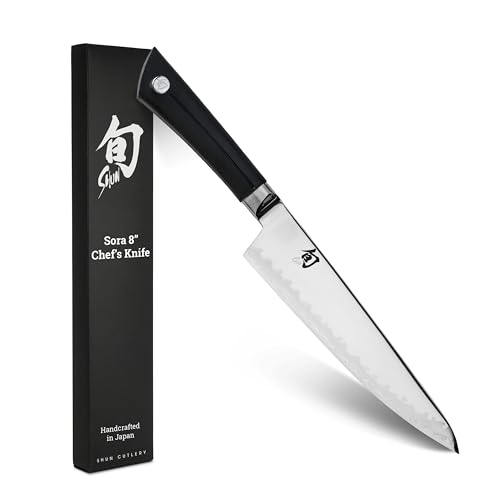
VG-10 is the steel behind a huge share of Japanese-made kitchen knives. The Sora puts a VG10 cutting core at a 16-degree edge for less than most Shun lines.
Knives by Steel Compared
| Knife | Steel | Steel type | Blade | Best for |
|---|---|---|---|---|
| Kershaw Leek | Sandvik 14C28N | Fine-grained stainless | 3″ drop point | Everyday carry, first good knife |
| Spyderco Tenacious | 8Cr13MoV | Budget stainless | 3.3″ full flat grind | Learning to sharpen, beater knife |
| Benchmade Bugout | CPM S30V | Powder stainless | Drop point | Light carry, long edge life |
| Kershaw Bel Air | CPM MagnaCut | Powder stainless | 3.05″ clip point | Premium carry, wet conditions |
| KA-BAR USMC | 1095 Cro-Van | Carbon steel | 7″ clip point | Camp, hard outdoor use |
| Shun Sora 8″ | VG10 core, 420J outer | Japanese stainless | 8″ chef’s knife | Home cooks, fine slicing |
Knife Steel Chart
The ratings below are relative, at the hardness each steel is usually run at on knives. “Top” means near the best in this list, “Low” means near the bottom. Hardness is on the Rockwell C scale (HRC), the number makers quote for blade steel.
| Steel | Type | Typical HRC | Edge retention | Toughness | Rust resistance | Ease of sharpening | Often found on |
|---|---|---|---|---|---|---|---|
| 420HC | Stainless | 56 to 58 | Low | High | High | Top | Buck, Gerber, Leatherman tools |
| 8Cr13MoV | Stainless | 56 to 59 | Low | Good | High | Top | Budget folders |
| AUS-8 | Stainless | 57 to 59 | Fair | Good | High | High | Ontario, Cold Steel |
| X50CrMoV15 | Stainless | 55 to 58 | Fair | High | High | High | German kitchen knives |
| 12C27 / 14C28N | Stainless | 57 to 61 | Good | High | High | High | Opinel, Kershaw, CIVIVI |
| AEB-L / Nitro-V | Stainless | 58 to 61 | Good | Top | High | High | CIVIVI, Kizer, kitchen customs |
| 440C | Stainless | 57 to 59 | Fair | Fair | High | Good | Older and budget knives |
| VG-10 | Stainless | 59 to 61 | Good | Fair | High | Good | Japanese kitchen knives, Spyderco |
| 1095 | Carbon | 55 to 58 | Fair | High | Low | Top | ESEE, KA-BAR, traditional folders |
| D2 | Semi-stainless tool steel | 58 to 61 | High | Fair | Fair | Fair | Budget and mid-range folders |
| 154CM / CPM 154 | Stainless | 58 to 61 | Good | Good | High | Good | Benchmade, mid-range folders |
| AR-RPM9 | Powder stainless | 59 to 61 | Good | Good | High | Good | CJRB |
| S30V / S35VN | Powder stainless | 58 to 61 | High | Good | High | Fair | Benchmade, Spyderco, USA Kershaw |
| MagnaCut | Powder stainless | 60 to 64 | High | High | Top | Fair | Premium folders and fixed blades |
| M390 / 20CV | Powder stainless | 60 to 62 | Top | Fair | Top | Low | Premium folders |
| S90V | Powder stainless | 59 to 61 | Top | Low | High | Low | High-end slicers |
| SG2 (R2) | Powder stainless | 62 to 64 | High | Low | High | Good on stones | Premium Japanese kitchen knives |
| Shirogami / Aogami | Carbon | 60 to 64 | Good | Fair | Low | High | Traditional Japanese kitchen knives |
Two notes on reading it. First, the same steel can land a row higher or lower depending on the maker’s heat treatment and blade geometry, so don’t treat one step as a big gap. Second, ceramic blades are not steel at all and don’t belong in this chart; I cover them in ceramic vs steel knives.
What the Ratings Mean
Edge retention
Edge retention is how long the edge keeps cutting before it needs sharpening. It comes mostly from hardness plus the amount and type of carbides, tiny hard particles in the steel that resist wear. Vanadium carbides are the hardest common ones, which is why S90V and M390 sit at the top. If you cut cardboard, rope or plastic all day, this is the rating you’ll notice most.
Toughness
Toughness is resistance to chipping and breaking. Lots of large carbides and high hardness both reduce it, so a steel that holds an edge forever often chips more easily when twisted or knocked against bone. Fine-grained steels with few carbides (AEB-L, 14C28N, 1095) are the tough ones. For a camp knife or anything that gets abused, toughness matters more than edge life.
Rust resistance
Rust resistance comes mainly from chromium that stays free in the steel rather than locked up in carbides. Around 12 to 13 percent chromium is the usual line for “stainless”, but stainless only means it stains less, not never. Carbon steels like 1095 and the Japanese paper steels will spot within hours if left wet. If you work near salt water or sweat a lot, rank this first.
Ease of sharpening
Ease of sharpening is roughly the opposite of edge retention. Soft, low-carbide steels sharpen on almost anything in a few minutes. The high-vanadium powder steels resist the abrasive just as they resist cardboard, so they want diamond plates or good synthetic stones and more patience. If you don’t enjoy sharpening, a softer steel you’ll actually keep sharp beats a premium one you leave dull.
Hardness (HRC)
HRC is the Rockwell C hardness number. Most knife steels run between 56 and 62. Softer blades (56 to 58) roll and bend instead of chipping, which suits German kitchen knives and hard-use outdoor knives. Harder blades (60 to 64) hold a thinner, keener edge longer but are less forgiving, which is the classic Japanese kitchen knife trade-off.
What’s Actually in Knife Steel
Every knife steel is iron plus carbon, with other elements added for specific jobs. You don’t need the full chemistry, but these five explain most of the chart:
- Carbon: lets the steel harden and forms carbides. More carbon, harder blade, usually longer edge life.
- Chromium: the main source of rust resistance, and it forms carbides of its own.
- Vanadium: forms very hard carbides and keeps the grain fine; the reason high-end steels hold an edge so long and sharpen so slowly.
- Molybdenum: adds strength and helps the steel harden evenly.
- Nitrogen: used in newer steels such as Nitro-V and some premium powder steels to boost rust resistance without adding coarse carbides.
The word “powder” matters too. Powder metallurgy (the “CPM” in CPM S30V and CPM MagnaCut) atomizes molten steel into fine powder and presses it back together, so carbides stay small and evenly spread. That’s how steels with lots of carbide can still be reasonably tough and take a clean edge.
Knife Steel Tiers, From Budget to Premium
Budget stainless: 420HC, 8Cr13MoV, AUS-8
Budget stainless is easy to sharpen, hard to rust and quick to dull. That’s a fair deal on a knife you’ll abuse, lend out or lose. These steels get a bad name mostly from poor heat treatment on no-name knives; from Buck, Spyderco or Ontario they’re perfectly usable.
Modern fine-grained stainless: 12C27, 14C28N, AEB-L, Nitro-V
This is the tier I’d steer most people toward. These steels take a very fine edge, resist rust well and are tough, and the edge lasts noticeably longer than budget steels at the hardness they’re usually run at. They’re also cheap to produce, so you find them on good knives at modest prices.
Mid-range: VG-10, 154CM, D2, AR-RPM9
Mid-range steels give more edge life with some cost elsewhere. VG-10 and 154CM are balanced stainless steels. D2 holds an edge well but isn’t quite stainless. AR-RPM9 is a Chinese powder steel that CJRB uses widely at low prices.
Premium powder steels: S30V, S35VN, MagnaCut, M390, 20CV, S90V
Premium steels hold an edge much longer and resist rust very well, and you pay for it in knife price and sharpening time. MagnaCut stands out because it is tough as well, which most steels at this level are not.
Carbon steels: 1095 and Japanese paper steels
Carbon steels are the traditional choice: easy to sharpen to a very keen edge and, in 1095’s case, very tough. The price is upkeep. I compare the two families in detail in carbon vs stainless steel.
Which Steel for Which Knife
Pocket knife for everyday carry
For everyday carry, pick 14C28N, Nitro-V or a similar modern stainless. Pocket knives see sweat, rain and the odd snack, and you want an edge you can restore on a small stone. Step up to S30V or MagnaCut if you cut abrasive material every day. Most of the folders in my best folding knife under $100 guide sit in this range.
Kitchen knife
For a kitchen knife, the choice is softer German stainless (X50CrMoV15 and similar) or harder Japanese steel (VG-10, SG2, the paper steels). German steel forgives bones, twisting and a honing rod; Japanese steel cuts thinner and stays sharp longer but chips if misused. My German vs Japanese knives comparison goes through that choice properly.
Camp, bushcraft and survival knife
For outdoor fixed blades, toughness comes first. 1095 and other simple carbon steels have done this job for generations because they flex instead of snapping and sharpen easily by a fire. MagnaCut and AEB-L-type stainless steels are the modern answer if you’d rather not oil the blade.
Fishing, diving and salt water
Near salt water, rust resistance outranks everything. Look for H-1 or LC200N on dedicated salt-water knives, or MagnaCut and 14C28N on general knives, and rinse in fresh water after use. Carbon steel is the wrong tool here.
Heat Treatment Matters as Much as the Steel Name
A steel’s recipe sets its potential; the heat treatment decides how much of it you get. The same S30V can be excellent or brittle depending on the hardening and tempering process, and a cheap knife labelled with a premium steel name often has neither the steel nor the heat treatment that should come with it. That’s why I care more about the maker than the steel on a listing, and why the brands in my best knife makers guide earn trust. A known brand that publishes its steel and hardness is a safer bet than a bargain promising MagnaCut at a price that makes no sense.
Blade geometry matters too. A thin, full-flat-ground 8Cr13MoV blade often slices better than a thick premium-steel blade, because cutting is mostly about how thin the edge is behind the bevel.
1. Kershaw Leek (14C28N, Olive Aluminum, Made in USA): Best Steel for Most People (14C28N)
Who it’s for: anyone who wants one good stainless steel knife without thinking about rust or special sharpening gear.
Sandvik 14C28N is my answer to “which steel should I get?” for most readers. It’s a fine-grained stainless, so it takes a very keen edge, and it was designed for knives rather than borrowed from industry. It keeps its edge for less time than S30V does, but it resists rust better than many pricier steels and comes back quickly on an ordinary stone.
The Leek is a good way to carry it. It’s slim, light at 2.4 ounces and has a 3-inch drop point that suits boxes, packaging and food. Kershaw makes it in the USA and adds a Tip-lock that keeps the blade closed in the pocket.
My reservation is the fine tip. It’s great for detail work, and the most reported Leek fault is a snapped tip after prying. Use a screwdriver for screws. The clip also only goes on the right side.
Key specs
- Blade: 3-inch drop point, Sandvik 14C28N stainless, stonewashed
- Handle: 6061-T6 anodized aluminum, olive
- Lock: liner lock plus Tip-lock; assisted opening flipper
- Weight: 2.4 oz; made in the USA, limited lifetime warranty (listing)
Pros
- Keen, rust-resistant, easy-to-sharpen steel
- Slim and light for a 3-inch blade
- Made in the USA
Cons
- Fine tip breaks if used to pry
- Right-side clip only; aluminum is slick when wet
My verdict: the knife I’d hand someone who asks what a sensible modern steel feels like. Look elsewhere if you want a lefty clip or a tougher tip.
2. Spyderco Tenacious (8Cr13MoV, G-10): Best Budget Steel (8Cr13MoV)
Who it’s for: buyers who want to see what budget steel can do in good hands, and people learning to sharpen.
8Cr13MoV is the steel people sneer at, and the Tenacious is why I don’t. The steel is soft-ish and low in carbides, so it dulls faster than anything else on this list. It also sharpens faster than anything else on this list, resists rust well and is hard to chip.
The knife around it is what makes the difference. Spyderco gives it a full flat grind, which means the blade is thin behind the edge and slices well even when it’s not freshly sharpened. The G-10 handle grips in wet hands, and the clip moves to four positions for either hand.
If you cut a lot of cardboard, you’ll be touching this edge up often. For many people, that’s a five-minute job on a stone and a good way to learn.
Key specs
- Blade: 3.3-inch, 8Cr13MoV stainless, full flat grind, plain edge
- Handle: G-10 scales, skeletonized stainless liners
- Lock: liner lock
- Clip: four-position (left or right, tip up or down)
Pros
- Thin grind slices better than its steel suggests
- Very easy to sharpen, hard to rust
- Four-position clip
Cons
- Shortest edge life here
- Liner lock needs a careful thumb when closing
My verdict: proof that geometry and heat treatment matter more than the steel name at this level. Buy it to learn sharpening, or as a knife you won’t mind losing.
3. Benchmade Bugout (CPM S30V, Storm Gray Grivory): Best Powder Steel Upgrade (S30V)
Who it’s for: people who carry daily, cut a lot and want to sharpen less often.
CPM S30V is a Crucible powder steel designed for knives, and it’s the steel that took premium stainless mainstream. Its vanadium carbides keep the edge working through much more cardboard and rope than the budget tier, and it stays very rust resistant. The trade-off is sharpening: it wants diamonds or good stones, and it can chip a little if the edge is ground very thin and twisted.
The Bugout is a sensible home for it. It’s one of the lightest full-size folders around, with a glass-filled nylon (Grivory) handle and Benchmade’s AXIS lock, a spring-loaded bar in the handle that a thumb draws back from either side. The clip is reversible, and Benchmade’s LifeSharp service will resharpen it for free.
The handle feels thin and a little hollow, which some people dislike. It’s built to be light, not to fill a big hand.
Key specs
- Blade: drop point, CPM S30V powder stainless
- Handle: Grivory (glass-filled nylon), storm gray, ambidextrous
- Lock: AXIS, reversible clip, lanyard hole
- Service: Benchmade LifeSharp free resharpening (listing)
Pros
- Much longer edge life than budget steel
- Very light for its blade size
- AXIS lock works from either side
Cons
- Slower to sharpen without diamond plates
- Thin handle feels hollow to some hands
My verdict: the cleanest way to feel what a powder steel adds. If you sharpen rarely and cut daily, this is the step worth paying for.
4. Kershaw Bel Air (CPM MagnaCut, Canvas Micarta): Best MagnaCut Knife
Who it’s for: enthusiasts who want the newest all-round steel in a polished, ambidextrous folder.
MagnaCut is the steel readers ask me about most right now, and the hype is mostly fair. It was designed by metallurgist Larrin Thomas and is made by Crucible as a powder steel. It manages long edge life, very high rust resistance and good toughness at the same time, which used to mean choosing two out of three.
The Bel Air puts it in a 3.05-inch clip point with canvas Micarta handles, a ball-bearing pivot and Kershaw’s DuraLock crossbar lock, which you release with a thumb from either side. The clip is reversible, so lefties are covered, and it’s made in the USA.
The catch is cost, both in the knife and in sharpening time. MagnaCut isn’t as stubborn as S90V on a stone, but it’s slower than 14C28N, and many people will never use enough edge to justify it.
Key specs
- Blade: 3.05-inch clip point, CPM MagnaCut, working finish
- Handle: canvas Micarta, olive
- Lock: DuraLock crossbar; KVT ball-bearing pivot, thumb stud
- Weight: 2.6 oz; made in the USA, reversible tip-up clip (listing)
Pros
- Edge life, toughness and rust resistance in one steel
- Crossbar lock suits either hand
- Light for a premium folder
Cons
- Costs much more than the Leek
- Slower to sharpen than the fine-grained stainless tier
My verdict: if you want the steel everyone’s talking about without a custom-knife bill, start here. If you just want a sharp, rust-free knife, the Leek does that already.
5. KA-BAR USMC Fixed Blade (1095 Cro-Van, Leather): Best Carbon Steel (1095)
Who it’s for: campers and outdoor users who want a tough carbon blade they can sharpen anywhere.
1095 is a plain high-carbon steel with almost no chromium, and KA-BAR uses its own 1095 Cro-Van version, with a little added chromium and vanadium. On a big knife like this, carbon steel makes sense: at the usual 56 to 58 HRC it’s tough enough to bend rather than snap, and a handful of strokes on a stone, or even a smooth river rock, brings the edge back.
It’s also the clearest example in this list of carbon steel upkeep. Leave it wet and it rusts. Keep it wiped and lightly oiled and it lasts decades, and many owners like the gray patina it builds. The stacked leather handle and leather sheath have the same rule: dry them out.
At 7 inches it’s a camp and utility knife, not a pocket knife. If you want 1095 in a smaller package, traditional folders and small fixed blades use it too.
Key specs
- Blade: 7 inches, clip point; steel: KA-BAR’s 1095 Cro-Van carbon
- Overall length: 11.875 inches; edge angle 20 degrees (listing)
- Handle: stacked leather; leather sheath
- Made in Olean, New York (KA-BAR)
Pros
- Tough, forgiving steel
- Very easy to sharpen in the field
- Proven design with a long history
Cons
- Rusts if put away wet
- Leather handle and sheath need drying and care
My verdict: the best way to see why carbon steel still has fans. Buy it if you’ll wipe it after use; choose a stainless camp knife if you won’t.
6. Shun Sora 8″ Chef’s Knife (VG10 Edge): Best Kitchen Steel (VG-10)
Who it’s for: home cooks who want to try a harder Japanese steel without a fragile, high-maintenance knife.
VG-10 is a stainless made by Takefu Special Steel in Japan, and it sits in a great many Japanese kitchen knives for good reason. Run at around 60 HRC, it holds a thin edge noticeably longer than German kitchen steel and still resists rust well. The cost is toughness: pry through a hard squash or catch a bone and the edge can chip.
The Sora uses VG10 only where it matters. Shun’s Composite Blade puts a VG10 cutting edge into a 420J stainless upper, so you get the hard edge at a 16-degree angle without paying for a full VG10 blade. The narrow, gyuto-style blade is nimble, and the textured polymer handle grips well and works in either hand.
It’s handcrafted in Japan, and Shun’s free sharpening is offered with it. I’ve covered the brand’s other lines in my Shun knives review.
Key specs
- Blade: 8-inch chef’s knife, VG10 edge in a 420J stainless upper (Composite Blade)
- Edge: 16 degrees per side
- Handle: textured PP/TPE polymer, full tang, either hand
- Made in Japan; free sharpening and honing offered (listing)
Pros
- Hard, keen VG10 edge that stays sharp
- Grippy handle for either hand
- Entry point to Shun quality
Cons
- Chips if twisted, used on bone or frozen food
- Polymer handle looks plainer than Shun’s wood lines
My verdict: the clearest way to feel the Japanese steel trade-off in your own kitchen. Pick German stainless instead if you hack through bones or want a knife you can neglect.
FAQ
What is the best knife steel?
There is no single best knife steel; the best one depends on the job. For most pocket knives, a modern fine-grained stainless like 14C28N or Nitro-V is the best balance. For maximum edge life, M390, 20CV or S90V lead; for an all-rounder at the premium end, MagnaCut; for tough outdoor blades, 1095 or AEB-L.
Is 8Cr13MoV a good steel?
Yes, 8Cr13MoV is a good budget steel when the maker heat-treats it well. It dulls sooner than better steels but sharpens very easily and resists rust. It’s a sensible choice for a first knife or a knife you’ll abuse.
Is MagnaCut worth it?
MagnaCut is worth it if you want long edge life, high toughness and excellent rust resistance in one knife and don’t mind paying for it. If you sharpen regularly and cut mostly light material, 14C28N gives most of the everyday benefit for much less money.
Is VG-10 good steel for a knife?
VG-10 is a good stainless for kitchen knives and slim folders. It takes a fine edge, holds it well at around 60 HRC and resists rust, but it chips more easily than softer German steels if twisted or used on bone.
What does HRC mean on a knife?
HRC is the Rockwell C hardness of the blade. Most knives sit between 56 and 62 HRC. Higher numbers usually mean longer edge life and a keener edge, but less toughness and harder sharpening.
Is 1095 steel stainless?
No, 1095 is a carbon steel, not stainless. It has almost no chromium, so it rusts if left wet. Wipe it dry after use and add a thin coat of oil to keep it in good shape.
Is a harder steel always better?
No, harder is not always better. A harder blade keeps cutting longer, yet it chips sooner and takes more time on the stone. For knives that get twisted, dropped or used on bone, a slightly softer and tougher steel is the better choice.
Final Verdict
Steel names are worth learning because they tell you which trade-off you’re buying: edge life, toughness, rust resistance or easy sharpening. For most people, the Kershaw Leek in 14C28N shows the best balance in an everyday knife. If you want longer edge life and don’t mind slower sharpening, the S30V Benchmade Bugout or the MagnaCut Kershaw Bel Air are the upgrades I’d look at; in the kitchen, the VG10-edged Shun Sora is the friendly way into harder Japanese steel.
If the knife is for the trail, my best knives for backpacking guide puts these steel choices into lightweight outdoor picks.

Gary Portman founded knivesadvice.com in 2019. He learned to cook in his family’s kitchen as a kid and has used kitchen, pocket and outdoor knives ever since, from paring and fillet knives to survival blades he carries camping and hiking. He writes the site’s buying guides, brand reviews and sharpening how-tos to help readers find the right knife for the job. More about Gary.