
Outdoor stores push big survival blades with serrated spines, yet experienced long-distance hikers usually carry something tiny: a small folder, a Swiss Army knife on a cord, sometimes just a razor blade in the first aid kit. On trail a knife slices cheese, cuts cord and trims moleskin, and every extra ounce rides on your shoulders for every mile.
The Opinel No.8 is the knife I’d hand most hikers: light, stainless and cheap enough that losing it won’t ruin a trip. If grams matter more than money, the Benchmade Bugout is the ultralight folder to beat.
My Top 7 Backpacking Knife Picks

A French classic that has been made the same basic way for over a century, and I think it’s still the smartest knife for most backpacks. It weighs about as much as a granola bar, the 12C27 stainless blade shrugs off sweat and rain, and this version even ships with a sheath. It’s the pick I’d make without a second thought.

For the hiker who weighs their spoon, this is the folder I’d point to. Under two ounces, a proper one-hand opening and the AXIS lock, plus S30V steel that holds an edge for a long trip. It costs a lot, and I’d only buy it if you’ll carry it every day off the trail too.
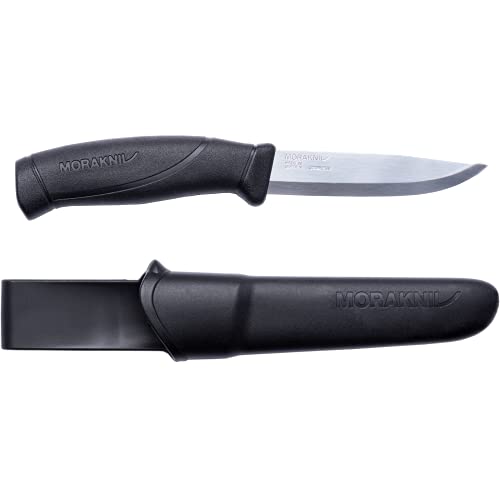
If you want a real fixed blade without the weight and price of a survival knife, I’d start here. It’s cheap, light for its size, comes with a sheath, and the grippy handle stays secure in wet hands. It’s also the knife I’d take for whittling tent stakes or splitting small kindling.

The Delica is the folder I’d choose for someone who wants to open and close a knife with gloves on or one hand busy. The big thumb hole, the solid back lock and the textured nylon handle make it easy to use when it’s cold, wet or dark.

Small, almost indestructible and made to hang around your neck where you can reach it without taking off your pack. I picked it for people who want the confidence of a fixed blade at folder weight, and who don’t mind a little care to keep carbon steel from rusting.

Even if you carry another knife, I’d find room for this one. At 21 grams it disappears in a hip belt pocket, and the tiny scissors are the tool you’ll actually reach for when trimming blister tape or a hangnail on day four.

For people who’d rather carry one tool than a knife plus gadgets. Two blades, a wood saw, screwdrivers and a can opener in under three ounces. It’s my choice for family camping and car-to-trailhead trips more than for counting grams.
Backpacking Knives Compared
| Knife | Type | Blade | Weight | Steel | Best for |
|---|---|---|---|---|---|
| Opinel No.8 | Folder (locking ring) | 3.35″ | about 1.6 oz | Sandvik 12C27 stainless | Most hikers |
| Benchmade Bugout | Folder (AXIS lock) | 3.24″ | 1.85 oz | CPM-S30V stainless | Ultralight, every day carry |
| Morakniv Companion | Fixed blade + sheath | 4.1″ | 3.9 oz with sheath | 12C27 stainless | Camp chores, budget |
| Spyderco Delica 4 | Folder (back lock) | about 2.9″ | about 2.5 oz | VG-10 stainless | One-hand use, wet weather |
| ESEE Izula | Fixed blade, neck carry | about 2.8″ | about 2 oz (knife only) | 1095 carbon | Tough, always reachable |
| Victorinox Classic SD | Keychain Swiss Army | Small pen blade | 0.7 oz | Stainless | Backup, first aid kit |
| Victorinox Hiker | Swiss Army, 13 functions | Two blades + saw | 2.7 oz | Stainless | Camping, one tool for all |
1. Opinel No.8 Stainless Steel Folding Knife: Best Overall
Who it’s for: almost every backpacker, from first overnight trips to long thru-hikes, who wants a light, honest folder that does the everyday trail jobs well.
The Opinel has been around since the 1890s, and the design has barely changed: a round beech handle, a thin blade and a twisting steel collar called the Virobloc that locks the blade open (or closed, so it can’t flop open in your pack). It’s about as simple as a folding knife gets, and on the trail I count that as a strength. There’s very little to break, jam or lose.
What puts it at the top for me is the ratio of weight to usefulness. At roughly 45 grams you get a 3.35-inch blade that is thin enough to slice a block of cheddar or an apple cleanly, which is what you’ll actually be doing with it most evenings. Thick “survival” blades wedge and crack food instead of slicing it. The stainless 12C27 version is the one I’d buy for hiking, because sweat, rain and salami grease don’t bother it.
My reservation is the handle. Beech is light and warm to hold, but wood takes on moisture. Many Opinel owners report that after a soaking the handle swells and the blade gets stiff to open, until everything dries out again. It’s a well-known quirk rather than a flaw, and a few drops of oil in the pivot and a dry storage bag go a long way. It also has no pocket clip and needs two hands to open, so it isn’t a quick-draw knife.
I like that this version now includes a faux-leather sheath, which makes it easy to hang off a hip belt instead of digging through pockets.
Key specs
- Blade: 3.35 inch (8.5 cm), Sandvik 12C27 modified stainless steel
- Open length: 7.5 inches
- Handle: beech wood from French managed forests
- Lock: Virobloc rotating safety ring
- Faux-leather sheath included; made in France
Pros
- Very light for a full-size blade
- Thin blade slices trail food better than thick outdoor knives
- Stainless steel copes with wet, sweaty conditions
- Cheap enough that losing it is not a disaster
Cons
- Wooden handle can swell when soaked, making the blade stiff to open
- Two-handed opening and no pocket clip
- Locking ring is fine for slicing, but this is not a knife for prying or batoning
My verdict: the first knife I’d put in a new backpacker’s kit. Skip it only if you need one-handed opening or plan to hike for days in constant rain.
2. Benchmade Bugout (535GRY-1): Best Ultralight Premium
Who it’s for: gram-counting hikers who also want a high-end everyday carry knife, and people who value a fast, one-handed folder.
The Bugout is the knife that convinced a lot of people a “real” folder could weigh less than two ounces. Benchmade lists it at 1.85 ounces with a 3.24-inch blade, which is nearly the same weight as the Opinel but with a pocket clip, a thumb stud for one-hand opening and the AXIS lock, a spring-loaded bar that is easy to release without putting your fingers in the blade path.
The steel is the other big upgrade. CPM-S30V is a premium powder steel hardened to 58 to 60 HRC, and in plain terms that means it stays sharp much longer than the softer stainless on the Opinel or the Mora. On a week-long trip without a sharpener, that matters. I also like Benchmade’s LifeSharp program: send it in and they’ll clean, oil and re-sharpen it for free for the life of the knife.
Two things hold it back from first place. It costs far more than my top pick, and I find it hard to justify for a knife that mostly cuts cheese and cord. And the thin Grivory handle saves weight partly by being slim; the most frequent criticism I read from Bugout owners is that the scales feel a bit flexy compared with metal-lined folders. For trail use that’s rarely a real problem, but it’s worth knowing before you pay this much.
Key specs
- Blade: 3.24 inch drop point, CPM-S30V stainless, 58 to 60 HRC, 0.09 inch thick
- Weight: 1.85 oz; closed length 4.22 inches
- Handle: Grivory (glass-filled nylon), ambidextrous
- Lock: AXIS; reversible deep-carry clip, lanyard hole
- LifeSharp free lifetime re-sharpening from Benchmade
Pros
- Exceptionally light for a full-featured folder
- Edge lasts a long time between sharpenings
- Smooth one-handed opening and a safe, easy lock
Cons
- Costs far more than every other knife here
- Slim plastic handle feels less rigid than heavier folders
- Harder steel takes more effort to sharpen in the field
My verdict: worth it if this will also be your pocket knife at home. If it only comes out on two trips a year, the Opinel gets you most of the way for much less money.
3. Morakniv Companion Stainless (4.1 Inch): Best Fixed Blade
Who it’s for: backpackers who build fires, carve, or simply prefer a fixed blade, and anyone on a tight budget.
The Mora Companion breaks my weight rule a little, and I kept it on purpose. Some trips call for a fixed blade: wet weather when you want to shave dry tinder from the inside of a stick, longer camps where you carve pot hangers or tent stakes, or just people who don’t trust folders. For those hikers, the Companion is the one I’d recommend, because it gives you a capable 4.1-inch Scandinavian blade for very little money.
Morakniv quotes 3.9 ounces including the plastic sheath. That’s heavier than the folders above, but much lighter than the chunky survival knives people often buy for hiking. The blade is 12C27 stainless, 2 mm thick, which is thin enough to slice food well and still strong enough for light wood work. The rubbery, high-friction handle is the part I rate most: cold, wet or greasy hands still get a secure grip.
The trade-offs are honest ones. The sheath is basic molded plastic with a belt clip, functional rather than nice. The tang doesn’t run the full length of the handle, so this isn’t a knife for hammering through logs (batoning), and if that’s your plan, my best bushcraft knife guide covers heavier options. For backpacking, though, I see that as the right call: more blade would mean more weight.
Key specs
- Blade: 4.1 inch (104 mm), 0.08 inch (2.0 mm) thick, hardened 12C27 stainless
- Overall length: 8.5 inches (217 mm)
- Weight: 3.9 oz (110 g) with sheath
- Handle: ergonomic polymer with soft friction grip and finger guard
- Polymer sheath with belt clip
Pros
- Remarkable value for a proper fixed blade
- Secure grip in wet or cold conditions
- Easy to sharpen, rust resistant
- Great for carving and tinder as well as food
Cons
- Heaviest knife on my list
- Plain plastic sheath
- Not a full tang, so not built for heavy batoning
My verdict: the best fixed blade for backpacking I know of at this price. Choose a folder instead if your knife only ever cuts food and cord.
4. Spyderco Delica 4 Lightweight: Best One-Hand Folder
Who it’s for: hikers in cold or wet places, anyone who wears gloves a lot, and people who want a well-built folder between the Opinel and the Bugout.
The original Delica appeared in 1990 and helped invent the modern lightweight clip folder, and the Delica 4 is still one of the most copied knives around. The reason I chose it for this list is how easy it is to use in bad conditions. The 13 mm hole in the blade is big enough to flick open with a gloved thumb, and the textured fiberglass-reinforced nylon handle is grippy without being rough.
VG-10 is a Japanese stainless steel that takes a very keen edge and resists rust well, which suits a knife that will live in a damp pocket for weeks. The blade is full flat ground, meaning it tapers evenly from spine to edge, so it slices food more like a kitchen knife than a thick outdoor blade. Spyderco lines it with skeletonized steel to keep it rigid while staying light, and the four-position clip lets you carry it tip-up or tip-down, on either side.
Spyderco‘s look splits people. The leaf-shaped blade and the hump for the hole are not everyone’s idea of a pretty knife, and I’ll admit I find it more functional than handsome. The back lock is very secure, but closing it one-handed takes some practice, and at just under three inches the blade is the shortest of the folders here.
Key specs
- Blade: about 2.9 inch, full flat ground VG-10 stainless
- Handle: fiberglass-reinforced nylon with Bi-Directional Texture, nested skeletonized steel liners
- Lock: back lock; 13 mm opening hole
- Four-position pocket clip
- Made in Japan
Pros
- Easy to open with gloves or wet hands
- Rust-resistant steel that takes a keen edge
- Very secure lock; flexible clip carry
Cons
- Shortest blade of the folders on my list
- Back lock is slower to close one-handed
- Looks are an acquired taste
My verdict: a superb trail folder if you hike where hands get cold and wet. If weight is your top priority, the Bugout saves a little; if price is, the Opinel saves a lot.
5. ESEE Izula: Best Neck Knife
Who it’s for: hikers who want a fixed blade they can wear around the neck, and anyone who wants a small knife that is nearly impossible to break.
The Izula is a tiny full-tang knife: one piece of 1095 carbon steel with a cut-out handle to save weight, in a molded sheath you can wear on a neck cord, clip to a pack strap or tuck in a pocket. Wearing a knife on your neck sounds odd until you try to reach a pocket knife buried under a hip belt and a rain jacket. Here it’s just there.
I picked it for how much toughness you get at folder weight. With no hinge and no lock, there’s nothing to fail, and the blade is thicker than anything else on my list. At around two ounces for the knife (plus a light sheath), it weighs about what the Delica does. It’s made in the USA, and ESEE has a strong reputation for standing behind its knives.
The catch is the steel. 1095 is a carbon steel: easy to sharpen and very tough, but it will rust if you put it away wet, and sweat from neck carry doesn’t help. Wipe it dry and add a touch of oil now and then, especially along the edge, and it will last for years. The bare skeleton handle is also small; many owners wrap it with paracord for a fuller grip, and I’d do the same.
Key specs
- Blade: about 2.8 inch, 1095 high-carbon steel
- Overall length: about 6.25 inches
- Weight: about 2 oz (knife only)
- Full tang, skeletonized handle
- Molded polymer sheath with clip plate; made in the USA
Pros
- Extremely tough for its size, no moving parts
- Always within reach on a neck cord
- Easy to sharpen in the field
Cons
- Carbon steel needs drying and oiling to avoid rust
- Small, bare handle is uncomfortable without a wrap
- Costs a lot for such a small knife
My verdict: the small fixed blade I’d trust most on a rough trip. Stick with a stainless folder if you know you won’t bother with rust care.
6. Victorinox Classic SD: Best Backup Under an Ounce
Who it’s for: ultralight hikers who want the bare minimum, and everyone else as a backup in the first aid kit.
This little Swiss Army knife is the most common “knife” I’d expect to see in a serious ultralight kit, and it isn’t because of the blade. The blade is small, fine for opening food packets, cutting cord or spreading peanut butter, but that’s it. The real reason is the scissors. Trimming blister tape, moleskin, gauze or a torn fingernail with a knife blade is awkward and a little risky. With scissors it takes seconds.
Add tweezers (splinters, and in tick country they’re welcome), a nail file and a tiny screwdriver, and you’ve got a surprising toolkit at 21 grams. Victorinox quality is also reliably good; the brand doesn’t make anything flashy, but its tools tend to work for decades.
Be realistic about what it won’t do. There’s no lock, the handle is too short for a full grip, and you won’t carve anything with it. I’d treat it as a backup or as the only tool for very light, well-trodden trips where you only need to cut packaging and tape.
Key specs
- 7 functions: small blade, scissors, nail file with screwdriver tip, tweezers, toothpick, key ring
- Size: 2.3 x 0.7 x 0.4 inches (58 x 18 x 9 mm)
- Weight: 0.7 oz (21 g)
- Scales: ABS/Cellidor; Swiss made
Pros
- Almost weightless
- Scissors and tweezers are genuinely useful on the trail
- Cheap and long-lasting
Cons
- Tiny blade, not a primary knife for most people
- No locking blade
My verdict: I’d put one in every first aid kit. Rely on it as your only knife only if your cutting needs are truly minimal.
7. Victorinox Hiker: Best for Camp Chores
Who it’s for: weekend campers, families and scout groups who want one tool for the knife jobs plus small repairs.
The Hiker is the bigger brother of the Classic SD, and it earns its place for a different reason. Victorinox packs 13 functions into it, and the ones that matter outdoors are the large blade, a small second blade, a wood saw, a can opener, a bottle opener and both flat and Phillips screwdrivers. That covers trimming a stick for a marshmallow, fixing a loose screw on a camp chair or trekking pole, and opening the can somebody forgot was not a pull-tab.
At 2.7 ounces it’s heavier than a single-blade folder, but lighter than carrying a knife plus a separate saw or screwdriver. I’d say it suits shorter trips with more gear and more people better than lean multi-day hikes, which is why it’s last here rather than higher.
The main limitation is the same as every classic Swiss Army knife: the blades don’t lock. That’s fine for normal slicing, but you have to be mindful of pressure toward the spine. The saw is small, good for sticks and thin branches rather than firewood.
Key specs
- 13 functions including large blade, small blade, wood saw, can opener, bottle opener, Phillips screwdriver
- Size: 3.6 x 1 x 0.6 inches (91 x 26 x 16 mm)
- Weight: 2.7 oz (77 g)
- Scales: ABS/Cellidor; Swiss made
Pros
- Replaces several small camp tools
- Saw is handy for sticks and small branches
- Trusted build quality
Cons
- Non-locking blades
- More tools (and weight) than a lean backpacker needs
- The saw is small and not for real firewood
My verdict: the right choice when you want versatility over minimum weight. Ultralight hikers should take the Classic SD instead.
What Actually Matters in a Backpacking Knife
Weight, measured honestly
Weight is where backpacking knives differ most from camping or survival knives. Anything from about one to three ounces is a sensible range for most hikers. Check whether the listed weight includes the sheath, since a fixed blade’s sheath can add a surprising amount. A knife that weighs half a pound feels harmless in the store and annoying by the second day.
Blade length: shorter than you think
For the real jobs on a backpacking trip (food, cord, tape, packaging, a bit of tinder), a blade between about 2.5 and 3.5 inches is plenty. Longer blades add weight and can run into local knife laws on some trails and parks, so check the rules where you hike. Only go to 4 inches or more if you plan to carve or process small wood regularly.
Folder or fixed blade
Folders are lighter and pocket-friendly, and for most backpackers I think they’re the better choice. Fixed blades are stronger, easier to clean, and quicker to use, but need a sheath and weigh more. A small neck knife like the Izula sits in between. If you’re weighing lock styles, my guide to folding knife lock types explains how the common ones compare.
Stainless or carbon steel
Your knife will get wet: rain, river crossings, sweaty pockets, greasy food. Stainless steels like 12C27, VG-10 and S30V handle that with little attention. Carbon steels like 1095 are tough and easy to sharpen, but rust if neglected. Harder steels hold an edge longer, while softer ones are easier to touch up with a small stone, which counts for more on a long trip than people expect.
Opening, grip and carry
Think about how you’ll use it with cold or gloved hands. A large thumb hole or stud helps, and a textured handle matters more than a pretty one. Then decide where it lives: pocket clip, hip belt sheath, neck cord or first aid kit. A great knife you can’t reach easily is the one you’ll stop using.
What I’d Actually Use It For on the Trail
It’s worth picturing the real tasks before you buy, because they’re humbler than knife marketing suggests:
- Food: slicing cheese, sausage, fruit and tortillas, and opening sealed meal bags. A thin blade wins.
- Repairs and first aid: cutting cord, tape, moleskin and gauze. Scissors are better still.
- Fire: shaving dry curls from a split stick when everything is wet. This is where a fixed blade like the Mora shines.
- Gear: trimming a frayed strap, opening packaging in town, tightening a screw.
Notice what’s missing: chopping trees, prying, self-defense. If your plan involves any of that, you’re shopping for a different kind of knife.
FAQ
Do I need a knife for backpacking at all?
Most people want one. You don’t need a big one, but cutting food, cord and tape without any blade is frustrating. A small folder or even a keychain Swiss Army knife covers the basics.
What is the best blade length for a backpacking knife?
About 2.5 to 3.5 inches suits almost everyone. It’s long enough for food and camp chores and keeps weight down. Check local knife laws if you plan to carry something longer.
Is a fixed blade or a folding knife better for hiking?
A folder is lighter and easier to carry, so it’s my default for most hikers. Choose a small fixed blade if you’ll make fires, carve, or want something tougher and easier to clean.
How much should a backpacking knife weigh?
Aim for roughly one to three ounces. Ultralight hikers often carry under an ounce, while a fixed blade with sheath will usually land between three and four.
Is a multi-tool better than a knife for backpacking?
For most trips, a simple knife plus small scissors is enough. A Swiss Army knife like the Hiker makes sense for camping trips where small repairs are likely. Full plier multi-tools are usually heavier than backpackers need.
How do I keep my knife sharp on a long trip?
Start with a properly sharp edge, and carry a small ceramic rod or pocket stone if you’ll be out more than a week. Wipe the blade dry each night, especially carbon steel. My guide on how to sharpen a pocket knife covers the technique.
Final Verdict
For most backpackers the Opinel No.8 is the best balance of weight, cutting ability and price. If you want the lightest premium folder and will carry it every day, go for the Benchmade Bugout. Need a fixed blade for fire and camp jobs without much weight or cost? The Morakniv Companion is hard to argue with. And whatever you choose, a Victorinox Classic SD in the first aid kit is the cheapest upgrade you can make.
Looking for a knife that also works off the trail? See my picks for the best folding knife under $100 and the best EDC knife under $100, or my overall best pocket knife picks.

Gary Portman founded knivesadvice.com in 2019. He learned to cook in his family’s kitchen as a kid and has used kitchen, pocket and outdoor knives ever since, from paring and fillet knives to survival blades he carries camping and hiking. He writes the site’s buying guides, brand reviews and sharpening how-tos to help readers find the right knife for the job. More about Gary.