
A budget flipper used to mean a gritty pivot, a wobbly blade and a tab that needed a hard flick of the wrist. Ball bearing pivots, D2 steel and properly tuned locks have since trickled down, and the best cheap flippers now feel better than expensive knives did ten years ago. The catch: plenty of Amazon’s “flipper knives” aren’t flippers at all, so every knife here opens with a real flipper tab and comes from a brand with a track record.
If you want one name, it’s the CIVIVI Mini Praxis, a smooth, pocket-friendly D2 flipper that feels far more expensive than it is. Need more blade? The full-size CIVIVI Praxis is the step up.
My Top 7 Flipper Knives Under $50
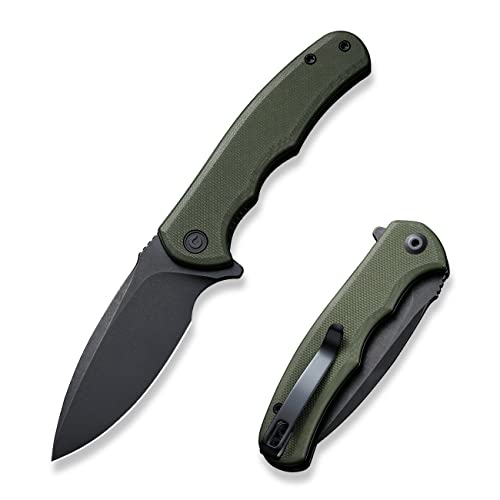
If a friend asked me for one cheap knife that still feels like a “real” knife, this is what I’d send them. The ceramic bearing pivot makes the flipper action quick and smooth, D2 steel holds an edge well, and the three-inch blade is just the right size for daily jobs without drawing looks.

Same idea as the Mini, but with a 3.75-inch blade and a handle that fills a large hand. I’d pick it for people who use a knife hard at work or outdoors and want reach and leverage, but still want it to ride flat in the pocket.

The Cryo is a small, dense knife with an all-steel handle and a spring that snaps the blade out the moment you touch the flipper. I like it for people who want something compact that feels solid and a little premium, designed by a well-known custom maker.

If you cut a lot of cardboard, plastic straps and packaging, the modified tanto blade on the Brawler makes sense to me. The strong, angular tip is great for piercing and scraping, the nylon handle is light, and the four-way clip suits almost any carry style.

For rope, webbing and zip ties, a few serrations near the handle help a lot, and this is the flipper I’d choose for that. The Clash has a chunky, grippy handle with a deep finger groove, which makes it feel safe for work use.

Left-handed, or just like options? The Phantara gives you both a flipper and a big thumb hole, plus a reversible clip. Sencut comes from the same parent company as Civivi, and this is a lot of knife for the money.

Ganzo has built a strong following among budget knife fans, and I think the FH91 shows why. D2 steel, G10 scales and a bearing pivot for very little money. It’s my pick for a beater knife you won’t cry over losing.
Flipper Knives Under $50 Compared
| Knife | Blade | Steel | Handle | Opening | Best for |
|---|---|---|---|---|---|
| CIVIVI Mini Praxis | 2.98″ | D2 | G10 | Manual, ceramic bearings | Everyday carry for most people |
| CIVIVI Praxis | 3.75″ | 9Cr18MoV | G10 | Manual, ball bearings | Big hands, work and outdoors |
| Kershaw Cryo | 2.75″ | 8Cr13MoV | Stainless steel | Assisted (SpeedSafe) | Compact, solid feel |
| Kershaw Brawler | 3″ | 8Cr13MoV | Glass-filled nylon | Assisted (SpeedSafe) | Boxes, straps, piercing |
| Kershaw Clash | 3.1″ | 8Cr13MoV, part serrated | Glass-filled nylon | Assisted (SpeedSafe) | Rope, webbing, work use |
| SENCUT Phantara | 3.7″ | 9Cr18MoV | G10 | Manual, flipper or thumb hole | Left-handers, big blade |
| Ganzo Firebird FH91 | about 3.5″ | D2 | G10 | Manual, ball bearings | Lowest cost beater |
1. CIVIVI Mini Praxis (D2, G10): Best Overall
Who it’s for: anyone who wants a smooth, reliable everyday flipper and doesn’t want to spend much.
CIVIVI is the more affordable sister brand of WE Knife Co., a factory known for high-end folders, and the Mini Praxis is a good example of how much of that know-how filters down. The blade is a 2.98-inch drop point in black stonewashed D2, a tool steel that holds an edge noticeably longer than the 8Cr13MoV found on many budget knives. It’s not as rust-proof as true stainless, so I’d wipe it down after cutting anything wet or acidic, but for daily use that’s a small price.
The heart of a good flipper is the action, and this is where the Mini Praxis earns the top spot. CIVIVI uses a ceramic ball bearing pivot with a well-tuned detent (the small ball that holds the blade closed until you push hard enough on the flipper). The result is a blade that stays shut in your pocket but fires open cleanly with a light press. That combination is harder to get right than it sounds, and many cheap flippers miss it.
The G10 handle is smooth but grippy, resistant to moisture and light enough that the knife disappears on a pocket clip. Three inches of blade is my sweet spot for everyday carry: big enough to break down boxes and slice an apple, small enough to not look aggressive in an office.
My reservation is that the Mini Praxis can feel a little small if you have big hands or plan to use it for heavy outdoor work. That’s what the full-size Praxis below is for.
Key specs
- Blade: 2.98 inch, black stonewashed D2 steel
- Handle: G10
- Pivot: ceramic ball bearings, flipper opening
- Pocket clip
- Lifetime service against defects; USA service center
Pros
- Smooth, snappy flipper action for the price
- D2 steel holds an edge longer than most budget steels
- Comfortable, office-friendly size
Cons
- D2 isn’t fully stainless, so dry it after wet jobs
- Can feel small in large hands
My verdict: the best all-round flipper you can buy for this kind of money. Go bigger only if your hands or your jobs demand it.
2. CIVIVI Praxis (3.75 Inch, G10): Best Full-Size
Who it’s for: people with larger hands, and anyone who uses a pocket knife for real work, camping or yard jobs.
The full-size Praxis is the knife that made the design popular, and it’s easy to see why. The 3.75-inch blade gives you real reach, and the handle is long enough for a full four-finger grip, which makes heavier cuts feel more controlled and safer. Despite that size, it’s slim and flat enough that it carries better than you’d expect; it doesn’t feel like a brick on a clip.
The blade is a thin, 0.12-inch flat ground drop point with a fine point, so it slices and pierces well instead of wedging through material. This version uses 9Cr18MoV stainless steel, a sensible budget choice to my mind: it resists rust better than D2 and is easy to sharpen, though it won’t hold its edge quite as long. Bearings in the pivot keep the flipper action smooth, and the deep-carry clip is reversible.
The downside is the obvious one. A 3.75-inch blade is a lot of knife for city carry, and in some places it may run into local blade length limits, so check the rules where you live. It’s also noticeably heavier than the Mini.
Key specs
- Blade: 3.75 inch flat ground drop point, 9Cr18MoV stainless, 0.12 inch thick
- Handle: G10 over stainless liners
- Lock: liner lock; ball bearing pivot, flipper opening
- Reversible deep-carry pocket clip
- Lifetime guarantee against defects
Pros
- Full-size grip and reach for real work
- Thin blade slices well
- Stainless steel that’s easy to sharpen
Cons
- Large for office or city carry
- Steel won’t hold an edge as long as D2
- Heavier than the Mini Praxis
My verdict: the flipper I’d carry for outdoor and work use on a budget. For everyday pocket carry in town, the Mini is the better fit.
3. Kershaw Cryo (Rick Hinderer Design): Best Assisted Opener
Who it’s for: people who want a compact, very solid-feeling knife that opens with a spring assist.
The Cryo was designed with Rick Hinderer, a custom knifemaker known for high-end folders, and you can see his style in the chunky steel handle and the sturdy lock. It’s a small knife at 6.5 inches open with a 2.75-inch blade, but at 4.1 ounces it’s dense. Some people love that reassuring weight; others will find it heavy for the size.
The big difference from the CIVIVI knives is Kershaw’s SpeedSafe assisted opening. You start the blade with the flipper (or the thumb stud) and a torsion spring takes over and snaps it open. It’s fast and very consistent, and I think it’s especially good for people who struggle to get the flick right on a manual flipper. Assisted knives are generally treated differently from automatic knives under US law, but rules vary, so check your local laws.
The blade is 8Cr13MoV, a common budget stainless that is easy to sharpen but needs touching up more often than D2. Both blade and handle get a coating for added protection, and you can set the clip up four different ways.
Key specs
- Blade: 2.75 inch drop point, 8Cr13MoV stainless, carbo-nitride coating
- Handle: contoured stainless steel
- Opening: SpeedSafe assisted, flipper or thumb stud
- 6.5 inches open; 4.1 oz
- Pocket clip for left or right, tip-up or tip-down
Pros
- Fast, consistent assisted opening
- Tough, premium-feeling steel build
- Very compact in the pocket
Cons
- Heavy for its size
- Steel handle can feel slick
- Edge needs more frequent sharpening than D2
My verdict: my favorite assisted flipper under $50 if you like a dense, metal knife. If you want light weight, choose a G10 or nylon handled knife instead.
4. Kershaw Brawler: Best Tanto
Who it’s for: warehouse and delivery workers, DIYers and anyone who does a lot of piercing and scraping.
The Brawler is the work knife on this list. Its modified tanto blade has an angled, reinforced tip that is stronger than a slim drop point, which matters when you stab into a box, pry at packaging or scrape tape. The straight edge also makes long, controlled cuts through cardboard easy.
The handle is glass-filled nylon over steel liners, curved to lock your hand in place, and it keeps the knife light at 3.9 ounces. Like the Cryo, it uses SpeedSafe assisted opening, and you can fire it with either the flipper tab or the thumb studs. The four-position deep-carry clip is a nice touch at this price.
My honest reservation is the shape itself. A tanto is great for utility work, but less good for slicing food or whittling, and the black oxide finish will wear with use. It’s a tool rather than a looker.
Key specs
- Blade: 3 inch modified tanto, 8Cr13MoV stainless, black-oxide finish
- Handle: glass-filled nylon, curved
- Opening: SpeedSafe assisted; liner lock
- 7.1 inches open; 3.9 oz
- 4-position deep-carry clip
Pros
- Strong tip for piercing and scraping
- Light, grippy handle
- Flexible clip options
Cons
- Tanto shape is less handy for food and fine slicing
- Black finish shows wear over time
My verdict: a great work flipper for boxes and packaging. Pick a drop point instead if you also want it for food or outdoor jobs.
5. Kershaw Clash (Black, Serrated): Best Partly Serrated
Who it’s for: anyone who regularly cuts rope, webbing, cable ties or other tough, fibrous material.
Serrations are a bit unfashionable among knife enthusiasts, but I think they’re underrated for work knives. A plain edge slips on slick rope and webbing; the teeth near the handle grab and saw through it. The Clash puts those serrations on the back third of a 3.1-inch drop point blade and leaves the front plain for normal cutting, which is a sensible split.
What makes it feel trustworthy to me is the handle. It’s a beefy glass-filled nylon grip with a deep index-finger groove, so your hand stays put even when you’re bearing down. Kershaw’s SpeedSafe assist and a built-in flipper make one-handed opening easy, and a liner lock holds the blade in place. Kershaw backs it with a limited lifetime warranty.
Two things to know. Serrations are harder to sharpen at home and need a tapered rod rather than a flat stone. And at 4.3 ounces with a chunky handle, it’s not a slim knife.
Key specs
- Blade: 3.1 inch drop point, partially serrated, 8Cr13MoV, black-oxide coating
- Handle: glass-filled nylon with deep finger groove
- Opening: SpeedSafe assisted with flipper; liner lock
- 7.5 inches open, 4.25 closed; 4.3 oz
- Limited lifetime warranty
Pros
- Serrations make quick work of rope and webbing
- Very secure, work-friendly grip
- Low price
Cons
- Serrations are harder to sharpen
- Bulky handle
- Coating will wear with use
My verdict: the right flipper if your daily cutting is rope, straps and ties. For general carry, a plain edge is easier to live with.
6. SENCUT Phantara (3.7 Inch): Best Ambidextrous
Who it’s for: left-handed carriers, and anyone who wants a big blade with more than one way to open it.
Most budget flippers are set up for right-handed users first. The Phantara is friendlier to lefties: you can open it with the flipper or with a large thumb hole from either side, and the pocket clip can be swapped to suit either hand. Sencut is part of the same company as CIVIVI and WE Knife, aimed at an even lower price point.
The 3.7-inch 9Cr18MoV blade is long, and the textured G10 handle has chamfered edges, so it’s more comfortable to hold for long periods than many cheap knives with sharp, square edges. A caged ceramic bearing pivot keeps the action smooth.
My reservations: a blade this long is more than many people need day to day. 9Cr18MoV is easy to sharpen and resists rust well, but won’t hold its edge as long as D2.
Key specs
- Blade: 3.7 inch, 9Cr18MoV stainless
- Handle: textured G10, chamfered edges
- Opening: flipper or thumb hole; caged ceramic ball bearing pivot
- Reversible pocket clip
Pros
- Two opening methods, good for left-handers
- Comfortable chamfered handle
- Big blade for the price
Cons
- Large for everyday city carry
- Edge retention is only average
My verdict: a smart buy for lefties and people who want a big, versatile flipper. Right-handers who want a large blade may still prefer the Praxis.
7. Ganzo Firebird FH91 (D2, G10): Best Budget Beater
Who it’s for: anyone who wants a capable flipper for the glovebox, the toolbox or a first knife, at the lowest sensible price.
Ganzo, and its Firebird line, has been a go-to name for budget knife buyers for years. It’s a big Chinese maker that sells under its own name rather than as a nameless listing, and that’s a real distinction at this price. The FH91 packs in features you used to pay much more for: a D2 steel blade rated at 60 HRC, G10 handle scales, a ball bearing pivot and a flipper tab, with dual thumb studs as a backup.
D2 at this hardness holds an edge well, though, as with the Mini Praxis, it needs drying after wet jobs to prevent spotting. The G10 handle is grippy and won’t mind sun, water or sweat, and the deep-carry clip keeps it low in the pocket.
Where you see the savings is in the details: fit and finish are a step below CIVIVI, and Ganzo’s warranty is a year rather than a lifetime. For a knife you’ll use hard, lend out or leave in a truck, that trade-off is easy to accept.
Key specs
- Blade: about 3.5 inch drop point, D2 steel, 60 HRC
- Handle: G10 with deep-carry pocket clip
- Opening: flipper with ball bearings, plus dual thumb studs
- Lock: liner lock
- 1-year warranty
Pros
- Very low price for D2 and G10
- Smooth bearing pivot
- Good backup or beater knife
Cons
- Fit and finish below CIVIVI
- Short warranty
- D2 needs drying to avoid rust spots
My verdict: the cheapest flipper on this list that I’d happily recommend. If you can stretch to the Mini Praxis, you’ll get a more refined knife.
What Makes a Budget Flipper Good (or Bad)
Action and detent
A flipper is only as good as its action. You want a firm detent that keeps the blade closed until you press with intent, and a smooth pivot (bearings or a well-made washer) that lets the blade swing fully open with a light push. A weak detent means sluggish, half-open blades; one that’s too strong makes the knife tiring to open.
Manual or assisted
Manual flippers rely on your flick and a good pivot. Assisted openers, like Kershaw’s SpeedSafe, use a spring to finish the job once you start it, which is easier for beginners and very consistent. Assisted knives are generally legal in more places than automatic knives, but laws vary, so always check where you live and carry.
Lock
Liner locks and frame locks are the most common on budget flippers. Both are fine for everyday tasks if they engage fully and don’t slip under pressure. My guide to folding knife lock types explains the differences in more detail.
Steel
Under $50 you’ll mainly see 8Cr13MoV, 9Cr18MoV and D2. The first two are stainless, easy to sharpen and forgiving; D2 holds an edge longer but can rust if neglected. None will match premium steels, but all are perfectly usable if you keep them sharp.
Size and handle
About three inches is the sweet spot for daily carry; go to 3.5 inches or more for outdoor and work use. G10 and glass-filled nylon handles are light and grippy, while steel handles feel solid but add weight.
Keeping a Cheap Flipper Running Like New
A budget flipper can feel great for years with a little attention:
- Keep the pivot clean. Pocket lint and grit are what make flippers sluggish. Blow out the pivot and add a drop of light oil now and then. My guide on how to clean a pocket knife walks through it.
- Check the pivot screw. If the blade starts to wobble, a gentle quarter turn of the pivot screw usually fixes it. Too tight and the action slows down.
- Sharpen little and often. Budget steels are easy to touch up. See how to sharpen a pocket knife.
- Don’t pry with it. Folding knife tips and locks aren’t designed for prying. Use a screwdriver.
FAQ
What is a flipper knife?
It’s a folding knife with a small tab (the flipper) on the back of the blade. Pressing the tab with your index finger swings the blade open, and when the knife is open the tab often doubles as a finger guard.
Are flipper knives legal?
Manual and assisted flippers are legal to own in most US states, but carry laws on blade length and opening type vary by state and city. Assisted openers are generally not classed as switchblades, but check your local rules before carrying.
Is a flipper better than a thumb stud?
Flippers are usually quicker and keep your thumb away from the edge as the blade opens. Thumb studs and holes are simpler and work well with either hand. Many knives, like the Brawler and Phantara, offer both.
Is D2 steel good for a budget knife?
Yes. D2 holds an edge longer than most budget stainless steels, which is why it’s popular under $50. It’s less rust-resistant, so wipe it dry after wet use.
Why won’t my flipper pocket knife open or close properly?
Usually a dirty pivot, a pivot screw that’s too tight, or a weak flick. Clean and oil the pivot, loosen the screw slightly, and press the tab firmly and quickly. If a knife still won’t close properly, see my guide to fixing a pocket knife that won’t close.
Final Verdict
The CIVIVI Mini Praxis is the best flipper knife under $50 for most people: smooth, sharp and the right size for everyday carry. If you want a bigger knife for work and outdoor use, step up to the full-size CIVIVI Praxis. And if a spring-assisted, all-steel knife appeals to you, the Kershaw Cryo is the one I’d choose.
Willing to spend a bit more? My picks for the best folding knife under $100 are the natural next step, and if you want something smaller and lighter for daily carry, see my best EDC knives under $100. My best pocket knife guide puts flippers next to every other kind of folder.

Gary Portman founded knivesadvice.com in 2019. He learned to cook in his family’s kitchen as a kid and has used kitchen, pocket and outdoor knives ever since, from paring and fillet knives to survival blades he carries camping and hiking. He writes the site’s buying guides, brand reviews and sharpening how-tos to help readers find the right knife for the job. More about Gary.