
Most people who search for the best kitchen knives are really asking which knives to buy, and the answer is fewer than the block sets suggest. A home kitchen runs on a chef’s knife (or a santoku), a small paring knife and a serrated bread knife. Everything else, from a nakiri to a carving knife, earns its place only if you cook the food it’s made for. A twelve-slot block with eight steak knives looks generous, yet most of those slots never get touched.
That’s also why the best choice isn’t one brand. The ideal chef’s knife and the ideal bread knife come from different makers, and a great paring knife doesn’t need to cost much at all. So this list is built by job: one knife per task, the one I’d buy at any budget, mixing Japanese blades where thin, hard steel helps and German or American ones where toughness matters more.
If you buy only one, make it the MAC MTH-80 Professional 8-Inch Chef’s Knife. Prefer a shorter, flatter blade? The WÜSTHOF Classic 7-Inch Santoku does the same work.
My Top 7 Kitchen Knife Picks

Thin, light and very sharp, with dimples that stop potato slices clinging. It’s the chef’s knife Japanese-knife fans recommend to people who have only used heavy German blades, and it rarely disappoints.
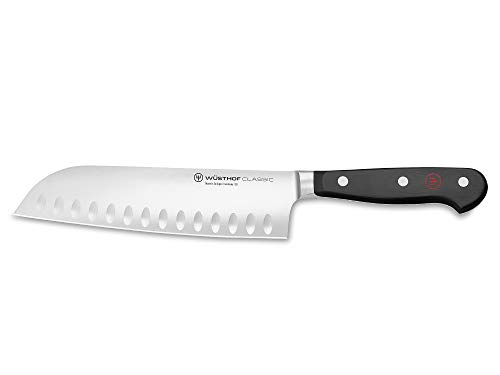
A forged German santoku: flatter and shorter than a chef’s knife, tough enough to shrug off a careless cut. Ideal if you chop straight down instead of rocking.

A flat, squared-off blade that lands flat on the board in one motion. If most of your dinners start with a pile of vegetables, it turns chopping into a pleasure.
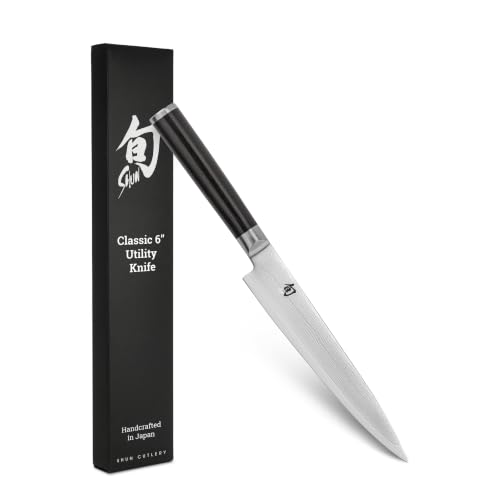
The in-between knife for sandwiches, cheese, shallots and trimming small cuts of meat. Sharp enough that you’ll grab it more often than you expect.

A forged paring knife from a brand used in culinary schools, at a small-knife price. Proof that the best knife for a job isn’t always an expensive one.
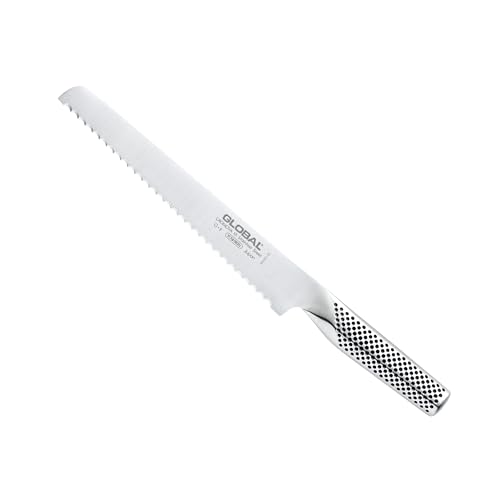
Light, one-piece steel and a crisp serrated edge for crusty loaves and tomatoes. It suits a cook who already likes the feel of a Global.
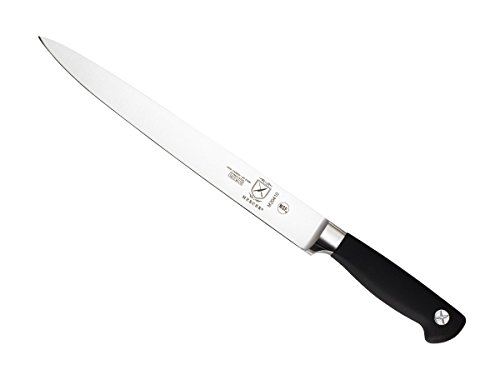
A long, narrow forged blade for roasts, turkey and ham, with a grippy handle that holds up to greasy hands. The knife that makes holiday carving look easy.
Kitchen Knives Compared
| Knife | Job | Blade | Style | Handle | Best for |
|---|---|---|---|---|---|
| MAC MTH-80 Professional | Chef’s knife | 8″ (200 mm), dimpled | Japanese, thin | Riveted, Western style | Everyday cooking with a light knife |
| WÜSTHOF Classic Santoku | Santoku | 7″, forged | German | Triple-riveted synthetic | Chopping and push cuts |
| Shun Classic Nakiri | Vegetable knife | 6.5″, VG-MAX, Damascus clad | Japanese | D-shaped Pakkawood | Vegetable-heavy cooking |
| Shun Classic Utility | Utility knife | 6″, VG-MAX | Japanese | D-shaped Pakkawood | Sandwiches, cheese, small prep |
| Mercer Renaissance Paring | Paring knife | 3.5″, forged | German steel | Triple-riveted synthetic | Peeling, trimming, garnish work |
| Global G-9 Bread Knife | Bread knife | 8.75″, serrated | Japanese | Dimpled stainless steel | Crusty bread, tomatoes |
| Mercer Genesis Carving | Carving knife | 10″, forged, taper-ground | German steel | Non-slip synthetic | Roasts, poultry, ham |
1. MAC MTH-80 Professional 8-Inch Chef’s Knife: Best Chef’s Knife
Who it’s for: home cooks who want one chef’s knife that feels light and cuts with almost no effort.
The MTH-80 is a Western-shaped chef’s knife from Japanese maker MAC, with a blade about 7.8 inches long. It’s thinner behind the edge than a German knife, so it glides through onions and carrots instead of wedging them apart. The row of dimples along the blade breaks the suction that makes wet slices cling.
I picked it as the top kitchen knife because it suits the widest range of cooks. It’s light enough that long prep sessions don’t tire your wrist, but its blade profile has enough curve to rock through herbs the way people raised on German knives expect.
My reservation is the usual one with thin Japanese steel: it doesn’t forgive abuse. No bones, no frozen blocks of anything, no glass boards, and use a whetstone or a guided sharpener rather than a pull-through. If those rules sound like too much, the santoku below is tougher.
Key specs
- Blade: 200 mm (7.8 inches), dimpled (hollow) edge
- Steel: molybdenum vanadium stainless
- Style: Western-shaped Japanese chef’s knife
- Series: MAC Professional (MTH-80)
Pros
- Light, thin and very sharp
- Dimples reduce sticking
- Familiar Western profile
Cons
- Thin edge can chip if misused
- Needs gentle sharpening methods
My verdict: the chef’s knife I’d put in most kitchens. Choose a heavier German knife only if you cut through bone or prefer weight doing the work.
2. WÜSTHOF Classic 7-Inch Santoku: Best Santoku
Who it’s for: cooks who chop straight down rather than rocking, and anyone who wants a tough, shorter main knife.
Compared with a chef’s knife, a santoku is flatter along the edge and ends in a rounded, sheep’s-foot tip, which makes it great for push cuts and thin, even slices. This one is WÜSTHOF’s Classic line: forged from one piece of stainless steel, full tang, triple-riveted handle, made in Solingen. It gives you the santoku shape with German toughness.
I like it for households that share one knife. Softer German steel bends rather than chips, so the occasional twist in a squash or a slip onto the counter won’t ruin it, and a honing steel brings the edge back quickly. My santoku vs chef’s knife comparison explains which shape suits your cutting style.
The flat edge doesn’t rock well, so herb mincing is slower than with a chef’s knife. And WÜSTHOF says hand wash only.
Key specs
- Blade: 7 inches, forged from one piece of stainless steel
- Full tang, triple-riveted handle
- Classic line, WÜSTHOF, Solingen, Germany
- Hand wash only
Pros
- Tough, forgiving German steel
- Great for push cuts and thin slices
- Comfortable, classic handle
Cons
- Poor for rocking cuts
- Heavier than a Japanese santoku
My verdict: the main knife for choppers and busy shared kitchens. Rockers should stay with the MAC.
3. Shun Classic 6.5-Inch Nakiri: Best Vegetable Knife
Who it’s for: vegetarians, stir-fry cooks and anyone who preps a lot of produce.
A nakiri’s dead-straight edge meets the board along its full length, so a cut through a scallion or a cabbage leaf goes all the way through with no connected pieces left behind. The tall, squared blade also makes a handy scoop for moving chopped food to the pan.
Shun’s Classic line is a good place to try the shape. Under the rippled Damascus pattern sits a hard VG-MAX core, the edge is ground to 16 degrees, and the D-shaped Pakkawood handle suits left and right hands. It’s made in Japan, and Shun offers free sharpening, which helps if you’ve never maintained hard steel. I go deeper on the shape in my best nakiri knife guide.
It’s a specialist. No meat on bone, no hard winter squash, no rocking. It sits beside your chef’s knife; it doesn’t replace it.
Key specs
- Blade: 6.5 inches; VG-MAX steel inside 68 Damascus layers
- Edge: 16 degrees
- Handle: D-shaped Pakkawood
- Handcrafted in Japan; free sharpening from Shun
Pros
- Clean, complete vegetable cuts
- Very sharp out of the box
- Free sharpening service
Cons
- Vegetables only
- Hard steel can chip on bone or frozen food
My verdict: worth it if vegetables fill most of your board. Occasional salad makers can skip it.
4. Shun Classic 6-Inch Utility Knife: Best Utility Knife
Who it’s for: cooks who keep reaching for a chef’s knife for small jobs and find it clumsy.
A utility knife sits between a paring knife and a chef’s knife. At 6 inches it slices a bagel, a block of cheddar or a chicken breast without the reach of an 8-inch blade, and it’s the knife most people use for quick lunches and snacks.
The Shun version is the same VG-MAX, Damascus-clad, 16-degree recipe as the nakiri, which is why I paired them: if you like one, the other feels familiar. It’s noticeably sharper than the utility knives that come in most block sets, and that sharpness is what makes a small knife useful rather than frustrating.
The trade-off is care. It’s a hand-wash, no-bones knife, and Shun recommends a whetstone or its own sharpening service. My guide to sharpening Shun knives covers both.
Key specs
- Blade: 6 inches; VG-MAX inner steel, 68 layers of Damascus outside
- Edge: 16 degrees
- Handle: D-shaped Pakkawood, ambidextrous
- Handcrafted in Japan
Pros
- Handy size for everyday small tasks
- Very sharp, holds its edge well
- Matches the nakiri if you buy both
Cons
- Costs more than most utility knives
- Needs careful washing and sharpening
My verdict: a small luxury that you’ll use daily. If you rarely cut sandwiches or cheese, your paring knife can cover this role.
5. Mercer Culinary Renaissance 3.5-Inch Paring Knife: Best Paring Knife
Who it’s for: everyone. A paring knife is the second knife every kitchen needs.
Paring knives do fiddly work in the hand: peeling apples, hulling strawberries, deveining shrimp, trimming green beans. They don’t need premium steel to do it well, and this is where I’d save money. The Renaissance is forged from high-carbon German steel, with a triple-riveted handle and a rounded spine that’s kind to your index finger.
Across the buying guides on this site, the point I repeat most is that grip matters more than steel on small knives, and this one has a full, comfortable handle instead of the thin stick many cheap parers use.
It’s hand wash only, like any forged knife. And a forged bolster on a paring knife makes the very back of the edge a little harder to sharpen.
Key specs
- Blade: 3.5 inches, forged high-carbon German steel
- Triple-riveted ergonomic handle, rounded spine
- Mercer Culinary Renaissance series
- Hand wash only
Pros
- Forged build at a small price
- Comfortable, full-size handle
- Easy to keep sharp
Cons
- Not dishwasher safe
- Bolster makes heel sharpening fiddly
My verdict: the paring knife I’d buy first. Spend the savings on the chef’s knife.
6. Global G-9 8.75-Inch Bread Knife: Best Bread Knife
Who it’s for: bakers and sandwich makers who like a light knife with a modern look.
A bread knife is the one serrated knife most kitchens need. Global’s G-9 is light and well balanced, made from molybdenum/vanadium stainless steel, with the brand’s one-piece look: blade and hollow steel handle, dimpled for grip. At 8.75 inches it handles sandwich loaves, baguettes and most homemade sourdough.
I picked it because the serrations bite cleanly into hard crust and soft tomato skins alike, and the knife’s low weight makes slicing a whole loaf less tiring than with a heavy forged bread knife.
The handle is the deciding factor. Global’s steel handles are loved or disliked, and with wet or floury hands they’re more slippery than a textured plastic handle. Hold one in a shop if you can. Very large round loaves may also need a longer blade.
Key specs
- Blade: 8.75 inches (22 cm), serrated
- Steel: molybdenum/vanadium stainless
- Handle: stainless steel, molded and dimpled
- Global lifetime warranty against defects and breakage
Pros
- Light and well balanced
- Clean cuts through crust
- Easy to clean, no handle seams
Cons
- Steel handle can feel slippery
- Short for big boules
My verdict: a lovely bread knife if the Global handle suits you. If it doesn’t, a plastic-handled serrated knife is the safer buy.
7. Mercer Culinary Genesis 10-Inch Carving Knife: Best Carving Knife
Who it’s for: anyone who roasts a chicken on Sundays or carves a turkey once a year.
A chef’s knife can carve, but a long, narrow blade does it better: less drag, longer strokes and neater slices. The Genesis is a forged blade of high-carbon German steel whose edge is taper-ground, and its 10-inch length covers a whole turkey breast or a pork loin in one pass.
The handle is why I like it for this job. Carving means fat and juice on your hands, and the Genesis grip stays secure when wet. It’s the same reason so many restaurant cooks use Mercer.
It’s a once-in-a-while knife for most homes, so don’t buy it before you have the basics. Hand wash it and keep it in a sheath or slot; a 10-inch blade loose in a drawer is a hazard.
Key specs
- Blade: 10 inches, forged; high-carbon German steel; taper grind
- Non-slip ergonomic handle
- Mercer Culinary Genesis series
- Hand wash only
Pros
- Long, narrow blade for clean slices
- Secure grip with greasy hands
- Forged at a modest price
Cons
- Only useful if you cook roasts
- Long blade needs safe storage
My verdict: the carving knife for regular roasters. Everyone else can carve with the chef’s knife.
Which Kitchen Knives Do You Actually Need?
Start with one main knife
Buy a chef’s knife or a santoku first: it will do most of your cutting. A chef’s knife rocks and handles bigger food; a santoku is shorter and better at straight chopping. Spend the most money here.
Add a small knife and a serrated one
Those two cover what a main knife does badly: small in-hand work and anything with a crust. With these three you have a complete kitchen, and my kitchen knives under $100 guide shows how to fill the same gaps on a small budget.
Then buy specialists for the food you cook
A nakiri if you prep lots of vegetables, a utility knife if you make many sandwiches, a carving knife if you roast often, a boning knife if you break down chicken. Skip anything you’d use twice a year.
Mix Japanese and German on purpose
Japanese knives are thinner and harder: sharper, longer-lasting edges, but they chip when twisted in food or knocked against bone. German knives are softer and tougher, and a honing steel keeps them going. Use Japanese blades for clean slicing and German ones for rough jobs. My German vs Japanese knives comparison goes deeper.
Pick handles before steel
A knife that slips or pinches will annoy you every day, whatever its steel. Textured synthetic handles are the safest with wet hands; Pakkawood is comfortable but smoother; bare steel is the slipperiest.
Individual knives usually beat a big set
Block sets pad the count with steak knives and shears. If you’d rather have everything matched, a small starter set is better value than a 15-piece block; my best knife sets guide compares both approaches.
FAQ
What are the best kitchen knives to buy?
The best kitchen knives are a good chef’s knife, a parer and a serrated bread knife, chosen individually. My picks are the MAC MTH-80 chef’s knife, the Mercer Renaissance paring knife and the Global G-9 bread knife. Add specialist knives only for food you cook often.
What 3 knives does every kitchen need?
A chef’s knife (or santoku) for most cutting, a paring knife for small in-hand work, and a serrated bread knife for crusts and tomatoes. Those three cover nearly every home cooking task.
Are expensive kitchen knives worth it?
For your main knife, often yes: better steel and balance make daily cooking easier. For paring, carving and bread knives, mid-priced knives perform almost as well. Spend on the knife you use most.
Should I buy individual kitchen knives or a set?
Individual knives, for most people. You get the best knife for each job instead of one brand’s version of everything, and you skip the filler. A small starter set is the exception if matching looks matter to you.
Are German or Japanese kitchen knives better?
Neither is better overall. Japanese knives are thinner and sharper but more brittle; German knives are heavier, tougher and easier to maintain. Many good kitchens use both.
How long do good kitchen knives last?
Decades, if you hand wash them, use a wood or plastic board and sharpen them properly. Dishwashers, glass boards and pull-through sharpeners are what shorten a knife’s life.
Final Verdict
The MAC MTH-80 is the kitchen knife I’d buy first: light, sharp and easy to live with if you treat it kindly. Cooks who want toughness over finesse should start with the WÜSTHOF Classic santoku instead, and the Mercer Renaissance paring knife is the cheapest big upgrade most kitchens can make. Add the nakiri, utility, bread or carving knife only when your cooking asks for it.
Shopping on a tighter budget for your main knife? See my chef knives under $100 guide.

Gary Portman founded knivesadvice.com in 2019. He learned to cook in his family’s kitchen as a kid and has used kitchen, pocket and outdoor knives ever since, from paring and fillet knives to survival blades he carries camping and hiking. He writes the site’s buying guides, brand reviews and sharpening how-tos to help readers find the right knife for the job. More about Gary.