
A slip joint is the pocket knife your grandfather probably carried: no lock, no button, no flipper. A stiff backspring holds the blade open and closed, and you open it two-handed with a thumbnail in the nail nick. It sounds old-fashioned, and it is, but that’s the appeal. Slip joints are slim, light and polite in a pocket, they come in dozens of classic patterns, and they make some of the nicest knife gifts you can buy.
The trade-off is that the blade can close if you push on its spine, so a slip joint is a cutting tool, not a prying or stabbing tool. Used that way, it’ll handle boxes, twine, apples and whittling for decades. In places where locking knives are restricted, a small non-locking folder is often the legal choice too.
The one I’d steer most people to is the Case Trapper in amber jigged bone, the classic two-blade pattern from Bradford, Pennsylvania. On a smaller budget, the Bear & Son 1095 Barlow is the one I’d carry.
My Top 6 Slip Joint Knife Picks

If someone asks me for one traditional knife, it’s a Case Trapper. A clip blade for fine work and a spey blade for slitting and trimming, jigged bone scales and Tru-Sharp stainless that won’t rust in a damp pocket. It looks like a gift even before you wrap it.

The Barlow, with its long bolster, is one of the oldest patterns, and this one is made in Alabama with a 1095 carbon blade that sharpens in a few strokes. Simple, tough and easy on the wallet.

Three blades (clip, spey and sheepsfoot) in a 3.25 inch handle that weighs 1.9 ounces. A small stockman-style knife that disappears in a pocket and comes with Buck’s Forever Warranty.

Four blades for very little money: a fine clip point, a sheepsfoot, a wharncliffe and a pen blade. The wharncliffe and the small blades make it a handy whittling and odd-jobs knife.

One long blade and a big, plain handle: the Sod Buster is a farm and workshop knife, not a jewelry piece. If you only ever use the main blade on a multi-blade knife, buy this instead.
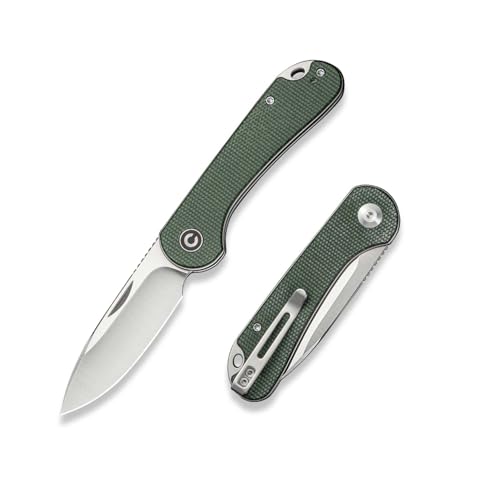
A modern take: a 2.96 inch 14C28N blade, Micarta scales and a reversible pocket clip, but still a nail nick and no lock. For someone who wants traditional manners with modern carry.
Slip Joint Knives Compared
| Knife | Pattern | Blades | Steel | Handle | Best for |
|---|---|---|---|---|---|
| Case Trapper 6254 SS | Trapper | Clip + spey | Tru-Sharp stainless | Amber jigged bone | First traditional knife, gifts |
| Bear & Son Barlow | Barlow | Clip point | 1095 carbon, 58 to 60 HRC | Yellow Delrin | Easy sharpening, US-made value |
| Buck 373 Trio | Small stockman style | Clip, spey, sheepsfoot | 420J2 stainless | Burlwood inlay | Light pocket carry |
| Old Timer 44OT Workmate | Four-blade utility | Clip, sheepsfoot, wharncliffe, pen | High carbon stainless | Sawcut | Whittling, odd jobs |
| Case Sod Buster Jr 2137 SS | Sod Buster | Skinner-style single blade | Tru-Sharp stainless | Black synthetic | Work and chores |
| CIVIVI Elementum Slip Joint | Modern slip joint | Single, 2.96″ | 14C28N stainless | Micarta, pocket clip | Modern carry without a lock |
1. Case Trapper, Amber Jigged Bone (6254 SS): Best Overall
Who it’s for: anyone buying their first traditional pocket knife, or a gift for someone who appreciates a classic.
The trapper is the pattern most people picture when they hear “old pocket knife”: a slim, straight handle with square ends and two long blades that open from the same end. The clip blade has a fine point for detail cuts, splinters and opening mail. The spey blade has a rounded, blunt tip that was originally meant for livestock work and is still the safest blade I know for slitting packaging without stabbing what’s inside.
Case’s number tells you what you’re buying. The 6 means bone handle, the 2 means two blades and 54 is the trapper pattern; SS means Tru-Sharp stainless, which shrugs off sweat and damp pockets. Amber jigged bone, with its carved, textured finish, gives a good grip and ages nicely. It’s made in Bradford, Pennsylvania and covered by Case’s limited lifetime warranty.
My reservations are the usual ones for Case. It’s 4 1/8 inches closed, which is long for a small front pocket, and fit and finish can vary a little from knife to knife, so a blade may sit slightly off-center. And two long blades in one handle make it a bit thick compared with the single-blade picks below.
Key specs
- Pattern: trapper (Case 6254 SS)
- Blades: clip and spey, Tru-Sharp stainless
- Closed length: 4 1/8 inches
- Handle: amber jigged bone
- Made in Bradford, PA, USA; limited lifetime warranty
Pros
- Two genuinely useful blade shapes
- Stainless blades, low maintenance
- Classic gift look, bone scales
Cons
- Long for small pockets
- Fit and finish vary between knives
- No lock, like every slip joint
My verdict: the traditional knife I’d give first. If you only want one blade and a plainer handle, the Sod Buster Jr is the working version.
2. Bear & Son Barlow, 1095 Carbon, Yellow Delrin: Best Barlow
Who it’s for: people who like carbon steel and a sharp edge they can restore in minutes, and anyone who wants a US-made traditional knife without spending much.
You can spot a Barlow across a room: a teardrop handle and a bolster that runs about a third of its length. That long bolster is the pattern’s whole idea, extra metal where the handle takes the most stress. Bear & Son builds this one in Jacksonville, Alabama with one clip point blade of 1095 carbon steel, rated 58 to 60 HRC by the listing (a hardness that holds an edge yet sharpens easily), yellow Delrin scales, nickel silver bolsters and brass liners.
1095 is the steel I’d pick for someone learning to sharpen. It takes a keen edge on a plain stone and comes back fast when it dulls. It also turns gray over time, a patina that many traditional knife fans love. At 4 inches closed and 2.9 ounces, it carries well without a clip.
The downside of carbon steel is rust. Wipe it dry after cutting fruit or working in the rain, and oil the blade lightly before it goes in a drawer. Bear & Son’s fit and finish also varies a little, which is the most common gripe I see from owners.
Key specs
- Pattern: Barlow, single clip point blade
- Steel: 1095 carbon, 58 to 60 HRC (per listing)
- Closed length: 4 inches; weight: 2.9 oz
- Handle: yellow Delrin, nickel silver bolsters, brass liners
- Made in USA; limited lifetime warranty
Pros
- Carbon blade sharpens very easily
- Classic Barlow look, hard to lose
- US-made for little money
Cons
- Rusts if put away wet
- Finish varies knife to knife
My verdict: the best value traditional knife here and the one I’d hand a beginner sharpener. Want stainless and a gift box look? Choose the Case Trapper.
3. Buck 373 Trio (420J2, Burlwood): Best Budget Three-Blade
Who it’s for: people who want a stockman-style knife with three blades in a smaller, lighter package, and anyone buying several knives as gifts.
The classic stockman carries three blades, and the Trio follows that recipe in a smaller frame. You get a 2.5 inch modified clip point for general work, a 1-11/16 inch spey blade and a 1-3/4 inch sheepsfoot, whose straight edge and blunt nose are good for controlled cuts on a board or cutting tape on a box. It’s 3.25 inches closed and weighs 1.9 ounces, so it’s lighter than the Case Trapper and easier to carry in dress trousers.
All three blades are 420J2 stainless. I’ll be honest about that steel: it’s very rust resistant and easy to sharpen, but it’s on the soft side, so the edges dull sooner than 1095 or premium steels. For a pocket knife that mostly opens mail and trims string, that’s an acceptable trade. Buck backs it with its Forever Warranty against defects.
The burlwood inlay looks warmer than plastic, but the small blades take some fingernail strength to open when the knife is new.
Key specs
- Blades: 2.5″ modified clip, 1-11/16″ spey, 1-3/4″ sheepsfoot
- Steel: 420J2 stainless
- Closed length: 3.25 inches; weight: 1.9 oz
- Handle: burlwood inlay, nickel silver bolsters
- Buck Forever Warranty
Pros
- Three blade shapes in a small, light knife
- Stainless, low maintenance
- Very good value
Cons
- Soft steel needs frequent touch-ups
- Stiff nail nicks at first
My verdict: the cheapest good way into multi-blade knives. If edge life matters more than blade count, the Bear & Son Barlow will stay sharp longer.
4. Old Timer 44OT Workmate (4 Blades, Sawcut): Best for Whittling
Who it’s for: whittlers, tinkerers and anyone who likes having a small blade for every kind of cut.
Four blades is a lot for one small knife, and the Workmate makes good use of them. The clip point has an extra-fine tip for precise cuts, the sheepsfoot has a rounded nose that’s hard to poke yourself with, the wharncliffe (a straight edge with a spine that slopes down to the point) is the one I’d use for carving, and the little pen blade handles small jobs. The knife is 5.4 inches long open, with a 2.2 inch main blade, and weighs 1.8 ounces.
The sawcut handle (a ridged, imitation bone texture) gives a firm grip, and brass bolsters finish it. Old Timer covers it with a lifetime warranty, per the listing.
Keep your expectations in line with the price. Old Timer moved production out of New York in 2004, and today’s budget models are mostly imported. The “high carbon stainless” steel isn’t named, factory edges are often rough, and spring tension can vary. Give it a proper sharpening before you start carving.
Key specs
- Blades: clip point, sheepsfoot, wharncliffe, pen
- Main blade: 2.2″; overall length 5.4″; weight 1.8 oz
- Steel: high carbon stainless (grade not stated)
- Handle: sawcut, brass bolsters
- Lifetime warranty (per listing)
Pros
- Four blade shapes, good for carving
- Light and slim
- Costs very little
Cons
- Unnamed steel, rough factory edges
- Spring tension varies
My verdict: a cheap, versatile whittler’s slip joint. For a knife that will become an heirloom, spend more on the Case Trapper.
5. Case Sod Buster Jr, Jet Black Synthetic (2137 SS): Best Single-Blade Work Knife
Who it’s for: farmers, gardeners, warehouse workers and anyone who wants one big blade and a handle you can hold with gloves on.
The Sod Buster is Case at its plainest. One long skinner-style blade with a gently curved edge, a smooth black synthetic handle and no bolsters to snag. It’s 3 5/8 inches closed, the junior size of the full Sod Buster, which makes it the size I’d carry every day.
A single blade has two real advantages over a trapper or stockman: the knife is thinner in the pocket, and you never open the wrong blade. The broad blade cuts cardboard, feed bags, twine and rope easily, and the Tru-Sharp stainless steel doesn’t mind sweat or rain. Like the Trapper, it’s made in Bradford, Pennsylvania with Case’s limited lifetime warranty.
The smooth synthetic handle is slicker than jigged bone when your hands are wet, and the plain black looks utilitarian, which is the point but makes it a less exciting gift. The tip is also not as fine as a clip point for detail work.
Key specs
- Pattern: Sod Buster Jr (Case 2137 SS)
- Blade: single skinner-style blade, Tru-Sharp stainless
- Closed length: 3 5/8 inches
- Handle: smooth jet black synthetic
- Made in Bradford, PA, USA; limited lifetime warranty
Pros
- One blade, slim in a pocket
- Big handle for gloved hands
- Stainless and easy to keep clean
Cons
- Smooth handle slips when wet
- Tip too broad for fine work
My verdict: the slip joint for people who work with their hands. If you want a fine point and a second blade, go back to the Trapper.
6. CIVIVI Elementum Slip Joint (14C28N, Micarta): Best Modern Slip Joint
Who it’s for: modern-knife fans who want a non-locking folder, office carriers, and people where locking knives are restricted.
The Elementum is one of CIVIVI’s best-known everyday folders, and this version swaps the liner lock for a slip joint. You still open it with a nail nick and it still has a backspring, but everything else is modern: a 2.96 inch blade in Sandvik 14C28N (a stainless steel that takes a fine edge and resists rust well), Micarta scales and a stainless pocket clip you can switch to either side.
That clip is the big difference from the traditional picks. It keeps the knife upright at the edge of your pocket instead of lying loose at the bottom with your keys. The washer pivot gives a smooth, consistent swing. CIVIVI offers lifetime service against defects, with a US service center.
Traditional collectors will find it plain: no bolsters, no bone, no history. And because it looks like a modern locking knife, remember that it isn’t one; it’ll close under spine pressure like any slip joint.
Key specs
- Blade: 2.96″, Sandvik 14C28N stainless
- Handle: Micarta
- Opening: nail nick; slip joint, no lock
- Washer pivot
- Reversible stainless pocket clip
- CIVIVI lifetime service against defects
Pros
- Pocket clip, unusual on a slip joint
- Good stainless steel
- Ambidextrous carry
Cons
- Lacks traditional character
- Looks like a locking knife but isn’t
My verdict: the slip joint for clip-carry people. If you want the classic look and feel, start with the Trapper or the Barlow.
How to Pick a Slip Joint
Choose the pattern by the jobs you do
Pick the pattern first, because it decides which blades you get. A trapper gives you a pointed clip blade and a blunt spey blade; a stockman adds a sheepsfoot for straight, controlled cuts; a Barlow or Sod Buster gives you one strong main blade. If you’re not sure, a single main blade covers most daily cutting, and extra blades are for people who know they’ll use them.
Mind the closed length
Traditional knives ride loose in a pocket without a clip, so size matters more than on a modern folder. Around 3 1/4 to 3 5/8 inches closed is comfortable in most trousers; 4 inches and up (the Trapper, the Barlow) is better for work pants or a belt pouch.
Carbon or stainless?
Carbon steel like 1095 or Case’s CV sharpens fastest and darkens with use, but rusts if left wet. Stainless like Tru-Sharp, 420J2 or 14C28N needs less care. My carbon vs stainless steel guide goes into the differences in more detail.
Check the spring, not just the looks
A good slip joint opens with firm, even pull and snaps shut with a solid click. A weak spring lets the blade wobble or fold too easily; a very stiff one makes small blades hard to open. Bone and wood scales look lovely, but the spring and blade centering are what you’ll notice every day.
Why there’s no lock, and when you’d want one
Slip joints skip the lock on purpose: they’re simpler, slimmer and legal in more places. If you regularly push hard on a blade, stab into material or cut toward a spine-loaded angle, buy a locking folder instead. My guide to folding knife lock types explains the options.
Using a Slip Joint Safely
Use a slip joint so the edge does the work and the spine never takes pressure. Keep your fingers off the back of the blade, cut away from yourself, and don’t twist or pry. When closing, hold the knife by the handle sides and fold the blade with your fingertips clear of the edge; the spring will pull it shut. Many traditional blades have a “half stop,” a small step where the blade pauses at 90 degrees, which makes closing gentler.
Keep the joint clean and lightly oiled, especially on multi-blade knives that collect pocket lint between the blades. My guide on how to clean a pocket knife covers it step by step.
Slip Joints vs Modern Locking Folders
A modern locking folder is the better tool for hard daily work; a slip joint is the better companion for light, everyday cutting and for carrying where locks aren’t welcome. Locking knives open one-handed and won’t close on your fingers, which is why my EDC knives under $100 and folding knives under $100 are all locking clip folders. Slip joints win on weight, slimness, looks and tradition.
FAQ
What is a slip joint knife?
A slip joint knife is a folding knife with no lock: a strong backspring presses on the blade’s tang to hold it open or closed. You open it with a nail nick and close it by pushing the blade past the spring’s resistance. Most traditional American and European pocket knives are slip joints.
Are slip joint knives safe?
Slip joint knives are safe for normal cutting as long as the force goes through the edge, not the spine. The risk is that a blade can fold if you push on its back or stab with it. Use a locking knife for heavy or awkward jobs.
What is the most popular slip joint pattern?
The trapper and the stockman are probably the most popular slip joint patterns in the US, with the Barlow close behind. The trapper has two long blades (clip and spey); the stockman has three (clip, sheepsfoot and spey) in a curved handle.
Can you carry a slip joint knife where locking knives are banned?
In some places, yes: several jurisdictions treat small non-locking folders differently from locking knives. In the UK, for example, a non-locking folder with a cutting edge under 3 inches is the usual legal everyday carry. Rules vary widely, so check your local laws; this isn’t legal advice.
How do you sharpen a slip joint knife?
Sharpen a slip joint like any pocket knife: hold a consistent angle on a stone and work each blade separately, with the other blades closed. Small blades are easier on the edge of a small stone or a pocket sharpener. My guide on how to sharpen a pocket knife walks you through it.
Do slip joint knives make good gifts?
Slip joints are among the best knife gifts: they look classic, they’re useful and they’re easy to carry. A Case Trapper in bone is the traditional choice; the Bear & Son Barlow is a great US-made option for a smaller budget.
Final Verdict
The Case Trapper in amber jigged bone is the slip joint I’d recommend first: two useful blades, stainless steel that’s easy to live with and a look that makes it a lasting gift. The Bear & Son 1095 Barlow is the value pick for anyone who loves a carbon edge. And if you want a non-locking knife with a pocket clip, the CIVIVI Elementum Slip Joint brings the idea up to date.
Planning to give one? Pair it with a small sharpener such as the Lansky pocket knife sharpener so the edge stays as good as the day it was unwrapped.

Gary Portman founded knivesadvice.com in 2019. He learned to cook in his family’s kitchen as a kid and has used kitchen, pocket and outdoor knives ever since, from paring and fillet knives to survival blades he carries camping and hiking. He writes the site’s buying guides, brand reviews and sharpening how-tos to help readers find the right knife for the job. More about Gary.