
The best everyday carry knife is the one you still have on you at 4 pm, and for most people that means small and light. My pick is the Spyderco Dragonfly 2: a blade a little over two inches long, a full grip despite the tiny size, and so little weight you forget it’s clipped there. If you’d rather spend less, the Gerber Paraframe Mini does the basics for very little money.
My Top 7 EDC Knives Under $100

This is the small knife I’d recommend before any other. Spyderco squeezed a four-finger grip into a handle shorter than most phones are wide, then added VG-10 steel and a back lock that works the same for either hand. It opens packages, letters and apples without ever feeling like you’re carrying a weapon.

The Baby Banter is what I’d choose if I wanted a small knife that also looks good on a desk. The plain drop point and clean G10 handle read as a tool, not a tactical toy, and the bearing pivot makes it pleasant to open over and over.

For workplaces where even a three-inch folder draws looks, the Chive is my answer. Its blade is under two inches and the whole knife weighs 1.7 ounces, but it still flips open with one finger and locks solidly.

If you’ve never carried a knife and aren’t sure you’ll keep doing it, start here. The Paraframe Mini costs very little, weighs 1.6 ounces and has a proper lock. Lose it and you won’t lose sleep.

I’d pick the Micra for people who want something on their keys instead of in their pocket. The small knife is honestly the minor part; the spring-loaded scissors, tweezers and screwdrivers are what earn it a spot on this list.

Anyone who opens deliveries all day should look at the EAB Lite. It takes standard utility razor blades, so you swap a dull edge in seconds instead of sharpening, and the slim handle doubles as a money clip.
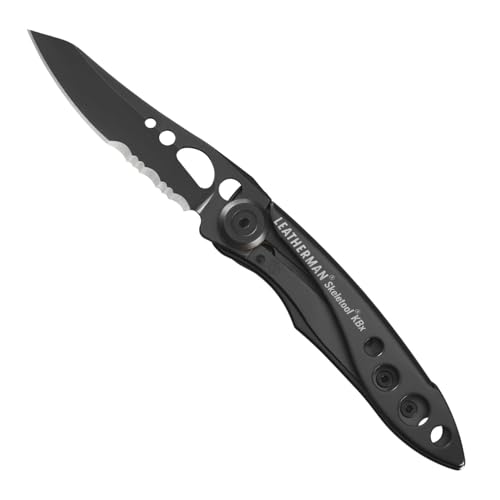
At 1.3 ounces it weighs about the same as the Dragonfly 2, and its bottle opener is also its pocket clip. I like it for people who want a real locking blade with a skeleton-thin footprint and nothing else to fiddle with.
EDC Knives Under $100 Compared
| Knife | Blade | Steel | Weight | Lock | Best for |
|---|---|---|---|---|---|
| Spyderco Dragonfly 2 | about 2.3″ | VG-10 | about 1.2 oz | Back lock | All-round small carry |
| CIVIVI Baby Banter | 2.34″ | Nitro-V | Light | Liner lock | Smart, low-key carry |
| Kershaw Chive | 1.9″ | 420HC | 1.7 oz | Frame lock + tip lock | Strict offices |
| Gerber Paraframe Mini | 2.2″ | Stainless | 1.6 oz | Frame lock | First knife, spare |
| Leatherman Micra | Small | Stainless | Light | None stated | Keys, grooming, small fixes |
| Gerber EAB Lite | 1.5″ | Replaceable utility blade | 2.2 oz | Liner lock | Boxes and packaging |
| Leatherman Skeletool KB | Short straight edge | 420HC | 1.3 oz | Locking blade | Lightest carry |
1. Spyderco Dragonfly 2 Lightweight (VG-10): Best Overall
Who it’s for: anyone who wants a genuinely useful knife that takes up almost no room in a pocket, at work or on the weekend.
Small knives usually fail in the hand, not in the pocket. Your pinky hangs off the end, your grip slips forward toward the edge, and you end up pinching the knife with two fingers. The Dragonfly 2 solves that with a deep finger choil (a notch behind the edge where your index finger sits), so even a short handle gives you a full four-finger hold. That one design trick is why I rank it above everything else here.
The rest is classic Spyderco. The blade is VG-10, a Japanese stainless steel that takes a keen edge and shrugs off sweat and rain, and it’s full flat ground, meaning it tapers evenly from spine to edge and slices rather than wedges. The round hole opens it with either thumb, the back lock sits on the spine where both hands can reach it, and the wire clip can move to either side for tip-up carry. If you already know the Delica and Endura from my folding knife guide under $100, think of this as their pocket-sized cousin.
My reservations are the ones Spyderco always gets. The leaf-shaped blade and big hole aren’t pretty to everyone, and the plastic handle feels inexpensive for what you pay.
Key specs
- Blade: about 2.3 inch VG-10, full flat grind, plain edge
- Handle: fiberglass-reinforced nylon (FRN) with bi-directional texture
- Lock: back lock
- Opening: Spyderco round hole, either hand
- Reversible deep-pocket wire clip, tip-up carry
Pros
- Full grip from a very small knife
- Light enough to forget about
- Ambidextrous lock, opening and clip
Cons
- Unusual looks
- Plastic handle feels plain for the price
My verdict: buy it if you want the most capable small knife under $100. Skip it only if the Spyderco look puts you off; the Baby Banter is the prettier alternative.
2. CIVIVI Baby Banter (Nitro-V, G10): Best Dressy Carry
Who it’s for: people who want a small knife with some polish, one they won’t mind pulling out in a meeting or at a dinner table.
The Banter, designed by Ben Petersen, is one of the cleaner-looking modern folders, and the Baby version shrinks it to a 2.34 inch blade without losing its proportions. There’s nothing aggressive about it: a simple drop point, a smooth ivory G10 handle and two titanium thumb studs. In an office it reads as a nice pen-sized tool, which is exactly the point.
The details are better than the price suggests. The blade turns on caged ceramic ball bearings, so it swings open smoothly with a push of the thumb, and the Nitro-V steel is very rust resistant, which suits a knife that gets used on lunch as often as on boxes. A liner lock holds it open, and the deep-carry clip keeps it low in the pocket.
What I’d watch: a light-colored G10 handle can pick up stains from jeans over time (it comes in other colors if that bothers you), and thumb studs on a blade this short are a little fiddly with big fingers.
Key specs
- Blade: 2.34 inch Nitro-V, drop point
- Handle: G10
- Lock: liner lock
- Opening: dual titanium thumb studs, caged ceramic ball bearing pivot
- Deep-carry pocket clip, lanyard hole
Pros
- Clean, non-threatening looks
- Smooth bearing action
- Rust-resistant steel
Cons
- Light handle colors can discolor
- Thumb studs are small for large hands
My verdict: the small knife to buy when looks matter as much as function. If you want maximum grip and lighter weight, the Dragonfly 2 still wins.
3. Kershaw Chive (420HC, Steel Handle): Best Under 2 Inches
Who it’s for: office workers, travelers and anyone whose workplace frowns on anything that looks like a “real” knife.
The Chive has been in Kershaw’s catalog for a long time, and it’s one of the smallest assisted openers you can buy from a major brand. The blade is just under two inches, the knife is 2.9 inches closed, and it weighs 1.7 ounces. In a shirt pocket or a small coin pocket it simply disappears.
Small doesn’t mean slow. A flipper tab and Kershaw’s SpeedSafe spring open it with one finger, a frame lock holds it, and a tip-lock slider keeps it closed while carried. The 420HC steel is soft enough to sharpen easily and very resistant to rust. It’s made in the USA and covered by Kershaw’s limited lifetime warranty.
My honest reservation: under two inches is too short for food prep or cutting thick rope, and the bare steel handle gets slippery with wet hands. The clip only mounts for right-hand, tip-down carry. Assisted openers are also treated differently from automatics in most places, but rules vary, so check yours.
Key specs
- Blade: 1.9 inch 420HC, drop point, bead-blasted
- Handle: 410 stainless steel
- Lock: frame lock plus tip-lock slider
- Opening: SpeedSafe assisted flipper
- Closed 2.9″, overall 4.8″, 1.7 oz; made in the USA
Pros
- Tiny and very discreet
- Fast one-hand opening
- Easy to sharpen, hard to rust
Cons
- Short blade limits bigger jobs
- Steel handle is slick when wet
- Right-hand clip only
My verdict: get it if discretion is the priority. If you have a little more room, the Kershaw Scallion is the same idea with a 2.4 inch blade.
4. Gerber Paraframe Mini (2.2 Inch, Plain Edge): Best Budget
Who it’s for: first-time carriers, gift buyers on a budget, and anyone who wants a spare for the car, gym bag or toolbox.
The Paraframe has hung on hardware-store pegs for years, and the Mini is the version I’d actually put in a pocket. The handle is an open stainless frame, which is why the whole knife weighs only 1.6 ounces, and the same frame forms the lock that holds the 2.2 inch clip-point blade open. There’s a pocket clip and nothing else to think about.
Cheap knives often cut corners on the lock, and that’s the one thing I won’t compromise on. The Paraframe’s frame lock is simple and does its job, and Gerber backs it with a limited lifetime warranty. For opening mail, trimming tags and cutting tape, it’s all the knife you need.
The compromises are real, though. It opens with a nail nick, so it’s slower than a thumb hole or flipper, the open frame lets lint collect inside, and the steel won’t hold an edge as long as VG-10 or Nitro-V. I’d also choose the plain edge over the serrated version for everyday jobs; it’s much easier to keep sharp.
Key specs
- Blade: 2.2 inch stainless steel, clip point, plain edge, nail nick
- Handle: open stainless steel frame
- Lock: frame lock
- Overall length 5.25″, weight 1.6 oz
- Pocket clip; limited lifetime warranty
Pros
- Very low cost
- Light and slim
- Real locking blade
Cons
- Nail-nick opening is slow
- Edge needs touching up more often
- Open frame collects pocket lint
My verdict: the cheapest way to find out whether carrying a knife suits you. Once it does, you’ll probably want one of the first two picks.
5. Leatherman Micra (Keychain Multi-Tool): Best Keychain Tool
Who it’s for: people who never want to think about carrying a knife, because it’s already on their keys.
Plenty of people shopping for an EDC knife really need a small toolkit. The Micra is that. It’s 2.5 inches closed and built around spring-action scissors, with a small knife, nail file, tweezers, screwdrivers and a bottle opener folded into the handles. Ten tools in all, and it clips to a key ring or bag.
The scissors are the star, and I mean that as praise. Loose threads, tags, tape, a hangnail: scissors do these jobs better and more safely than any blade. Leatherman makes the Micra in the USA and backs it with a 25-year warranty, which is unusually long for something this small.
Be clear about what you’re buying, though. The knife blade is short and secondary, so it’s no substitute for a proper folder when you need to cut rope or break down boxes. Keychain tools also take a beating from keys, so expect scratches. And like any keychain tool, check airport rules before you fly; tools with blades aren’t allowed in US carry-on bags.
Key specs
- 10 tools: spring-action scissors, knife, nail file, tweezers, screwdrivers, bottle opener and more
- Closed length 2.5″
- Stainless steel
- Made in the USA; 25-year warranty
Pros
- Always with you on your keys
- Scissors are genuinely useful
- Long warranty
Cons
- Knife blade is small and secondary
- Not a one-hand tool
- Keys scratch it up
My verdict: the best choice for keychain carry and for people who mostly need scissors. Pair it with a small folder if you cut a lot.
6. Gerber EAB Lite (Utility Blade, Money Clip): Best Box Cutter
Who it’s for: warehouse and retail workers, contractors, online shoppers and anyone who mostly cuts cardboard and tape.
Cardboard is hard on a knife edge. The glue and grit in it dull steel faster than almost anything else you’ll cut in a normal week. The EAB Lite gets around that by holding a standard contractor-grade utility blade: when it dulls, you swap it for a fresh one instead of sharpening. For a box-opening knife that’s a huge practical advantage.
It’s also flat. The handle is a slim stainless frame that doubles as a money clip, the blade folds away behind a liner lock, and the whole tool is 5.1 inches open and 2.2 ounces. It sits in a front pocket like a folded bill.
The downsides come from the same design. A utility blade is a thin, short (1.5 inch) edge with a square tip, great for boxes and terrible for food. The blade change needs a coin or fingernail and a little care, and the money clip will feel tight if you carry a thick stack of cards.
Key specs
- Blade: 1.5 inch replaceable utility razor blade
- Handle: slim stainless frame, works as a money clip
- Lock: liner lock
- Overall length 5.1″, weight 2.2 oz
Pros
- Always sharp: just change the blade
- Very flat in a pocket
- Low cost
Cons
- Useless for food or fine work
- Blade changes need care
- Money clip tension is limited
My verdict: if most of your cutting is boxes, buy this instead of wearing out a nice knife. If you also cut food or rope, carry it alongside one.
7. Leatherman Skeletool KB (420HC, Bottle Opener): Best Featherweight
Who it’s for: minimalists who want a locking blade at the lowest possible weight, and people who like the Leatherman look without carrying pliers.
The Skeletool KB is a stripped-down cousin of Leatherman’s Skeletool multi-tool: one straight-edged 420HC blade and a bottle opener, and that’s all. The clever part is that the bottle opener is also the pocket clip, so nothing on it is wasted. At 1.3 ounces it’s about as light as the Dragonfly 2.
It’s made at Leatherman’s Portland, Oregon factory and carries the same 25-year warranty as the Micra. The blade locks open and releases with a press on the lock. 420HC isn’t a fancy steel, but it’s tough, easy to sharpen on a simple rod and very rust resistant, which is what I want in a knife I’ll forget about until I need it.
What I don’t love: the skeletonized handle is thin and has little to hold onto during long or hard cuts, and the opener-clip means the knife rides with a lump of metal at the top of your pocket. It’s a knife for quick jobs, not for an afternoon of work.
Key specs
- Blade: 420HC stainless, straight edge, locking
- Bottle opener doubles as pocket clip
- Weight 1.3 oz
- Made in Portland, Oregon; 25-year warranty
Pros
- Extremely light
- Two useful tools, nothing wasted
- Long warranty
Cons
- Thin handle tires your hand on long cuts
- Clip/opener adds bulk at the top of the pocket
My verdict: great if weight is your number one concern. If you want a fuller grip at about the same weight, choose the Dragonfly 2.
Choosing a Knife You’ll Actually Carry Every Day
Start with where you spend your day
An EDC knife lives in an office, a car, a train and a grocery line far more often than in the woods. That’s why I favor small, quiet designs here. A big tactical folder may be more capable on paper, but it’s the knife people leave at home. For office and city carry, a blade of 2 to 2.5 inches handles mail, packaging, tags, string and fruit, and it worries coworkers far less than a four-inch blade.
Weight matters more than steel
Most knives on this list weigh around two ounces or less. Around that weight a knife stops dragging your pants down and stops printing through fabric, and that’s what turns it into an everyday habit. Premium steel is nice, but I’d take a lighter knife with ordinary steel over a heavy one with exotic steel for daily carry.
Pick the right kind of tool
Not everyone needs a folding knife. If most of your cutting is cardboard, a utility-blade knife like the EAB Lite stays sharper for less effort. If you mostly snip, scissors on a keychain tool like the Micra are safer and handier. A small folder covers the widest mix of jobs, which is why it takes the top spots.
Opening method and lock
Thumb holes and thumb studs open smoothly with either hand. Flippers, like the Chive’s, are quick and keep fingers away from the edge. Nail nicks are slower but simple. Whatever the opening, insist on a lock for a pocket knife you’ll use daily. My guide to folding knife lock types covers how back locks, liner locks and frame locks compare.
Know the rules where you go
Blade length limits, assisted-opening rules and workplace policies differ from state to state and city to city. Small blades stay inside most limits, but check before you carry, and remember that knives of any size aren’t allowed through US airport security in carry-on bags.
Small Knife Care in 3 Minutes a Week
- Wipe off tape glue. Adhesive builds up on the blade and makes it drag. A drop of rubbing alcohol on a paper towel removes it.
- Blow out the pocket lint. Small knives with open frames collect lint around the pivot and lock. My guide on how to clean a pocket knife covers a proper wash.
- Touch up little and often. A few light strokes on a ceramic rod keep a short edge working far longer than waiting until it’s dull. Here’s my walkthrough on sharpening a pocket knife.
- Don’t pry. Small blades snap at the tip when used as screwdrivers. Use the Micra’s screwdriver instead.
FAQ
What size knife is best for everyday carry?
For most people, a blade between 2 and 3 inches. Under about 2.5 inches is best for offices and cities because it’s discreet and within most local limits; around 3 inches suits people who also cut food, rope or do yard work.
Is a keychain knife enough for EDC?
It is for light jobs like tags, tape, threads and opening mail. For boxes, rope or food, a small locking folder is safer and more comfortable to hold.
Can I carry a pocket knife at work?
That depends on your employer’s rules as well as local law. Small, non-threatening designs like the Chive, Baby Banter or a keychain tool are the least likely to cause problems, but ask if you’re unsure.
Why would I want a utility blade knife instead of a regular folder?
Because you never have to sharpen it. If you cut cardboard daily, a replaceable blade stays sharp with a 30-second swap, and your nicer knife stays sharp for everything else.
Are assisted-opening knives legal?
In many places assisted openers like the Kershaw Chive are treated differently from automatic knives, but laws vary by state and city. Check your local rules before carrying one.
What’s the difference between this list and your folding knife guide?
This page is about the smallest, lightest knives and tools for daily carry. My folding knife guide covers full-size folders around three to four inches, with more emphasis on lock types and outdoor use.
Final Verdict
The Spyderco Dragonfly 2 is my top EDC knife under $100: tiny in the pocket, full-size in the hand, and built from steel that stays sharp and stays clean. Want something smarter-looking? The CIVIVI Baby Banter has the nicest finish here. Need the absolute minimum? The Kershaw Chive keeps you under two inches without giving up one-hand opening.
Prefer a faster, larger blade? My list of the best flipper knives under $50 covers that side of pocket carry.

Gary Portman founded knivesadvice.com in 2019. He learned to cook in his family’s kitchen as a kid and has used kitchen, pocket and outdoor knives ever since, from paring and fillet knives to survival blades he carries camping and hiking. He writes the site’s buying guides, brand reviews and sharpening how-tos to help readers find the right knife for the job. More about Gary.