
To use a butterfly knife, you hold one handle (the safe handle) and let the other handle and the blade swing around it, opening or closing the knife with wrist movements instead of a thumb stud or a spring. The one rule that matters: always know which handle is the bite handle, because that’s the one that swings toward the edge.
Learn on a trainer, a butterfly knife with a blunt, unsharpened blade. Every beginner drops the knife and catches the wrong handle, and a trainer turns that mistake into a bruise instead of a cut. Flipping is mostly muscle memory, so the hours you put in on a blunt trainer transfer almost completely to a live blade later, if you ever want one. My pick is the Nabalis X Will Hirsch Vulp. A quick note before you buy anything: butterfly knife laws vary a lot by state and country, so check the rules where you live.
Below you’ll find the parts of a balisong, how to hold it, a basic opening and closing step by step, the tricks to learn next, and how to keep the pivots flipping smoothly.
Butterfly Knife Parts You Need to Know
A butterfly knife (also called a balisong) has two handles that rotate around the blade’s tang on two pivots. When closed, the handles hide the blade completely. Learn these names first, because every tutorial uses them.
- Bite handle: the handle that closes onto the sharp edge. If you’re holding it when the knife closes, the edge swings toward your fingers.
- Safe handle: the handle that closes onto the spine (the blunt back of the blade). Beginners hold this one.
- Latch: the small catch that locks the two handles together when the knife is closed. Many flippers use latchless knives because the latch can clip your knuckles. It’s a different idea from the blade locks on folders, which I explain in my folding knife lock types guide.
- Pivots: the two joints where the handles meet the blade. Washers or bushings inside them decide how smoothly it swings.
- Tang pins and zen pins: small pins that stop the handles in the right place when the knife opens or closes. Zen pins sit inside the handles and are hidden.
- Kicker: a small bump at the base of the blade that stops the edge from hitting the handle.
How to Hold a Butterfly Knife
Hold the safe handle in your dominant hand, loosely, with your thumb and fingers wrapped around it like a pencil you might let go of. A tight fist kills the swing. The knife moves because your wrist moves, not because your fingers push it.
Before every session, close the knife and look at it: find the edge, then find the bite handle. If you’re flipping a trainer, still treat the blunt edge as if it were sharp. Habits you build on a trainer carry straight over to a live blade.
How to Open a Butterfly Knife (Basic Opening)
The basic horizontal opening is the first move nearly everyone learns. Practice it slowly, over a bed or a cushion, until it’s boring.
- Unlatch the knife. Hold it closed in your dominant hand by the safe handle, palm up, with the bite handle lying on top.
- Turn your palm down. Rotate your wrist so your palm faces the floor. Gravity pulls the bite handle away from the safe handle, swinging it down and exposing the blade.
- Flip your wrist back. With a small, smooth flick, turn your palm up again. The bite handle swings around over the back of your hand and the blade rotates out.
- Catch the bite handle. Let the bite handle land in your palm next to the safe handle, then close your fingers around both. The blade now points out, open.
Go too fast and the bite handle slaps your knuckles; go too slow and it won’t make it around. Find the slowest flick that still completes the swing, then repeat it until you stop thinking about it.
How to Close a Butterfly Knife
Closing is the opening in reverse, and it’s where most cuts happen with a live blade, because the bite handle travels toward your fingers.
- Let go of the bite handle. Hold only the safe handle, blade pointing out.
- Turn your palm down and flick. The bite handle swings back around, under your hand.
- Turn your palm up again. The bite handle swings over and closes onto the edge, covering the blade.
- Close your fingers and latch it. Only grip once both handles are together.
If a closing goes wrong, open your hand and let the knife drop. Never try to catch a falling butterfly knife, trainer or not. That’s the habit that saves fingers later.
Beginner Tricks to Learn Next
Once the basic opening and closing feel automatic, these are the usual next steps. Learn them in order, on a trainer.
Vertical opening
The same idea as the basic opening, but the knife swings up and down beside your hand instead of across it. It teaches you to control the handles in a second plane.
Rollovers
A handle rolls over the back of your hand or around a finger, then lands back in your grip. Rollovers are the foundation of most combos, and they’re where you learn timing.
Fanning
The knife opens and closes continuously in a fast, fan-like motion. It looks impressive, but it’s mostly the moves above linked together.
Aerials
Aerials like the Y2K release the knife into the air and catch it again. Leave them until you’re very comfortable, and do them on a trainer only. A falling live blade is how flippers get hurt badly.
What Is a Butterfly Knife Used For?
Today, most people use a butterfly knife for flipping: a skill hobby, a bit like juggling or a yo-yo, that keeps your hands busy. As a cutting tool it works, but a regular folding knife opens faster with one hand, locks more securely and is far easier to carry. If cutting is what you need, my best folding knives under $100 guide is a better place to start.
The balisong is traditionally linked to the Philippines, and the design has a long history there as a working knife. In much of the world, though, it’s restricted or banned, which is another reason most new flippers stick to trainers.
Are Butterfly Knives Legal?
It depends entirely on where you live. Some US states and many countries ban owning or carrying a butterfly knife, others allow it, and rules can change at city level too. Some places treat trainers differently from live blades, and some don’t. Check your local laws before you buy, and don’t carry one in public unless you’re sure it’s allowed.
How to Care for a Butterfly Knife
A butterfly knife only flips well when its pivots are clean, lubricated and correctly tightened.
Check the pivot screws
If the blade wiggles side to side, the pivots are too loose; if the handles swing sluggishly, they’re too tight. Adjust each pivot a tiny amount at a time. Many balisongs use Torx screws, so check the size before you start.
Clean out grit
Pocket lint and dust get into the pivots and make the action gritty. Wipe the knife down, use a toothbrush or cotton swab in the gaps, and dry it fully afterwards.
Lubricate the pivots
One small drop of knife pivot oil in each pivot, then flip it a few times to spread it. Too much oil attracts more dirt, so wipe off the excess. My guide on how to clean a pocket knife covers the same routine for folders in more detail.
Tools I’d Use
A trainer is the one thing you do need. These two cover adults and nervous beginners.
1. Nabalis X Will Hirsch Vulp Balisong Trainer: The One I’d Start On

Built like a good balisong: 6061 aluminum channel handles, hidden zen pins and bushings Nabalis tunes for a smooth swing with little play. At 9.92 inches and 3.95 oz it’s light enough to control, and its slightly handle-heavy balance makes basic openings easier to time. If you later move to a heavy steel balisong, it will feel different in the hand.
2. Squid Industries Plastic Squiddy Trainer: For Younger or Nervous Beginners
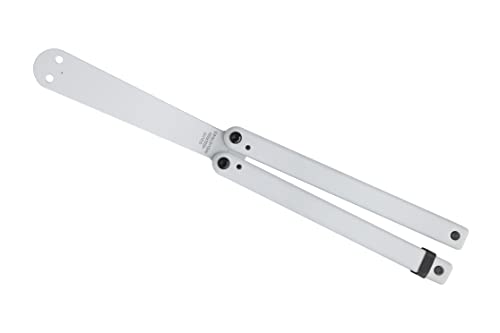
CNC-machined plastic handles with steel weights in the ends, phosphor bronze washers, no latch to clip your knuckles, and a rounded blade with a cartoon squid face, so you can practice in public without alarming anyone. It’s made in the USA. Plastic feels lighter and softer than metal, so it’s a first trainer, not a forever one.
FAQ
How do you use a butterfly knife for the first time?
Start with a trainer and the basic horizontal opening. Hold the safe handle loosely, turn your palm down so the bite handle swings away, then flick your palm back up so it lands in your hand. Practice slowly over a soft surface until it feels automatic.
Which handle do you hold on a butterfly knife?
Hold the safe handle, the one that closes onto the blunt spine. The bite handle closes onto the edge, so holding it while the knife closes can put your fingers in the blade’s path.
Should you flip overhand or underhand?
Both. The basic opening uses a palm-down then palm-up wrist turn, so you’ll use both positions in one move. Start with whichever direction a tutorial teaches for that move, and keep your grip loose either way.
Is a butterfly knife hard to learn?
The basic opening and closing are easy to learn with patience at any age; tricks take much longer. Go slowly, use a trainer, and practice for short sessions so you don’t get sloppy when tired.
Can you seriously hurt yourself with a butterfly knife?
Yes, with a live blade. Most injuries happen while closing the knife or trying to catch a dropped one. A trainer removes the edge, which is why I’d never learn on a sharp balisong.
What does balisong mean?
Balisong is the Filipino name for a butterfly knife. The knife is strongly associated with the Philippines, especially the province of Batangas.
Final Verdict
Using a butterfly knife comes down to three things: hold the safe handle, let your wrist do the work, and never catch a falling knife. Learn the basic opening and closing first, then move on to vertical openings and rollovers.
Learn all of it on a blunt trainer first. If you’d rather have a knife that opens with one flick of a finger, see my best flipper knives under $50 or my best EDC knives under $100.

Gary Portman founded knivesadvice.com in 2019. He learned to cook in his family’s kitchen as a kid and has used kitchen, pocket and outdoor knives ever since, from paring and fillet knives to survival blades he carries camping and hiking. He writes the site’s buying guides, brand reviews and sharpening how-tos to help readers find the right knife for the job. More about Gary.