
Most hunters gut and skin with whatever knife hangs on their belt, and it works, right up to the moment a long, pointy blade slips through the hide and nicks the meat or the gut sac. A real skinning knife is shaped to stop that from happening: a short blade, a big curved belly that does the cutting, and a point that sits up and out of the way.
For most deer hunters, my pick is the Old Timer Sharpfinger, a small upswept skinner that has been a hardware-store staple for decades and costs very little. If you’d rather never sharpen in the field, the Outdoor Edge RazorPro G pairs a replaceable skinning blade with a gutting blade in one handle.
My Top 7 Skinning Knife Picks

The skinner I’d hand a new deer hunter. The 3.3 inch upswept blade keeps its point high while the belly peels hide, the thumb rise and finger choil put your hand right behind the edge, and the full tang and leather sheath make it a knife you can keep in the truck for years.
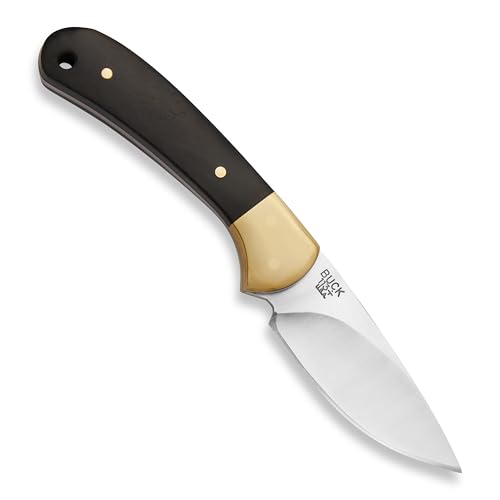
A wide, curved belly with a point that angles down so it won’t poke through hide. It’s handmade in Idaho with 420HC steel and Buck’s Forever Warranty. A classic skinner that looks as good as it works.
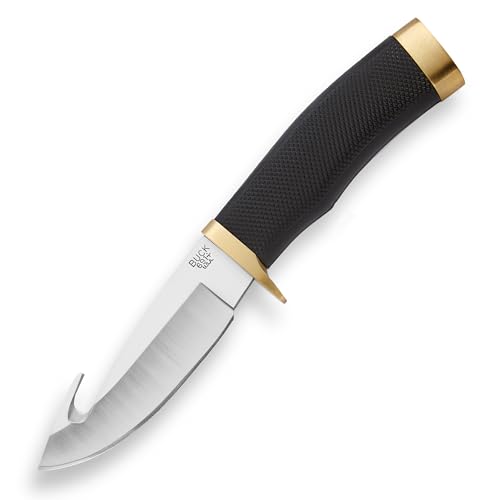
If you want a gut hook, this is the one I’d buy: a 4.25 inch drop point with the hook ground into the spine, plus a textured rubber handle that won’t squirm in a bloody hand.
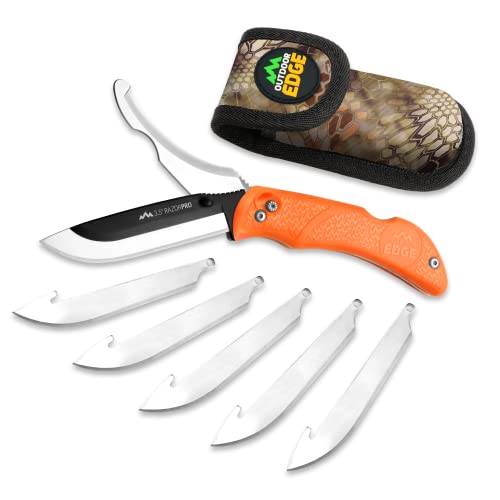
Two tools in one: a 3.5 inch razor blade for skinning that you swap in seconds, and a fixed 3.1 inch gutting blade for opening the belly. For elk or a second deer, a fresh edge beats sharpening by headlamp.

D2 steel holds its edge through a whole animal, the rubber overlay on the handle grips well, and the molded sheath drains and cleans in a minute. A light, modern take on the field knife.

Small, very sharp and made from a steel that keeps cutting long after softer blades give up. Benchmade’s free LifeSharp service is a nice bonus for a knife you’ll only use a few weeks a year.

For hunters who hang the deer in the garage and skin it there, a butcher’s skinning knife with a grippy Fibrox handle is cheaper and easier to clean than any field knife.
Skinning Knives Compared
| Knife | Blade | Steel | Handle | Carry | Best for |
|---|---|---|---|---|---|
| Old Timer Sharpfinger | 3.3″ upswept skinner | High carbon stainless | Sawcut Delrin | Leather sheath | First skinner, deer |
| Buck 113 Ranger Skinner | 3 1/8″ skinner, wide belly | 420HC | Ebony | Leather sheath | Classic US-made skinner |
| Buck 691 Zipper | 4 1/4″ drop point, gut hook | 420HC | Rubber | Nylon sheath | Gutting and skinning with one blade |
| Outdoor Edge RazorPro G | 3.5″ replaceable + 3.1″ gutting | Stainless | Rubberized TPR | Nylon sheath | Big game, several animals |
| Kershaw Deschutes Skinner | 3.9″ drop point | D2 | Polypropylene, rubber overlay | Molded sheath | Edge life, wet weather |
| Benchmade Hidden Canyon Hunter | Compact drop point | CPM-S90V, 59 to 61 HRC | Richlite and G10 | Sheath | Premium, light carry |
| Victorinox Fibrox 5″ Skinning | 5″ butcher’s skinner | Stainless | Fibrox | None (use a guard) | Skinning at home |
1. Old Timer Sharpfinger (152OT): Best Overall
Who it’s for: deer and hog hunters who want a dedicated skinner that costs little, and anyone putting together a first field kit.
The Sharpfinger’s shape is the reason it’s still around. The 3.3 inch blade curves up toward the tip, so the long belly does the work while the point rides above the hide instead of digging into the meat. Your index finger sits in a choil (a notch just behind the edge) and your thumb rests on a ridge on the spine, which gives you fingertip control for the small, careful cuts around legs and the neck.
It’s a full tang knife with sawcut Delrin scales (a textured synthetic that looks like bone and doesn’t mind blood or water) and a brown leather belt sheath. At 7.1 inches overall and 3.1 ounces, it’s light enough to forget on your belt.
The steel is the catch. Old Timer only calls it “high carbon stainless” and doesn’t name the grade, the factory edge is often rough, and you’ll be touching it up more often than a D2 or S90V knife. Give it a proper sharpening before the season. The upswept tip also makes it a poor general camp knife; it’s a skinner first.
Key specs
- Blade: 3.3 inch upswept skinner, high carbon stainless (grade not stated)
- Overall length: 7.1 inches; weight: 3.1 oz
- Full tang, sawcut Delrin handle, thumb rise and finger choil
- Brown leather belt sheath
- Old Timer lifetime warranty
Pros
- Classic skinning shape that keeps the point out of the meat
- Fingertip control from the choil and thumb rise
- Costs very little
Cons
- Unnamed steel needs frequent touch-ups
- Rough factory edge
- Upswept tip is awkward for camp chores
My verdict: the cheapest knife here that does the skinning job properly. If you want a better finish and a warranty from a US maker, step up to the Buck 113.
2. Buck 113 Ranger Skinner: Best US-Made Skinner
Who it’s for: hunters who want a traditional American skinner that will last a lifetime, and anyone buying a hunting gift.
The 113 takes the opposite approach to the Sharpfinger’s point. Its 3 1/8 inch blade has a narrow tip that angles slightly down and a very wide, curved belly. You skin with long sweeps of that belly, and the downturned point is shaped so it doesn’t puncture the hide or the gut while you work. Buck describes it as a cross between its Ranger and Vanguard knives, and it has the same tidy, old-school look.
The blade is 420HC with Buck’s heat treat, a steel I like for hunting knives because it resists rust and sharpens quickly on any stone. Buck builds it by hand in Idaho (the leather sheath is imported), weighs 5.2 ounces and is 7 1/4 inches overall. Like every Buck, it’s covered by the Forever Warranty.
My reservation is the handle. The classic ebony finish looks great, but smooth wood gets slick when it’s covered in blood and fat, and that’s exactly when you’re using a skinner. Wipe your hands and the handle often, or choose the rubber-handled Buck Zipper if grip matters more to you than looks.
Key specs
- Blade: 3 1/8 inch skinner, 420HC stainless
- Overall length: 7 1/4 inches; weight: 5.2 oz
- Handle: classic ebony
- Leather sheath with snap and belt loop (imported)
- Made in the USA; Buck Forever Warranty
Pros
- Wide belly built for long skinning strokes
- Downturned point protects meat and hide
- Easy-sharpening, rust-resistant steel
Cons
- Smooth handle slips when wet
- Costs much more than the Sharpfinger
My verdict: the skinner I’d pass down. For wet, cold hunts where grip matters most, the Zipper or the Kershaw is the safer handle.
3. Buck 691 Zipper (Rubber Handle): Best Gut Hook
Who it’s for: hunters who want one fixed blade that opens the belly with a hook and then skins with a full-bellied edge.
A gut hook is a small, sharpened half-circle ground into the spine near the tip. You make a short starting cut, hook it under the skin and pull, and it unzips the hide in a straight line without the blade going deep enough to cut into the stomach or intestines. That’s where the Zipper name comes from. Below the hook, the 4 1/4 inch drop point has a generous belly for skinning and enough length for quartering.
The rubber handle is the reason I picked this version over the wood-handled 191. It’s textured and grippy in rain, snow and blood, and the brass guard keeps your fingers off the edge. The knife is 8 1/2 inches overall and 6.6 ounces, comes with a heavy-duty nylon sheath, and is handcrafted in the USA with 420HC steel and the Forever Warranty.
Gut hooks have their critics, and they’re not wrong about two things: the hook is fiddly to sharpen (a small round rod or a tapered diamond file does it), and it can snag on brush or clothing. It’s also a heavier knife than the small skinners here.
Key specs
- Blade: 4 1/4 inch drop point with gut hook, 420HC stainless
- Overall length: 8 1/2 inches; weight: 6.6 oz
- Handle: textured rubber, brass guard and pommel
- Heavy-duty nylon sheath
- Made in the USA; Buck Forever Warranty
Pros
- Hook opens the hide without cutting the gut
- Grippy rubber handle
- Long enough for quartering too
Cons
- Hook needs a round rod or file to sharpen
- Heavier than a dedicated skinner
My verdict: the gut hook knife to buy if you only want to carry one fixed blade. If you never use hooks, the Sharpfinger plus a small drop point covers the same work.
4. Outdoor Edge RazorPro G (Skinning + Gutting Blades): Best Replaceable Blade
Who it’s for: elk and multi-deer hunters, outfitters’ clients, and anyone who hates sharpening.
Hide and hair dull an edge faster than almost anything you’ll cut at home, and that’s the problem replaceable blades solve. The RazorPro G takes Outdoor Edge’s 3.5 inch RazorSafe skinning blades: when one stops shaving hair, you press a button, slide it out and click in a new one. Six spare blades come with the knife.
The second blade is what sets it apart from the RazorLite in most hunting kits. It’s a fixed 3.1 inch gutting blade, a short knife dedicated to opening the belly, so the razor-thin skinning blade never has to do the rough work. One knife covers both the opening cut and the skinning. The rubberized TPR handle is non-slip, and the knife rides in a nylon belt sheath.
The thin replaceable blades are the trade-off. They’re very sharp but not built for prying or twisting through joints, and they can snap if you lever with them. Treat it as a scalpel and carry a sturdier knife or a saw for bones. You’ll also keep buying blades, so factor that in.
Key specs
- Blades: replaceable 3.5 inch stainless skinning blade + fixed 3.1 inch gutting blade
- 6 spare skinning blades included
- Handle: non-slip rubberized TPR
- Nylon belt sheath
- Outdoor Edge, Denver, Colorado
Pros
- Fresh, razor-sharp edge in seconds
- Gutting blade saves carrying a second knife
- Grippy handle
Cons
- Thin blades snap if twisted
- Ongoing cost of spare blades
My verdict: the most practical choice for skinning several animals in a season. For one deer a year, a fixed skinner you sharpen at home is simpler.
5. Kershaw Deschutes Skinner (D2): Best Modern Fixed Blade
Who it’s for: hunters who want an edge that lasts through a whole animal and a sheath that won’t soak up blood.
The Deschutes is a lightweight full tang knife with a 3.9 inch drop point in D2, which keeps cutting noticeably longer than 420HC or the Sharpfinger’s steel. Despite the name, it’s more of an all-round hunting knife than a pure skinner: the drop point is easier to control for gutting, and the curved edge still skins well. At 8.65 inches overall it weighs just 3.3 ounces.
What I like most is the practical stuff. The polypropylene handle has a rubber overlay, a thumb ramp and contours that keep your grip when things get messy, and the glass-filled nylon sheath has a drainage hole, webbing slots and a removable belt strap. Rinse it at camp and it’s clean, unlike leather.
D2 is only semi-stainless, so it can spot if you put it away wet; wipe and dry it after use. It also takes more effort to sharpen than 420HC when it finally dulls. The stonewashed finish hides scratches but looks plain next to the Buck.
Key specs
- Blade: 3.9 inch drop point, D2 steel, stonewashed
- Overall length: 8.65 inches; weight: 3.3 oz
- Full tang; polypropylene handle with rubber overlay
- Glass-filled nylon sheath with drainage hole and belt strap
Pros
- Long edge life from D2
- Grippy handle and easy-clean sheath
- Very light for its size
Cons
- Can spot if stored wet
- Harder to sharpen than 420HC
My verdict: the best pick for wet-weather hunts and anyone tired of touching up a soft edge. If you want a true upswept skinner, take the Sharpfinger.
6. Benchmade Hidden Canyon Hunter (CPM-S90V): Best Premium
Who it’s for: hunters who want a small, refined skinning and caping knife and are happy to pay for top steel.
The Hidden Canyon is a compact drop point with a blade under 3 inches, but Benchmade gave it a handle long enough for a full grip. That combination makes it good for the fine work: skinning around the legs, caping a buck for the taxidermist and trimming close to the hide.
This version uses CPM-S90V at 59 to 61 HRC, one of the most wear-resistant steels you can buy in a production knife. In plain terms, it stays sharp far longer than anything else here. The handle is wood-pattern Richlite (a dense paper composite) over orange G10, so it’s easier to spot if you set it down in the leaves. It’s made in Oregon City, Oregon, and Benchmade’s LifeSharp service will resharpen it to a factory edge for free for life.
Two honest downsides. S90V is slow to sharpen at home and needs diamond stones, which is why the free service matters. And it’s the most expensive knife in this guide by a wide margin; for one deer a year, that money is hard to justify.
Key specs
- Blade: compact drop point (under 3 inches), CPM-S90V, 59 to 61 HRC, satin
- Handle: wood-pattern Richlite over orange G10
- Made in Oregon City, Oregon
- Benchmade LifeSharp: free resharpening for life
Pros
- Exceptional edge retention
- Small blade, full-size grip
- Free lifetime sharpening service
Cons
- Needs diamond stones to sharpen at home
- Very expensive for a seasonal knife
My verdict: the skinner to buy once and never think about again. Budget-minded hunters lose very little by choosing the Kershaw instead.
7. Victorinox Fibrox 5″ Beef Skinning Knife: Best for Home Processing
Who it’s for: hunters who hang and skin their deer at home, and small-farm butchers.
Not every skinning knife needs a sheath. If the deer goes home whole and you skin it hanging in the garage or barn, a butcher’s skinning knife is the better tool: lighter, cheaper and far easier to scrub clean than a hunting knife with a guard and a textured handle full of crevices.
This Victorinox has a 5 inch skinning blade and the same Fibrox handle as the brand’s famous kitchen knives. Fibrox is a textured synthetic that stays grippy when it’s greasy, and that’s the right property for a handle that spends its day in fat and hide. It’s Swiss made, and it pairs well with a boning knife for the cutting that comes after the skinning.
It has no sheath, so it needs a blade guard in the kit bag, and it’s not a knife to carry in the woods. Victorinox lists it as dishwasher safe; I would still wash it by hand, since a dishwasher rattles the edge dull. And it won’t help in the field if you quarter the animal where it fell.
Key specs
- Blade: 5 inch skinning blade, stainless steel
- Handle: Fibrox, non-slip
- Swiss made
- No sheath included
Pros
- Grippy handle when greasy
- Very easy to clean
- Good value from a pro cutlery brand
Cons
- No sheath, home use only
- Not suited to field dressing
My verdict: the right skinner for the garage, not the woods. Pair it with a field knife like the Sharpfinger for gutting.
What Makes a Good Skinning Knife
Blade shape comes first
Choose a blade with a big, curved belly and a point that stays out of the way. An upswept skinner (the Sharpfinger) lifts the tip above the hide; a classic skinner (the Buck 113) turns the point slightly down; a drop point is the compromise that also guts and quarters well. Long clip points and tanto blades are the wrong shapes: their sharp tips are what puncture meat and gut.
Keep it short
For deer, hogs and similar game, a skinning blade of about 3 to 4 inches gives the best control. Shorter blades are better for caping and small game; longer than 4.5 inches and you’re holding the knife too far from the edge for careful work.
Gut hook or not
A gut hook is useful if you struggle to open the belly without cutting too deep, and pointless if you already use two fingers to lift the hide ahead of the blade. It’s a personal choice, not a must. A separate gutting blade, like the one on the RazorPro, is another way to keep the skinning edge for skinning.
Replaceable or fixed edge
Replaceable blades give you a scalpel-sharp edge every time, but they’re thin and they cost money for life. A fixed blade needs sharpening, often in the middle of the job. If you skin more than two or three animals a season, replaceable blades usually win.
Grip when it’s wet and bloody
Rubber, textured synthetics and G10 hold best. Smooth wood and polished resin look nicer but get slippery. A finger guard or choil matters too: it’s the only thing stopping your hand from sliding onto the edge.
Steel you can live with
Easy-sharpening stainless (420HC, 12C27) is the practical choice for most hunters. Harder steels like D2 and S90V cut longer between sharpenings but are slower to restore. My carbon vs stainless steel guide explains the rust and sharpening trade-offs.
Skinning Tips That Save the Edge (and the Meat)
Skin with the edge turned toward the hide, not the meat, and let the belly do the cutting in short, light strokes. Pull the hide away from the carcass with your free hand so the knife only has to slice the thin membrane between them; on a hanging deer, much of the hide can be peeled with your fist once it’s started.
Hair is what dulls a skinning knife fastest, so cut from the inside of the hide outward whenever you can. Bring a pocket sharpener or a small ceramic rod and touch up the edge as soon as it stops biting. My knife sharpener guide includes compact options, and the Lansky pocket sharpener fits in any pack. Once the hide is off, switch to a boning knife for breaking down the meat: my boning knife for deer guide covers that part.
FAQ
What is the best knife for skinning a deer?
A short skinner or drop point with a curved belly, about 3 to 4 inches long, is best for skinning a deer. The Old Timer Sharpfinger is the classic budget choice, and the Buck 113 is a US-made upgrade. If you’d rather not sharpen, a replaceable blade knife like the Outdoor Edge RazorPro is the easiest way to keep a sharp edge.
What is the difference between a skinning knife and a hunting knife?
A skinning knife has a shorter blade with a wide, curved belly and a raised or downturned point, built to separate hide without puncturing meat. A general hunting knife is usually a drop point that guts, skins and quarters reasonably well. Many hunters carry both, or choose a drop point that skins well like the Kershaw Deschutes.
Are gut hooks worth it?
Gut hooks are worth it if you want a foolproof way to open the hide without cutting into the stomach. They’re harder to sharpen and can snag, so experienced hunters often skip them and lift the hide with two fingers instead. Try a knife like the Buck Zipper if you’re unsure.
Can you skin a deer with a replaceable blade knife?
Yes, replaceable blade knives skin very well because the edge is always razor sharp. Swap blades as soon as one drags. Don’t use them to pry through joints or cut bone, since the thin blades can snap.
Can a boning knife skin a deer?
A boning knife can skin in a pinch, but it isn’t the right tool: a skinning knife removes the hide and a boning knife separates meat from bone. Skinners are short and wide with a curved belly; boning knives are longer, narrower and often flexible. For processing a deer at home you’ll want one of each.
How sharp should a skinning knife be?
A skinning knife should be sharp enough to shave hair, because a dull edge makes you push harder and that’s when the blade slips into the meat. Touch it up during the job, not after.
Final Verdict
For most deer hunters, the Old Timer Sharpfinger is the skinning knife I’d start with: the right shape, a secure grip and almost no cost. Want a better-made, US-built classic? Go for the Buck 113 Ranger Skinner. And if you hunt big game or several animals a season, the Outdoor Edge RazorPro G’s replaceable skinning blade and built-in gutting blade will save you a lot of sharpening.
Processing at home afterward? See my butcher knife sets guide for the knives that take over once the hide is off.

Gary Portman founded knivesadvice.com in 2019. He learned to cook in his family’s kitchen as a kid and has used kitchen, pocket and outdoor knives ever since, from paring and fillet knives to survival blades he carries camping and hiking. He writes the site’s buying guides, brand reviews and sharpening how-tos to help readers find the right knife for the job. More about Gary.