
If you process your own venison, get a boning knife before anything else, and make it the Victorinox Fibrox Pro 6″ curved boning knife with the semi-stiff blade. It grips when your hands are slick, the blade has just enough give, and it costs very little.
The hunting knife that gutted the deer is the wrong tool for this job. A drop point blade is thick and short, so it leaves meat on the skeleton and hacks through seams that a narrow boning blade simply follows around the ball joint and along the backbone. If you’d rather buy one knife for life, the WÜSTHOF Classic 5″ is the upgrade. For boning knives chosen for the kitchen rather than deer camp, see my best boning knife guide.
My Top 7 Boning Knives for Deer

Venison is lean and the bones are big, so I want a blade that flexes a little around a joint without flopping. The semi-stiff Victorinox does exactly that, and its textured handle stays put when it’s covered in fat. It’s the knife I’d keep in the processing bin year after year.

If you process several deer every season and want a knife that will outlast the freezer, this is where I’d spend the money. It’s forged in Solingen, the steel is tough enough to shrug off bumps against bone, and the shorter blade feels precise around joints.
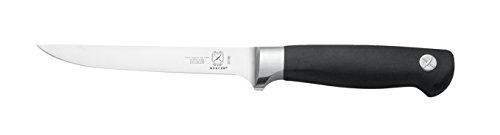
This one sits nicely between the stamped budget knives and the WÜSTHOF. You get a forged German steel blade and a soft, grippy handle for much less than the premium picks. It’s a knife built for culinary school kitchens, and it shows in how plain and practical it is.
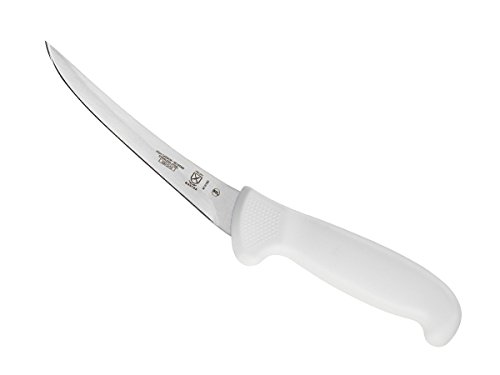
I like having a cheap spare on the table during a long processing day, and this is the one I’d choose. It costs very little, the textured handle is safe in wet hands, and if the edge gets rolled on a bone, you’ve lost very little.

For hunters who bone out a deer at camp or at the truck, I’d want this blaze-orange knife. You can spot it in leaves and snow, the rubbery handle grips through cold, wet fingers, and the flexible 5-inch blade is short enough to work inside a quartered animal.
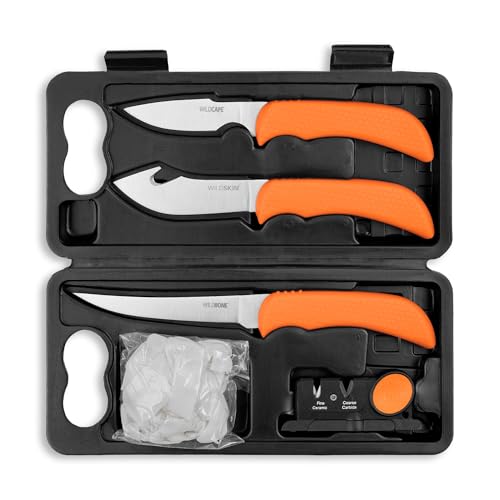
New hunters often need more than one knife, and this kit covers the whole job in one case: a gut hook skinner, a caping knife, a boning knife, gloves and a sharpener. It’s the gift I’d give someone heading out for their first deer season.

If you’re buying for a hunter who already has the basics, the Night Shark looks and feels like something special. It comes in gift packaging with a nylon belt sheath, and the textured handle is designed for wet, messy work, which suits a deer camp better than a polished wood one.
Deer Boning Knives Compared
| Knife | Blade | Steel | Handle | Extras | Best for |
|---|---|---|---|---|---|
| Victorinox Fibrox Pro 6″ Curved | 6″, curved, semi-stiff | Stainless | Fibrox, textured | None | All-round venison deboning |
| WÜSTHOF Classic 5″ | 5″, narrow, curved | High carbon stainless, 58 HRC, forged | Synthetic, triple riveted | None | Many deer a season, buy once |
| Mercer Genesis 6″ | 6″ | High carbon German steel, forged | Santoprene, non-slip | None | Forged knife on a budget |
| Mercer Ultimate White 6″ Curved | 6″, curved | High carbon Japanese steel | Textured, non-slip | None | Cheap spare or first knife |
| Outdoor Edge 5″ Wild Game | 5″, flexible | 420J2 stainless, full tang | Blaze-orange TPR rubber | None | Boning at camp or the truck |
| Outdoor Edge WildLite set | Boning, caping, gut hook skinner | 420J2 stainless, full tang | Blaze-orange TPR rubber | Gloves, sharpener, hard case | Field dressing to freezer |
| Dalstrong Night Shark 6″ Curved | 6″, curved, semi-flexible | 7Cr17MoV stainless | Textured polypropylene | Nylon belt sheath, gift box | Gift for a hunter |
1. Victorinox Fibrox Pro 6″ Curved Boning Knife (Semi-Stiff): Best Overall
Who it’s for: anyone who processes one or two deer a year at home and wants a single boning knife that does the whole animal well.
Victorinox sells this curved shape with a flexible or a semi-stiff blade, and for deer I’d pick the semi-stiff one. A fully flexible blade is lovely on chicken and fish, but on a venison hindquarter it bends when you push along the big leg bone. A stiff blade tracks well yet won’t follow a curve. Semi-stiff is the middle ground: firm enough to drive along the femur, with enough give to roll around the ball joint and the pelvis.
The handle is what really earns it the top spot. Processing a deer means hours of fat, blood and cold water on your hands, and Victorinox’s Fibrox handle has a textured, slightly rubbery feel that stays secure when everything is slippery. It’s plain to look at and nobody will admire it on a magnetic strip, but it’s built for butchers who use one all day, and it shows.
My one reservation is the edge. Like most Swiss and German style kitchen knives, the steel is on the softer side, so it dulls faster than harder Japanese steel when you keep bumping bone. The upside is that a few strokes on a honing steel bring it back in seconds, which is exactly what you want halfway through a quarter.
Key specs
- Blade: 6 inch, curved, semi-stiff, stainless steel
- Handle: Fibrox, textured and non-slip
- Made in Switzerland
- Also sold with a flexible blade
Pros
- Right amount of flex for venison
- Very secure grip with wet, greasy hands
- Easy to bring back with a honing steel
Cons
- Plain, utilitarian looks
- Softer edge needs regular honing during a long session
My verdict: the deer boning knife I’d recommend first, to almost anyone. Only skip it if you know you want a forged knife or a full field kit.
2. WÜSTHOF Classic 5″ Boning Knife: Best Premium
Who it’s for: hunters who process several deer every season, or who also bone out pork shoulders and whole chickens through the year, and want a knife that lasts decades.
WÜSTHOF’s Classic line is the German company’s best-known range, and I’ve gone through the brand in detail in my WÜSTHOF knives review. Its one-piece forged blade is rated 58 HRC (HRC is the Rockwell hardness scale; around 58 means tough and easy to hone rather than brittle). That suits deer work, where the edge spends its life sliding along bone and occasionally clipping it.
The blade is 5 inches, a little shorter than the others here. I see that as a plus around joints, the neck and the shoulder blade, where a short, narrow tip is easier to steer. The full tang and triple riveted handle feel solid and balanced, and the knife carries a limited lifetime warranty.
The reservations: it costs much more than the Victorinox, and the smooth synthetic handle doesn’t grip as well as Fibrox or rubber once it’s coated in fat. Keep a towel nearby and wipe the handle often. On long hindquarter cuts, some people will also prefer the extra inch of a 6-inch blade.
Key specs
- Blade: 5 inch, narrow and curved, forged high carbon stainless steel
- Hardness: 58 HRC
- Full tang, triple riveted synthetic handle
- Made in Solingen, Germany; limited lifetime warranty
Pros
- Built to last for decades
- Tough edge that tolerates bone contact
- Precise around joints and small cuts
Cons
- Expensive for a boning knife
- Smooth handle gets slippery with fat
- Shorter blade on big leg muscles
My verdict: worth it if you butcher a lot of game and like owning one excellent knife. For a deer or two a year, the Victorinox does the same job for much less.
3. Mercer Culinary Genesis 6″ Boning Knife: Best Forged Value
Who it’s for: hunters who prefer the weight and feel of a forged knife but don’t want to pay WÜSTHOF prices.
I picked this Mercer because nothing at its price beat it. Mercer supplies a lot of culinary schools and professional kitchens, and the Genesis line is its forged range: a high carbon German steel blade with a taper-ground edge and a Santoprene handle that has a soft, almost rubbery feel.
That handle is the reason I rate it for deer. Many forged knives come with hard, polished handles that look great and grip badly once they’re greasy. The Genesis handle stays comfortable and secure, which matters more than anything else when you’re three hours into a processing session. The blade is heavier than the stamped knives here, which some people find steadier when pushing through tough connective tissue.
What holds it back: it’s not as refined as the WÜSTHOF, the full bolster makes the full length of the edge a little harder to sharpen on a stone, and Mercer says to hand wash it and never soak it, so it’s not a knife to leave in a tub of bloody water.
Key specs
- Blade: 6 inch with a taper-ground edge; precision-forged German high carbon steel
- Handle: Santoprene, non-slip even with wet hands
- Hand wash; don’t soak
Pros
- Forged build at a mid-range price
- One of the grippiest handles on a forged knife
- Comfortable on long processing days
Cons
- Heavier than the stamped knives
- Bolster complicates stone sharpening
My verdict: a smart middle step for anyone who wants a forged knife. If you don’t care about forging, the Victorinox is lighter and just as capable.
4. Mercer Culinary Ultimate White 6″ Curved Boning Knife: Best Budget
Who it’s for: first-time home processors, groups that butcher together and need several knives, and anyone who wants a backup blade on the table.
Processing a deer goes faster when you can swap to a fresh knife instead of stopping to sharpen, and that’s how I’d use this Mercer. It’s one of the cheapest boning knives from a brand that professional kitchens actually buy, with a curved 6-inch blade of high carbon Japanese steel and a handle with textured finger points that help with grip.
For the price, the blade shape is genuinely good: narrow, curved and pointed, so it follows bones nicely. It’s also a sensible way to find out whether a curved boning knife suits you before you spend more on a WÜSTHOF or a Victorinox.
Don’t expect miracles from the edge or the finish. The handle is a hard plastic that won’t feel as cushioned as Fibrox or Santoprene on a long day, and the white color stains if you leave it dirty. Mercer also recommends hand washing, despite how utilitarian it looks.
Key specs
- Blade: 6 inch, curved, high carbon Japanese steel
- Handle: ergonomic, textured finger points for grip
- Hand wash recommended
Pros
- Very low price
- Good curved blade shape for following bone
- Cheap enough to own two or three
Cons
- Handle is less comfortable than Fibrox
- White handle shows stains
My verdict: the best way to equip a processing table on a tight budget. As your main knife for years, I’d still spend a little more on the Victorinox.
5. Outdoor Edge 5″ Wild Game Boning Knife: Best for Camp Boning
Who it’s for: hunters who bone out deer, elk or antelope in camp, at the truck or in a garage rather than in a kitchen.
Outdoor Edge is a Denver-based company that makes hunting and game processing tools, and this is its dedicated boning knife. The blade is a flexible 5-inch boning and fillet shape with a full tang, and the handle is blaze-orange rubbery TPR. In camp that color isn’t a gimmick: put a knife down in leaves, snow or a pile of quarters and a black handle disappears.
The steel is 420J2 stainless, which resists rust well and is easy to sharpen. The trade-off, which is common knowledge with this steel, is that it doesn’t hold an edge for long, so plan to touch it up with a small sharpener every so often. The flexible blade is also better at skinning silverskin and working around ribs than at driving along a big leg bone.
I’d see it as a knife for working outdoors and away from a kitchen. If your deer always ends up on a kitchen table, one of the 6-inch kitchen boning knives above will feel more capable.
Key specs
- Blade: 5 inch, flexible, 420J2 stainless steel, full tang
- Handle: blaze-orange TPR, non-slip
- Outdoor Edge “service for life” support
Pros
- Easy to find when you set it down
- Grippy rubber handle in cold, wet conditions
- Rust resistant and easy to sharpen
Cons
- Soft steel needs frequent touch-ups
- Flexible blade is less suited to big leg bones
My verdict: a cheap, practical knife for boning game in the field. Kitchen processors should look at the Victorinox or Mercer Genesis first.
6. Outdoor Edge WildLite 6-Piece Game Processing Set: Best Field-to-Freezer Kit
Who it’s for: new hunters building their first kit, and anyone shopping for a hunter who doesn’t own dedicated processing knives yet.
Deboning is the last step. Before it comes field dressing, skinning and quartering, and a lone boning knife isn’t the right tool for those. The WildLite set packs a gutting and skinning knife with a gut hook, a caping knife for detail work around the head and legs, a boning knife, game cleaning gloves and a two-stage carbide and ceramic sharpener, all in a compact hard-side case.
All three knives have full tang 420J2 stainless blades and the same blaze-orange rubber handles as the standalone Outdoor Edge knife above. That makes the set easy to keep clean and easy to find in the field, and the case keeps everything organized in a pack or a truck.
The compromise is the boning knife itself, which is a basic one. Soft steel means sharpening more often, and serious home butchers will eventually want a better 6-inch kitchen boning knife to go with it. I’d also replace a carbide pull-through sharpener with a proper stone or rod at home, since carbide removes a lot of metal; the one in the kit is fine for quick fixes in camp.
Key specs
- Knives: gut hook skinning knife, caping knife, boning knife
- Blades: 420J2 stainless steel, full tang
- Handles: blaze-orange TPR, non-slip
- Also includes: game cleaning gloves, two-stage carbide/ceramic sharpener, hard-side case
Pros
- Covers field dressing through deboning
- Organized, compact case
- Very good value for a complete kit
Cons
- Boning knife is basic
- Soft steel dulls quickly
- Carbide sharpener is harsh on edges
My verdict: the easiest way to go from no processing gear to a complete set. If you already own a good hunting knife, buy a dedicated boning knife instead.
7. Dalstrong Night Shark 6″ Curved Boning Knife: Best Gift
Who it’s for: people buying a present for a hunter or home butcher, and anyone who wants a boning knife with a belt sheath.
Of Dalstrong’s current range, the Night Shark is the one that makes sense for game: a semi-flexible, curved 6-inch blade in 7Cr17MoV stainless steel, and a textured polypropylene handle that Dalstrong designed for wet, messy work rather than for display. I’ve written a full Dalstrong review, and my view of the brand hasn’t changed: you pay partly for the presentation, and that presentation is exactly what makes a Dalstrong a good gift.
The ballistic nylon sheath has strap holes for a belt or pack, which is handy if the knife travels to camp. Out of the box it feels more special than the Victorinox, and the semi-flexible blade suits venison in the same way.
My reservation is value. 7Cr17MoV is a decent budget stainless steel, but it’s not better than what Victorinox or Mercer use for much less. You’re paying for the look, the sheath and the box, which is fine for a gift and less so for yourself.
Key specs
- Blade: 6 inch, curved, semi-flexible, 7Cr17MoV stainless steel
- Handle: textured polypropylene and thermoplastic
- Ballistic nylon sheath with strap holes
- Gift packaging
Pros
- Looks and feels like a present
- Grippy handle for wet work
- Comes with a belt sheath
Cons
- Steel is no better than cheaper picks
- Costs more than its performance justifies
My verdict: buy it for a hunter you want to impress. For your own processing table, the Victorinox gives you the same results for less.
What Matters in a Boning Knife for Venison
Stiff, semi-stiff or flexible
This is the choice that matters most. Deer bones are large and the muscles are lean, so a semi-stiff blade is the best all-round option: it tracks along the leg bone without bending but still curves around joints. Flexible blades are better for birds, fish and peeling off silverskin. Stiff blades suit heavy work on beef and pork.
Blade length: 5 or 6 inches
A 6-inch blade is the most versatile for deer: long enough for clean strokes along a hindquarter, short enough to control. A 5-inch blade is nimbler around the neck, shoulder and joints. Anything longer than 6 inches starts to feel clumsy for detailed work on a deer.
Grip comes first
Your hands will be covered in fat, blood and cold water for hours. A textured handle in Fibrox, Santoprene or rubber is safer than polished wood or bare steel, and safety is the whole point here: a knife that slides in a greasy hand is the real danger on a processing table. This is why I left the all-steel Global knife off this edition.
Softer steel is fine, even better
A boning knife constantly touches bone. Very hard steel holds an edge longer but can chip when it hits a joint. Softer stainless steel dulls a little faster, yet it rolls instead of chipping and comes back with a honing steel in seconds. For deer, I’d take easy maintenance over maximum hardness.
Curved or straight
A curved blade lifts meat away from the bone as you cut and is great on a hindquarter. A straight blade gives more control for trimming and tip work. Both work, but if I could only have one for deer, I’d take the curve.
Easy cleaning
Choose a knife without deep gaps between handle and blade, where blood and fat can hide. Wash it in hot, soapy water as soon as you finish and dry it straight away, even if the label says it’s dishwasher safe.
How to Bone Out a Deer, Step by Step
You don’t need butcher training to get clean cuts from a deer. The trick is to follow the natural seams between muscles instead of cutting across them.
- Start with a cold, skinned carcass. Chilled meat is firmer and much easier to separate cleanly.
- Remove the tenderloins first. They sit inside the body cavity along the spine. Run your fingers under them and use the tip of the knife only to free the ends.
- Take off the backstraps. Cut down along each side of the spine from the hip to the neck, then along the ribs, and peel each strap away in one long piece.
- Remove the front shoulders. There’s no ball joint holding them on, so cut between the shoulder blade and the ribs and lift them off.
- Remove the hindquarters. Cut along the pelvis and work the knife around the ball joint to free each leg.
- Separate the hindquarter muscles. Pull the large muscle groups apart along the seams (top round, bottom round, eye of round and sirloin tip) and use the knife only where they hold on.
- Trim. Remove fat, silverskin and bloodshot meat. Venison fat tastes strong, so most hunters remove all of it. Neck, flank and scraps go into the grind pile.
Hone the knife every few minutes as you go. A boning knife that’s still sharp makes the whole job faster and safer. When honing no longer brings it back, my guide to sharpening a boning knife shows how to restore the edge on a whetstone.
FAQ
Can I debone a deer with my hunting knife?
You can, but it’s slower and wastes more meat. Most hunting knives have thick, short drop point blades made for gutting and skinning. A boning knife is thinner and narrower, so it follows bones and seams far more closely.
Is a fillet knife the same as a boning knife?
No. Fillet knives are longer, thinner and more flexible, made for fish. Boning knives are sturdier for meat and bone. A flexible boning knife overlaps with a fillet knife, which I explain in boning vs fillet knives.
How many knives do I need to process a deer?
One good boning knife can do all the deboning and trimming. Add a skinning knife for removing the hide, a honing steel to keep the edge going and, for cutting steaks across the grain, a longer slicing or chef’s knife (my picks for the best knife for cutting meat cover those).
Should I choose a 5 or 6 inch boning knife for deer?
Six inches is the better single choice for most hunters. Choose 5 inches if you mainly work on smaller deer, shoulders and joints, or if you prefer a nimbler knife.
How often should I sharpen during processing?
Hone every few minutes with a steel and sharpen properly once the steel no longer restores the edge. With soft stainless steels, plan on at least one proper touch-up per deer.
Can I put a boning knife in the dishwasher after processing?
I wouldn’t. Even knives sold as dishwasher safe last longer and stay sharper when washed by hand in hot, soapy water and dried immediately. Clean them promptly after handling raw game.
Final Verdict
For most hunters processing venison at home, the Victorinox Fibrox Pro 6″ semi-stiff curved boning knife is the one to buy: right flex, excellent grip and low cost. If you process a lot of game and want a knife for life, the WÜSTHOF Classic 5″ is the upgrade worth paying for. And if you’re starting out with no processing gear, the Outdoor Edge WildLite set covers everything from the field to the freezer.
Doing more butchering than one deer? My guide to the best butcher knife sets covers full kits, and for fat and silverskin work, see my picks for the best knife for trimming meat.

Gary Portman founded knivesadvice.com in 2019. He learned to cook in his family’s kitchen as a kid and has used kitchen, pocket and outdoor knives ever since, from paring and fillet knives to survival blades he carries camping and hiking. He writes the site’s buying guides, brand reviews and sharpening how-tos to help readers find the right knife for the job. More about Gary.