
Most people trim a brisket or a pork loin with whatever knife is in the block, usually a chef’s knife. It works, sort of. The blade is too tall to follow the curve of a fat seam, so it either leaves fat behind or takes a slab of good meat with it, and silverskin just slides over the edge.
A trimming knife fixes that. It’s narrow, sharp to the very tip, and usually curved, so you can slip it under fat and peel it away in thin strips. My pick for most cooks is the Victorinox Fibrox Pro 6-inch curved flexible boning knife: it bends just enough to ride along the meat and grips well when your hands are greasy. If you trim whole briskets, add the Dexter-Russell 8-inch Sani-Safe trimming knife.
My Top 6 Meat Trimming Knife Picks

If a friend asked me which knife to buy just for trimming, this would be the answer before they finished the question. The flexible curved blade lies flat against the meat and lifts silverskin in long strips, and the Fibrox handle doesn’t care how greasy you get.

Whole briskets and pork butts have fat caps wider than a 6-inch blade. I like this Dexter-Russell for those because the longer, wider blade takes off a fat cap in fewer, smoother passes, and it’s sold as a trimming knife, not a repurposed something else.

Some cooks find a fully flexible blade too wobbly on firm beef and pork trim. This is the one I’d hand them: a semi-flexible, forged blade from Mercer’s butcher line with a textured nylon handle that stays put.

For steaks, chops and chicken thighs, a shorter blade is simply easier to steer. I picked the Premio because it’s a forged German knife with a proper bolster, and HENCKELS says it can go in the dishwasher.
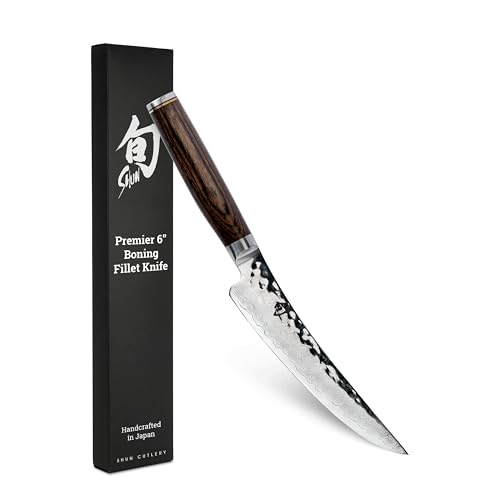
Trimming is mostly fat and membrane, not bone, which is exactly where a hard, thin Japanese edge shines. If you want the cleanest, least effort trim and you’ll treat a knife with care, this is my splurge.

You get a full tang, a triple-riveted handle and a lifetime warranty for very little money. I’d buy it for the occasional trimmer who wants something nicer looking than plain plastic.
Trimming Knives Compared
| Knife | Blade | Flex | Handle | Best for |
|---|---|---|---|---|
| Victorinox Fibrox Pro Curved | 6″, curved | Flexible | Fibrox (textured) | Silverskin, everyday trimming |
| Dexter-Russell S138 Sani-Safe | 8″, wide, curved point | Some flex | Textured plastic | Brisket and pork butt fat caps |
| Mercer BPX Curved Boning | 5.9″, curved | Semi-flexible | Textured nylon | Firm beef and pork trim |
| HENCKELS Forged Premio | 5.5″ | Not stated | Synthetic, triple riveted | Steaks, chops, chicken |
| Shun Premier Boning & Fillet | 6″, narrow, curved | Not stated | Pakkawood | Finest, cleanest trim |
| Cutluxe Curved Boning | 6″, curved | Flexible | Pakkawood | Occasional trimming on a budget |
1. Victorinox Fibrox Pro 6″ Curved Flexible Boning Knife: Best Overall
Who it’s for: anyone who trims fat, sinew and silverskin from beef, pork, lamb or chicken at home and wants one knife that does all of it.
Victorinox sells this as a boning knife, and it’s a good one, but I think its real talent is trimming. The blade is narrow, curved and flexible. Curved means the edge meets the meat at a shallow angle, so you can slide it under a layer of fat and lift rather than dig. Flexible means it bends to follow a rounded tenderloin or the dome of a pork loin instead of cutting straight across and into the meat.
Silverskin is where you’ll notice the difference most. That tough, shiny membrane on tenderloins and racks of lamb doesn’t render when it cooks, so it has to come off. With this knife you nick one end, grab the tab, angle the edge slightly up and pull the silverskin against the blade in one long strip. A stiff knife tends to bite into the meat underneath; this one rides along the top.
The Fibrox handle is the other half of the case. Trimming is greasy work, and I’d take a textured grip over fancier steel every time. This handle is about as secure as kitchen knives get when they’re coated in fat.
My reservation: the flex that makes it great on silverskin makes it a little vague on hard, cold beef fat, which is why semi-flexible fans should look at the Mercer BPX. For venison I recommend the semi-stiff version of this knife in my boning knife for deer guide.
Key specs
- Blade: 6-inch curved, flexible stainless steel
- Handle: patented Fibrox, textured and slip resistant, NSF approved
- Made in Switzerland; lifetime warranty from Victorinox covering manufacturing defects
Pros
- Flexible curved blade lifts silverskin and fat cleanly
- Excellent grip when greasy
- Also a capable boning knife for poultry and fish
- Light and easy to control for long sessions
Cons
- Flex feels vague on very firm beef fat
- Plain looks and no sheath
My verdict: the trimming knife I’d buy first. Only skip it if most of what you trim is firm beef, in which case go semi-flexible.
2. Dexter-Russell 8″ Sani-Safe Trimming Knife: Best for Big Fat Caps
Who it’s for: barbecue cooks who trim whole packer briskets, pork butts and big roasts, where a 6-inch blade feels short.
This is the only knife on my list that Dexter-Russell actually sells as a trimming knife (their listing calls it a trimming and fillet knife), and it shows. The 8-inch blade is wide, with a curved point, and Dexter-Russell grinds it for a blend of sharpness, flexibility and durability rather than maximum flop.
The length is the point. On a whole brisket you’re shaving down a fat cap that can be wider than your hand, and a longer blade lets you take it in long, even sweeps instead of lots of short choppy cuts that leave a lumpy surface. Even fat thickness matters on a brisket, because it renders evenly and the bark forms evenly. Once it’s cooked, my guide to the best brisket knife covers slicing it.
Dexter-Russell is one of the oldest cutlery makers in the United States, and this Sani-Safe line is built the way they build knives for meat plants: textured, slip-resistant plastic handle, stain-free high-carbon steel, hand-honed edge. It’s not pretty, but it’s very hard to drop.
My reservation: 8 inches is too much knife for steaks, chops and chicken. It’s a big-cut specialist, so most people will want a 6-inch knife alongside it.
Key specs
- Blade: 8-inch wide trimming blade with curved point, stain-free high-carbon steel
- Edge: hand honed
- Handle: textured, slip-resistant (Sani-Safe series)
- Model S138PCP; made in the USA according to Dexter-Russell
Pros
- Takes off wide fat caps in long, even passes
- Very secure handle
- Commercial-grade build
Cons
- Too long for small cuts
- Plain commercial looks
My verdict: if you cook whole briskets or pork butts, this is the trimming knife to add. If you don’t, the Victorinox does everything you need.
3. Mercer BPX 5.9″ Curved Boning Knife: Best Semi-Flexible
Who it’s for: cooks who mostly trim beef and pork and want a blade with a bit more backbone than a flexible one.
BPX is Mercer’s butcher line, and this curved boning knife is semi-flexible: it gives a little, but it doesn’t wave around. On firm trim like the fat on a chuck roast, a pork shoulder or a New York strip, that extra stiffness lets you push the edge exactly where you want it, which some people find easier than coaxing a fully flexible blade.
Mercer precision-forges the blade from high-carbon German steel and ice hardens it, and the mirror finish helps the knife slide out of the cut. The handle is textured glass-reinforced nylon, which I like for this job: grippy, tough and easy to scrub clean.
Mercer lists trimming fat and sinew as one of this knife’s main uses, alongside deboning chicken, ham and fish. That matches how I’d use it: a trimming knife first, a boning knife second.
My reservation: on thin silverskin, the stiffer blade doesn’t hug the meat quite as well as the Victorinox. And it’s hand wash only, according to Mercer.
Key specs
- Blade: 5.9-inch curved, semi-flexible, precision-forged high-carbon German steel, ice hardened
- Finish: mirror-finished blade
- Handle: textured, glass-reinforced nylon
- Care: hand wash, no dishwasher
Pros
- More control on firm beef and pork trim
- Forged blade from a dedicated butcher line
- Grippy, tough handle
Cons
- Less effortless on silverskin than a flexible blade
- Hand wash only
My verdict: buy it if flexible knives feel floppy to you or you mostly trim beef. For poultry and silverskin, the Victorinox is the better choice.
4. HENCKELS Forged Premio 5.5″ Boning Knife: Best Short Blade
Who it’s for: home cooks who trim steaks, chops and chicken thighs rather than big roasts, and want a forged knife that matches a German set.
Not every trimming job needs six inches. Taking the fat edge off a ribeye, pulling the tendon out of a chicken tenderloin or cleaning up chicken thighs is close, fiddly work, and a shorter blade is easier to steer in tight curves. At 5.5 inches, the Premio is the most compact knife here.
It’s also the most traditional looking: a forged blade with a bolster, a curved triple-riveted handle and a stainless end cap. If the rest of your block is German and forged, this will look like it belongs. HENCKELS says it’s dishwasher safe, which is convenient, though I’d still wash any knife by hand to keep the edge sharper for longer.
My reservations: HENCKELS doesn’t say how flexible the blade is, so don’t expect the bend of the Victorinox. And the smooth synthetic handle isn’t as grippy as Fibrox or textured nylon when it’s greasy, so keep a towel nearby.
Key specs
- Blade: 5.5-inch boning blade, German stainless steel, satin finish
- Construction: forged, with bolster
- Handle: curved, triple riveted, stainless steel end cap
- Dishwasher safe according to HENCKELS
Pros
- Short blade is easy to control on small cuts
- Forged build and classic looks
- Low maintenance stainless steel
Cons
- Flex not specified; less suited to long silverskin strips
- Smoother handle than the textured picks
My verdict: a smart buy if you trim small cuts and like forged German knives. For roasts and briskets, choose a longer blade.
5. Shun Premier 6″ Boning & Fillet Knife: Best Premium
Who it’s for: careful cooks who want the cleanest possible trim and are happy to look after a premium Japanese knife.
I left this knife out of my deer boning guide because venison work rubs against bone and joints all day, and Shun’s hard VG-MAX steel can chip when it does. Trimming is a different story. Fat, sinew and silverskin are soft, and hard, thin steel sharpened to a 16 degree edge glides through them with almost no pressure. That makes it easier to take off exactly what you mean to and nothing more.
Shun calls this blade shape a gokujo: narrow, curved and very sharp, designed to get close and cut fibrous tissue. The hammered (tsuchime) finish helps stop fat and meat sticking to the blade, and the Pakkawood handle is comfortable for both left and right-handed cooks. If you’re deciding between Shun’s two main lines, my Shun Premier vs Classic comparison explains the differences.
My reservations: keep it away from bones, frozen meat and twisting cuts, or you’ll risk chips. Pakkawood is smoother than the textured handles on this list when greasy. And the price is in a different league from the Victorinox, which will trim a brisket just as well in practical terms. Shun’s free sharpening and honing service softens the blow.
Key specs
- Blade: 6-inch gokujo shape, VG-MAX steel with 68 layers of Damascus cladding, hammered tsuchime finish
- Edge: 16 degrees
- Handle: contoured Pakkawood, ambidextrous
- Handcrafted in Japan; free sharpening and honing from Shun
Pros
- The keenest edge on my list for clean, precise trimming
- Hammered finish reduces sticking
- Beautiful knife with a useful sharpening service
Cons
- Hard steel can chip on bone or if twisted
- Pakkawood is less grippy when greasy
- Much more expensive than the other picks
My verdict: a joy to trim with if you’re careful and keep it on boneless work. If you also bone out ribs and shoulders with the same knife, buy one of the German or Swiss options instead.
6. Cutluxe 6″ Curved Boning Knife: Best Budget Forged
Who it’s for: occasional trimmers who want a full-tang knife with a wood-look handle without spending much.
Cutluxe is a newer online brand that has done well with barbecue knives, and this curved boning knife fits that crowd. Cutluxe describes the blade as flexible, tapered and hand sharpened at 14 to 16 degrees per side, which is a fine edge for a German-style steel. The full tang and triple-riveted Pakkawood handle make it feel more substantial than the plastic-handled picks.
The lifetime warranty against material and workmanship defects is a nice bit of reassurance at this price, and the curved, flexible shape does the same basic job as the Victorinox: slide under fat, follow the meat, peel silverskin.
My reservation is the handle. Laminated, polished Pakkawood looks good, but it’s slicker than Fibrox when your hands are covered in fat. For a knife that spends its life trimming raw meat, I’d still pick grip over looks, which is why this sits at number six and not higher.
Key specs
- Blade: 6-inch curved, flexible, high-carbon German steel, 56+ Rockwell
- Edge: hand sharpened, 14 to 16 degrees per side
- Handle: Pakkawood, full tang, triple riveted
- Lifetime warranty against material or workmanship defects
Pros
- Full tang and forged feel for little money
- Flexible curved blade suits trimming
- Lifetime warranty
Cons
- Polished handle is slippery when greasy
- Newer brand without the long track record of Victorinox or Dexter-Russell
My verdict: a good-looking budget trimmer for occasional use. If you trim every week, spend the same money on the Victorinox and its grippier handle.
What Makes a Good Trimming Knife
Trimming knives are mostly boning knives under another name, so the details matter more than the label on the box. These are the things I look at.
Flex: flexible for silverskin, semi-flexible for firm trim
Choose a flexible blade if you trim a bit of everything, and semi-flexible if you mostly trim beef and pork. Flexible blades bend to follow the meat and lift silverskin without digging in. Semi-flexible blades are easier to aim on cold, firm fat. Stiff blades are for boning, not trimming.
A curved blade rides under fat
A curved edge is easier to trim with than a straight one. The curve meets the meat at a shallow angle, so you can lift fat and membrane instead of cutting down into the meat below. Straight-bladed boning knives work, but they take more care.
Length: 6 inches for most, 8 for big fat caps
Six inches handles steaks, chops, tenderloins and chicken. Go shorter (5 to 5.5 inches) if you mostly trim small cuts, and add an 8-inch trimmer if you cook whole briskets or pork butts, where long sweeps give a smoother, more even fat layer.
Grip comes before steel
The handle matters most, because trimming coats everything in fat. Textured plastic, Fibrox and textured nylon stay secure; polished wood and Pakkawood are comfortable but slicker. A knife that slips while you’re working the tip under silverskin is how people cut themselves.
Easy to sharpen or long edge life
Pick softer German or Swiss steel if you want a knife that’s easy to sharpen, and hard Japanese steel if you’d rather sharpen less often. Softer steel loses its edge sooner but comes back with a honing steel in seconds. Harder steel like Shun’s VG-MAX stays sharp longer but needs a whetstone and careful handling. For most home trimming, I prefer the softer, easier option.
Don’t skip the boning vs fillet question
Fillet knives are thinner and more flexible still, made for fish. They’ll trim chicken and pork in a pinch, but they’re too floppy for brisket fat. A curved boning or trimming knife is the better all-round tool for meat.
How to Trim Fat and Silverskin Without Losing Meat
- Chill the meat first. Cold fat is firm and cuts cleanly; warm fat smears. Trim straight from the fridge.
- Dry the surface and your hands. Pat the meat with paper towels and keep a towel nearby for the handle.
- Start at an edge. Slide the tip under the fat or membrane to make a small tab you can hold.
- Angle the blade up. Tilt the edge slightly toward the fat or silverskin, away from the meat, so it cuts the layer you’re removing.
- Pull the tab, not the knife. For silverskin, hold the tab taut and move the knife in long, gentle strokes along the meat. Let the blade’s flex follow the shape.
- Leave a little fat where it helps. On brisket or pork butt, most pitmasters trim the cap to about a quarter inch rather than removing it all.
- Hone as you go. A few passes on a honing steel every so often keeps the edge biting instead of skating over the membrane.
FAQ
What is a trimming knife used for?
A trimming knife removes fat, sinew, silverskin and gristle from raw meat. It’s a short, narrow knife, usually 5 to 8 inches with a curved blade and a sharp tip, so it can slide under unwanted tissue and lift it off without cutting into the meat. Many trimming knives are sold as curved boning knives.
What is the best knife to trim fat off meat?
A curved, flexible boning knife is the best knife for trimming fat for most people, and my top pick is the Victorinox Fibrox Pro 6-inch curved flexible. For whole briskets and pork butts, a longer 8-inch trimming knife like the Dexter-Russell S138 makes big fat caps faster and more even.
Should a trimming knife be flexible or stiff?
Flexible or semi-flexible. A flexible blade follows the meat and peels silverskin cleanly, while a semi-flexible one gives more control on firm beef fat. Stiff blades are better for boning out large bone-in cuts than for trimming.
Are handheld meat fat trimmers worth it?
I’d buy a knife instead. The handheld fat trimmer tools sold online are mostly no-name gadgets, and a sharp, flexible trimming knife does the same job plus silverskin, sinew and boning. Spend the money on a good knife and keep it honed.
Can I trim meat with a chef’s knife?
You can, but it’s harder and wastes more meat. A chef’s knife is tall and stiff, so it can’t follow the curve of a fat seam or slip under silverskin. For occasional trimming it works; if you trim regularly, a trimming knife pays for itself in saved meat. Keep the chef’s knife for slicing and dicing (my best chef knife under $100 guide covers good ones).
Which knife should I use to cut the meat off a ribeye bone?
Use a boning knife, ideally a semi-flexible or stiff one. Keep the edge pressed against the bone and work in short strokes so you leave as little meat behind as possible. A flexible trimming knife works too, but a firmer blade is easier to keep tight to the bone.
How do I keep a trimming knife sharp?
Hone it often and sharpen it a few times a year. A honing steel realigns the edge during long trimming sessions, and a whetstone or a guided sharpener restores it when honing stops working. I explain the full process in my guide on how to sharpen a boning knife.
Final Verdict
For most home cooks, the Victorinox Fibrox Pro 6-inch curved flexible boning knife is the trimming knife to get: it lifts silverskin and fat cleanly, grips well when greasy and costs little. Add the Dexter-Russell 8-inch Sani-Safe if you trim whole briskets or pork butts, and choose the Mercer BPX if you prefer a firmer, semi-flexible blade for beef.
Need more than a trimming knife? My guide to the best knife for cutting meat matches a knife to every other meat job, and my best butcher knife sets guide covers complete butcher kits for processing meat at home.

Gary Portman founded knivesadvice.com in 2019. He learned to cook in his family’s kitchen as a kid and has used kitchen, pocket and outdoor knives ever since, from paring and fillet knives to survival blades he carries camping and hiking. He writes the site’s buying guides, brand reviews and sharpening how-tos to help readers find the right knife for the job. More about Gary.