
The most common cleaver mistake I hear about isn’t a cut finger. It’s a chipped knife: someone buys a big, rectangular blade that looks like a cleaver, swings it at a chicken backbone, and finds a notch in the edge. A lot of what’s sold as a “cleaver” is really a thin Chinese chef’s knife made for vegetables. A true meat cleaver is thick at the spine, heavy for its size and sharpened to a tougher edge, so its weight does the chopping and the steel survives the bone.
My pick for most home kitchens is the WÜSTHOF Classic 6-inch Cleaver: solid enough for ribs and poultry, small enough to control. On a tight budget, the Mueller 7-inch does the same job for very little.
My Top 7 Meat Cleaver Picks

It’s the cleaver I’d hand to someone who breaks down a couple of chickens a week and portions the odd rack of ribs. Six inches keeps it easy to aim, the tapered blade has real weight behind the edge, and the riveted synthetic handle shrugs off grease.

For a cleaver you’ll use a handful of times a month, this is all you need. It’s full tang, sharpened to a sturdy 18 degrees, and it costs very little. Just keep a dry towel nearby: the steel handle gets slick.

Not everyone wants to swing a hatchet. This light HENCKELS is for chicken wings, cooked ribs and small joints, and it’s easy on the wrist. Think of it as a precise little chopper, not a bone splitter.
Almost three pounds of steel with a blade 6 mm thick. If you smoke whole pork shoulders, split big beef ribs or process your own meat, this one lets gravity do the work. It’s overkill for a weeknight chicken.

This is the plain, honest cleaver you’d find in a butcher’s back room: made in the USA, NSF certified, with a textured grip that won’t twist in fatty fingers. Nothing fancy, nothing missing.

For anyone who wants a cleaver that looks as good hanging on the wall as it works on the board. It’s forged and weighted for bone work, and the walnut handle with brass rivets is a real pleasure. It does ask for hand washing.

One piece of stainless steel from tip to butt, so there’s no seam or rivet for meat juice to hide in. It’s lighter than it looks and easy to keep clean. The steel handle splits people, so try the grip with wet hands if you can.
Meat Cleavers Compared
| Cleaver | Blade | Weight class | Handle | Best for |
|---|---|---|---|---|
| WÜSTHOF Classic 6″ | 6″, tapered, made in Germany | Medium | Riveted synthetic | Poultry, ribs, joints |
| Mueller 7″ | 7″, 18 degree edge, full tang | Medium | Seamless stainless steel | Occasional bone work on a budget |
| HENCKELS Classic 6″ | 6″, satin finish | Light | Riveted synthetic | Wings, small bones, cooked ribs |
| Dalstrong Obliterator 9″ | 9″, 6 mm thick, 7Cr17MoV | Very heavy (2.9 lb) | G10 | Big bones, whole shoulders |
| Dexter-Russell S5387PCP | 7″, high-carbon stain-free steel | Medium-heavy | Textured polypropylene | Greasy, high-volume butchery |
| Lamson 7.25″ | 7.25″, forged high-carbon stainless | Medium-heavy | American walnut, brass rivets | Bone work with a classic look |
| Global G-12 | 6.5″, one-piece stainless | Light | Stainless steel, bolsterless | Hygiene, small joints |
1. WÜSTHOF Classic 6-Inch Cleaver: Best Overall
Who it’s for: home cooks who split chickens, cut through pork or lamb ribs and disjoint legs, and want one cleaver that will last decades.
WÜSTHOF lists this cleaver for exactly the jobs most of us need one for: splitting poultry, disjointing meat and cutting through ribs. The blade is tapered from the base to the tip, so there’s mass near the handle for the chop and a slightly finer front end for lighter cuts. At 6 inches long, it’s easy to land where you aim, which matters more than raw weight when you’re working between ribs.
The handle is the same triple-riveted synthetic you’ll find across the Classic line. I like it here because cleaver work is greasy work, and a synthetic handle is grippier and easier to scrub than polished wood. If you already own a Classic chef’s knife, the feel is familiar. My WÜSTHOF knives review covers the rest of the line.
My reservation: it’s a medium-weight cleaver, not a hatchet. It’ll handle chicken, pork ribs and lamb joints comfortably, but thick beef bones or frozen meat are a job for a saw. And WÜSTHOF says hand wash for best results, which I’d follow with any cleaver.
Key specs
- Blade: 6-inch high-carbon steel with a stain-resistant alloy, tapered base to tip
- Handle: synthetic polypropylene, triple riveted
- Made in Germany; limited lifetime warranty
- Hand wash recommended
Pros
- Easy to control for precise chops between bones
- Grease-friendly synthetic handle
- Built to last a lifetime
Cons
- Costs much more than the Mueller for similar home use
- Not heavy enough for big beef bones
My verdict: the cleaver I’d buy once and keep. If you only chop bones a few times a year, the Mueller is the smarter spend.
2. Mueller 7-Inch Meat Cleaver: Best Budget
Who it’s for: anyone who needs a cleaver now and then, for a holiday bird, a rack of ribs or a whole chicken on sale.
A cleaver is the one knife where cheap can work surprisingly well, because the job relies on weight and a tough edge, not on refined steel. The Mueller gets the basics right: a full tang, high-carbon German stainless steel and an 18 degree edge on both sides. That angle is a sensible choice for a cleaver; a thinner edge would be sharper but would dent on the first knuckle bone.
Mueller sells it for poultry joints, rib bones and brisket, and the wide blade is handy for scooping chopped food off the board.
The handle is my one real complaint. It’s seamless stainless steel, which is easy to clean but gets slippery once your hands are covered in chicken fat. Wipe your hands and the handle often, and keep your grip firm. I’d also hand wash it to keep the edge from knocking around in the dishwasher.
Key specs
- Blade: 7-inch high-carbon German stainless steel, 18 degree double bevel
- Handle: full tang, seamless stainless steel, contoured
- Backed by Mueller’s guarantee
Pros
- Costs very little for a full-tang cleaver
- Durable edge angle for bone work
- No seams in the handle to trap food
Cons
- Steel handle slips when greasy
- Less refined finish than the German brands
My verdict: the obvious buy for occasional bone work. Pay more only if you’ll use a cleaver every week.
3. HENCKELS Classic 6-Inch Meat Cleaver: Best Lightweight
Who it’s for: cooks with smaller hands or sore wrists, and anyone whose “bone work” means wings, drumsticks and cutting cooked ribs apart.
HENCKELS is unusually honest about this cleaver. It calls it lightweight and lists trimming skin and fat, breaking down smaller, thinner bones and cutting up barbecue ribs for serving. I take that at face value: this is a nimble chopper for light bone work, and it’s very good at that.
The light weight is a real advantage for some people. Swinging a heavy cleaver accurately takes some strength, and a tired arm is a sloppy arm. The HENCKELS lets you make lots of small, controlled chops, like separating wing flats from drumettes or slicing a rack of smoked ribs between the bones.
What it can’t do is power through a thick pork shoulder bone or a frozen block of meat; that’s the wrong tool, and you risk damaging the edge. HENCKELS allows the dishwasher; I’d keep it out anyway to protect the edge.
Key specs
- Blade: 6-inch stainless steel, satin finish, stain and rust resistant
- Lightweight design for smaller, thinner bones
- Dishwasher safe per HENCKELS
Pros
- Easy to control, even for long sessions
- Great for wings and cooked ribs
- Low-maintenance stainless blade
Cons
- Too light for thick or frozen bones
- Maker gives few construction details
My verdict: the cleaver for wing nights and barbecue plates. If you split whole chickens through the backbone often, get something heavier.
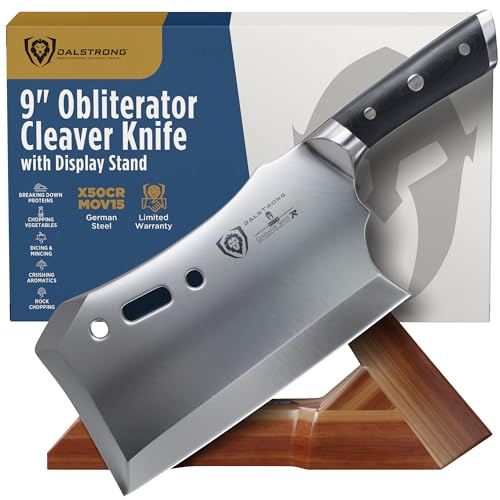
4. Dalstrong Obliterator 9-Inch Meat Cleaver: Best Heavy Duty
Who it’s for: barbecue cooks, hunters and anyone who portions large cuts with the bone in.
The Obliterator is about as heavy as kitchen cleavers get. Dalstrong lists a 6 mm thick blade and a weight of 2.9 pounds, and even says to choose it when weight is part of the task. With that much mass, a short, controlled drop does the work that would take several hard swings with a 6-inch cleaver. It’s built for splitting pork shoulders, beef short ribs and big poultry for the smoker.
The rest of the package is very Dalstrong: a full tang 7Cr17MoV blade, a thick black G10 handle, a fitted sheath and an acacia stand to show it off. As I said in my Dalstrong knives review, this brand puts real effort into the unboxing, and some of the cost goes into that presentation. That makes it a great gift for a pitmaster.
The weight is also the downside. It’s tiring to use for long and clumsy for small jobs like chicken wings, and the 9-inch blade needs a big, sturdy board. G10 is comfortable, but smoother than a textured plastic handle, so keep it dry.
Key specs
- Blade: 9-inch, 6 mm thick, high-carbon 7Cr17MoV, full tang
- Weight: 2.9 lb
- Handle: black G10
- Includes acacia wood stand and fitted sheath
Pros
- Enormous chopping momentum
- Comes with a stand and sheath
- Impressive gift
Cons
- Heavy and tiring for everyday cooking
- Needs a large, solid cutting board
- You pay partly for the presentation
My verdict: a specialist for people who chop big bones regularly. Everyone else will find it too much knife.
5. Dexter-Russell 7-Inch Stainless Cleaver (S5387PCP): Best Commercial
Who it’s for: people who process a lot of meat at once, from deer season to bulk chicken prep, and value grip over looks.
Dexter-Russell has a long history in butcher shops and restaurant kitchens, and this cleaver shows it. It’s a practical, made-in-the-USA tool: a high-carbon, stain-free blade that’s individually ground and honed, and a textured polypropylene handle designed to resist slipping in wet conditions. It’s NSF certified, so it’s meant for commercial kitchens.
That handle is why it’s on my list. When you’re chopping through a pile of chicken backs or splitting ribs for an hour, your hands get slippery and a smooth handle can twist. Textured plastic is the safest grip there is, and it can be scrubbed hard without worrying about wood or finish.
It isn’t pretty, and the plain plastic handle says “work tool” rather than “gift.” Dexter-Russell describes it as heavy-duty with weight and balance for one-swing cuts, but don’t expect the brute mass of the Dalstrong.
Key specs
- Blade: 7-inch high-carbon stain-free steel, individually ground and honed
- Handle: textured, slip-resistant polypropylene
- NSF certified; made in the USA
Pros
- Best grip on this list with greasy hands
- Commercial-grade and easy to sanitize
- American made
Cons
- Utilitarian looks
- Not as heavy as the 9-inch cleavers
My verdict: the cleaver for high-volume, messy jobs. If it’ll live on a magnetic strip in a pretty kitchen, look at the Lamson.
6. Lamson 7.25-Inch Meat Cleaver, Walnut: Best Wood Handle
Who it’s for: cooks who like traditional tools and don’t mind a little care for a handle that ages well.
Lamson is one of the old American cutlery names, and this cleaver is a traditional design done properly. The blade is forged from high-carbon stainless and weighted for bone work; Lamson says it’s thick enough to go through bone rather than around it, and lists splitting chicken joints and pork ribs in a single stroke. At 7.25 inches it’s a bit longer than my top pick, which gives a little more reach across a big cut.
The solid American walnut handle with brass rivets is the reason to choose it. It’s warm, good-looking and comfortable, and it’ll darken nicely over the years. Lamson also points out that the broad face is good for smashing garlic and ginger and carrying food to the pan.
Wood needs care, though. Lamson warns that the dishwasher dries out and cracks walnut, so hand wash it and dry it promptly, and oil the handle now and then. Polished wood also gives a less secure hold than textured plastic once fat gets on it.
Key specs
- Blade: 7.25-inch forged high-carbon stainless steel
- Handle: solid American walnut, brass rivets
- Hand wash only (handle)
Pros
- Forged weight for bone work
- Beautiful walnut handle
- Handy for smashing and scooping too
Cons
- Wood handle needs hand washing and oiling
- Less grippy than textured plastic when greasy
My verdict: a cleaver you’ll enjoy owning as much as using. Choose the Dexter-Russell if you want zero upkeep.
7. Global G-12 6.5-Inch Meat Cleaver: Best All-Steel
Who it’s for: Global fans and hygiene-minded cooks who want a light cleaver with nothing to trap raw meat juices.
Global’s cleaver is built like the rest of its knives: entirely stainless steel, with no bolster and no separate handle. That makes it one of the easiest cleavers to clean properly, which matters when you’re handling raw chicken. The bolsterless design also means you can use and sharpen the whole edge, right up to the heel.
Global calls it lightweight for agility, and it’s square-bladed for butchering and cutting through bones. In practice it sits closer to the HENCKELS than to the heavy cleavers: great for poultry and small joints, less suited to big bones.
The steel handle is the catch, and it’s the same point I make about every Global knife. It’s hygienic and many people love the feel, but it gets slippery when wet or greasy. If you can, hold one before you buy.
Key specs
- Blade: 6.5-inch square blade, all stainless steel
- Bolsterless, one-piece construction
- Lightweight; hand washing preferred
Pros
- Easiest to clean on this list
- Full edge usable and sharpenable
- Light and agile
Cons
- Slippery steel handle when greasy
- Too light for heavy bones
My verdict: a clean, modern choice for poultry and small joints. If grip matters more than looks, the Dexter-Russell is safer.
What Makes a Meat Cleaver Worth Buying
Weight does the cutting
A good meat cleaver is heavy for its size, because momentum, not pressure, is what breaks bone. Medium cleavers (like the WÜSTHOF and Mueller) suit poultry and pork ribs; light ones (HENCKELS, Global) suit wings and cooked ribs; very heavy ones (Dalstrong) are for big bones and large cuts. Buy the weight that matches what you chop most often.
6 to 7 inches suits most kitchens
A 6 to 7-inch blade is long enough for a whole chicken and short enough to aim accurately. Go to 9 inches only for large cuts and a large board.
A thick spine and a tough edge
Meat cleavers are thick at the spine and sharpened to a sturdier edge than a chef’s knife, so they don’t chip or dent on bone. That’s the real difference from a Chinese chef’s knife, which looks similar but is thin and meant for vegetables and boneless meat. If that’s what you’re after, see my best Chinese chef’s knives instead.
Grip beats looks
Choose a handle that stays secure with greasy hands. Textured plastic is the safest; G10 and wood are comfortable but smoother; bare stainless steel is the slipperiest. A cleaver that twists mid-swing is a hazard.
Know what a cleaver can’t do
A cleaver goes through poultry, pork and lamb bones and soft joints. Thick beef leg bones and frozen meat call for a bone saw, and a boning knife is better for removing meat from the bone. My guide to the best knife for cutting meat covers which knife does which job.
How to Use a Meat Cleaver Safely
- Use a thick, stable board. A heavy wooden or end-grain board absorbs the blow; put a damp towel underneath so it can’t slide. Never chop on glass, stone or a thin plastic sheet.
- Find the joint first. Wiggle the bone to see where it bends, and aim there. Joints separate with one clean chop; solid bone takes more force.
- Hold the handle firmly near the blade and keep your other hand flat on the meat, well away from the landing spot.
- Let the cleaver drop. Lift it a short way and let its weight do the work, rather than swinging wildly. One accurate chop beats three hard ones.
- If it sticks, rock it out gently or lift the whole piece and bring it down together on the board. Don’t twist the blade sideways in the bone.
FAQ
Can a meat cleaver cut through bone?
Yes, a real meat cleaver cuts through poultry bones, pork and lamb ribs and most joints. Very thick beef bones and frozen meat are better handled with a bone saw, which avoids damaging the cleaver’s edge.
What size meat cleaver should I buy?
A 6 to 7-inch meat cleaver suits most home kitchens. Choose a 9-inch heavy cleaver only if you regularly portion big cuts like pork shoulder or beef ribs.
What is the difference between a meat cleaver and a vegetable cleaver?
A meat cleaver is thick and heavy with a sturdy edge for chopping through bone. A vegetable cleaver (Chinese chef’s knife) is thin and light for slicing and chopping vegetables and boneless meat, and it can chip on bone.
How do you sharpen a meat cleaver?
Sharpen a meat cleaver on a whetstone or a guided sharpener, keeping a steeper angle than you’d use on a chef’s knife so the edge stays tough. It doesn’t need to be razor sharp: a clean, durable edge works best on bone.
Can you cut frozen meat with a cleaver?
It’s best not to. Frozen meat is hard and brittle, so the cleaver can glance off or chip. Thaw the meat partly, or use a bone saw.
Should a meat cleaver go in the dishwasher?
Even when the maker allows it, hand washing is better: the dishwasher knocks and dulls the edge, and it ruins wooden handles. Wash it, dry it right away and store it on a strip or with a guard.
Final Verdict
The WÜSTHOF Classic 6-inch Cleaver is the meat cleaver I’d recommend to most home cooks: accurate, solid and built to last. The Mueller 7-inch does the same work for very little money, and the Dalstrong Obliterator is there for anyone who regularly takes on big bones.
Building a meat kit? My best butcher knife sets guide adds the breaking and boning knives a cleaver can’t replace, and my best butcher knife picks cover the long breaking knife on its own.

Gary Portman founded knivesadvice.com in 2019. He learned to cook in his family’s kitchen as a kid and has used kitchen, pocket and outdoor knives ever since, from paring and fillet knives to survival blades he carries camping and hiking. He writes the site’s buying guides, brand reviews and sharpening how-tos to help readers find the right knife for the job. More about Gary.