
If you want one Chinese chef’s knife, get the Victorinox Fibrox 7″ Chinese Cleaver. It’s light, it grips well even with wet hands, and it costs little enough that you can find out whether the style suits you without regret. For a beautiful upgrade, the Shun Classic 7″ Vegetable Cleaver is the one I’d save for.
One warning before you shop. A Chinese chef’s knife looks like a cleaver, and Amazon often lists the two together, but it is a thin slicing and chopping knife. Its edge is ground fine for vegetables, boneless meat and fish, and it can chip or roll if you swing it through chicken bones. If you need to chop through bone, you want a heavy meat cleaver with a thick spine instead. Everything below is the thin kind.
My Top 6 Chinese Chef’s Knife Picks

This is the Chinese chef’s knife I’d buy for a kitchen that has never owned one. The textured Fibrox handle stays secure when your hands are wet from washing greens, and the Swiss-made blade is sharp and easy to keep that way. It looks plain, but it does the job without fuss.
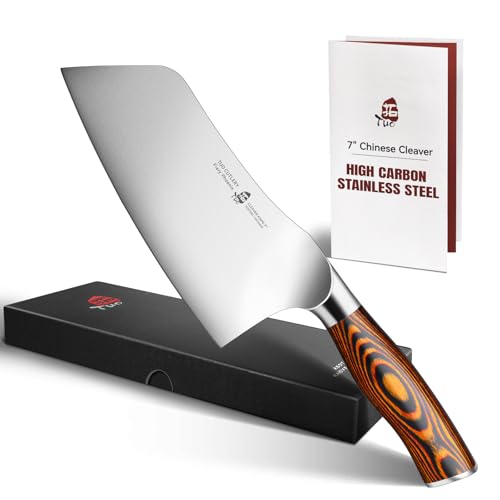
For very little money, TUO gives you a full-tang Chinese chef’s knife with a handsome Pakkawood handle and a gift box. The softer German steel is forgiving, which suits someone still learning to chop with a wide blade.

If you already love the shape and want the nicest version, this is it. Shun brings its VG-MAX core and 68 Damascus layers to the Chinese cleaver, and the result glides through cabbage and squash with very little effort.

Wüsthof makes this one in Solingen, and the wide 8-inch blade is the biggest on my list. I like that Wüsthof is clear about its job: vegetables and boneless food only. That honesty is rarer than it should be in this category.

This is the most traditional-looking knife here, with a round Padauk wood handle like the ones you see in Chinese restaurant kitchens. HEZHEN wraps a hard 9Cr18CoMoV core in softer steel, so you get a keen edge with some protection around it.
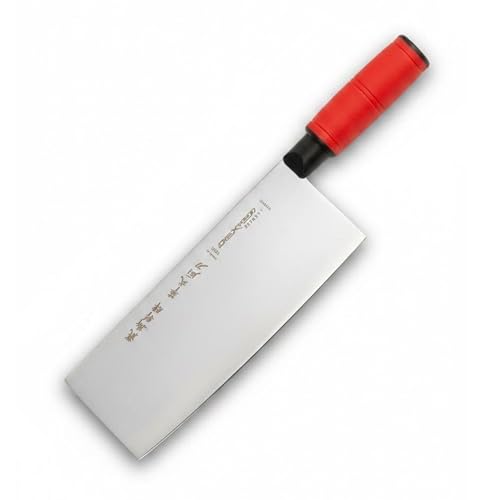
Dexter-Russell has made this restaurant pattern for decades, and it’s still the straightforward working knife it always was. The red SofGrip handle is grippy and NSF certified, and the knife is made in the USA.
Chinese Chef’s Knives Compared
| Knife | Blade | Steel | Handle | Made in | Best for |
|---|---|---|---|---|---|
| Victorinox Fibrox 7″ | 7″, straight edge | Victorinox stainless | Fibrox, non-slip | Switzerland | First Chinese chef’s knife |
| TUO Fiery Phoenix 7″ | 7″, curved edge, full tang | German 1.4116, 56 HRC | Pakkawood | Not stated | Tight budgets, gifts |
| Shun Classic 7″ | 7″, 68-layer Damascus | VG-MAX core | D-shaped Pakkawood | Japan | The premium choice |
| Wüsthof 8″ | 8″, wide | Wüsthof stainless | Not stated | Germany | Big vegetables, larger hands |
| HEZHEN 7″ | 7″, 3-layer clad | 9Cr18CoMoV core, 58 to 60 HRC | Round Padauk wood | Not stated | Traditional feel |
| Dexter-Russell 8″ x 3¼” | 8″, individually ground | High-carbon DEXSTEEL | SofGrip rubber | USA | Busy, wet kitchens |
1. Victorinox Fibrox 7″ Chinese Cleaver: Best Overall
Who it’s for: anyone trying a Chinese chef’s knife for the first time, and cooks who want a dependable everyday version.
Victorinox applies the same recipe here that made its Fibrox chef’s knife so popular: a sharp, thin Swiss-made blade on a handle that simply doesn’t slip. That handle matters more on this shape than on most knives. A Chinese chef’s knife is tall and wide, and you often use the flat to scoop food off the board, so your hand moves a lot. A textured grip keeps it steady.
The 7-inch straight edge suits the classic chopping motion, where the whole edge meets the board at once, and it’s light enough to use for a long prep session. I’ve covered Victorinox’s kitchen knives in more depth in my Victorinox chef knife review, and the same strengths and weaknesses apply here.
Speaking of weaknesses, it’s no beauty. The black plastic handle and plain blade won’t impress anyone, and Victorinox says very little about the steel itself. Victorinox also calls it dishwasher safe, but I’d still wash it by hand; a dishwasher dulls any edge faster.
Key specs
- Blade: 7″, straight edge
- Handle: Fibrox, ergonomic and non-slip
- Made in Switzerland
- Dishwasher safe per Victorinox (hand washing still recommended)
Pros
- Secure grip with wet or oily hands
- Light and easy to control
- Low price for a Swiss-made knife
Cons
- Plain, utilitarian looks
- Few published details on steel and hardness
My verdict: the easiest Chinese chef’s knife to recommend. If looks matter to you, the TUO or Shun will feel more special.
2. TUO Fiery Phoenix 7″ Vegetable Cleaver: Best Budget
Who it’s for: budget buyers and gift givers who want something that looks nicer than its price.
TUO’s Fiery Phoenix gets a lot right for very little money. It’s full tang, the Pakkawood handle has a polished bolster, and it arrives in a box that makes it an easy present. The blade is German 1.4116 stainless (X50CrMoV15) tempered to about 56 HRC, the same family of steel many German kitchen knives use.
That softer steel is a good match for a beginner. It takes knocks better than hard Japanese steel and is easy to hone back. TUO sharpens it to 18 degrees per side, a sturdy angle that’s sharp without being delicate. The edge also has a gentle curve, so you can rock it a little when mincing herbs, which some cooks find easier than pure up-and-down chopping.
The trade-off is edge holding. It will need honing and sharpening more often than the Shun or HEZHEN. And while TUO calls the Pakkawood essentially waterproof, I’d still dry it right after washing.
Key specs
- Blade: 7″, curved profile, full tang
- Steel: German 1.4116 (X50CrMoV15), HRC 56 ± 2
- Edge: hand sharpened to 18 degrees per side
- Handle: Pakkawood with polished bolster
- Gift box; TUO lifetime guarantee against manufacturing defects
Pros
- Great looks for the money
- Forgiving, easy-to-hone steel
- Curved edge allows some rocking
Cons
- Needs sharpening more often
- Pakkawood is smoother than a textured grip when wet
My verdict: the best way to try a Chinese chef’s knife for little money. Choose the Victorinox instead if grip matters more to you than looks.
3. Shun Classic 7″ Vegetable Cleaver: Best Premium
Who it’s for: cooks who already reach for a cleaver-shaped knife and want the best one they can buy.
Shun’s take on the Chinese cleaver keeps the traditional tall, rectangular shape but builds it like a Japanese knife: a VG-MAX core with 68 layers of Damascus cladding and a 16-degree edge. Hard steel and a thin edge make a big difference on a wide blade. Cabbage, squash and big onions split cleanly instead of wedging the knife.
The D-shaped Pakkawood handle is comfortable, and Shun handcrafts the knife in Japan and offers free sharpening and honing. My Shun knives review covers the Classic line and how it compares with Shun’s other series.
The cost is the obvious drawback; it costs far more than the Victorinox. The other is the same caution I give for every Shun: hard steel chips if it meets bone, frozen food or a twisting cut. On a knife that looks this much like a cleaver, it’s tempting to use it like one. Don’t.
Key specs
- Blade: 7″, VG-MAX core with 68 layers of Damascus cladding
- Edge: 16 degrees per side
- Handle: D-shaped Pakkawood, suits left- and right-handed cooks
- Handcrafted in Japan; free sharpening and honing from Shun
Pros
- Exceptionally sharp and long-lasting edge
- Beautiful Damascus finish
- Free sharpening service
Cons
- Expensive
- Hard edge chips if used like a meat cleaver
My verdict: the Chinese chef’s knife to buy if you cook vegetables every day and look after your knives. Casual cooks will be happy with the Victorinox.
4. Wüsthof 8″ Chinese Chef’s Knife: Best German-Made
Who it’s for: cooks with larger hands or big boards who want a Chinese chef’s knife from a German brand they trust.
Wüsthof has been making knives in Solingen, Germany, for over 200 years, and this 8-inch Chinese chef’s knife carries the Solingen name. The blade is the longest on this list, which helps with wide heads of cabbage, melons and big piles of herbs, and the tall face makes it easy to carry chopped food to the pan.
What I respect is how Wüsthof describes it. The listing says plainly that it’s meant for vegetables and boneless ingredients, not bones or coconuts, and points you to a European cleaver for those jobs. That’s exactly how a Chinese chef’s knife should be used, and it saves a lot of chipped edges. If you already own other Wüsthof knives, my Wüsthof knives review explains how the brand’s lines differ.
My reservation: Wüsthof doesn’t list the handle material, steel hardness or weight for this model, so I can’t compare those details with the others.
Key specs
- Blade: 8″, wide Chinese chef’s profile
- Use: vegetables and boneless ingredients (not bones or very hard foods)
- Made in Solingen, Germany
- Limited lifetime warranty
Pros
- Largest blade here for big jobs
- Trusted German maker with a lifetime warranty
- Clear guidance on what it’s for
Cons
- Few published specs
- 8 inches can feel big on a small board
My verdict: a solid choice for German-knife loyalists who want a bigger blade. If you have a small kitchen, a 7-inch knife is easier to handle.
5. HEZHEN 7″ Clad Steel Chinese Chef Knife: Best Traditional Style
Who it’s for: cooks who want a Chinese chef’s knife that looks and feels like the real restaurant tool.
HEZHEN is a Chinese knife brand, and this is the pick for anyone who likes the traditional look. The round, hand-polished Padauk wood handle is the shape you see in Chinese kitchens. It lets you twist and angle the blade freely, and most people find it comfortable within a few sessions.
The blade is a three-layer composite: a 9Cr18CoMoV core hardened to 58 to 60 HRC, sandwiched between softer outer steel. That’s a smart layout for this shape. The hard core holds a keen edge, ground to 15 degrees per side, while the softer cladding makes the wide blade less brittle. It’s a nice middle ground between the soft TUO and the hard Shun.
My reservations are about the handle and the paperwork. A round wooden handle is less secure than the Fibrox or rubber grips when your hands are wet, and natural Padauk needs drying and an occasional oil. HEZHEN also ties its lifetime warranty to buying directly from the brand, so check the seller before you order.
Key specs
- Blade: 7″, 3-layer composite clad steel
- Core: 9Cr18CoMoV, 58 to 60 HRC
- Edge: 15 degrees per side, wet ground by hand
- Handle: round natural Padauk wood
Pros
- Authentic traditional shape and feel
- Hard core with protective cladding
- Keen 15-degree edge
Cons
- Round wood handle slips more when wet
- Wood needs drying and occasional oiling
My verdict: the knife for cooks who want tradition and a good core steel at a fair price. If you cook with wet hands a lot, pick the Dexter-Russell or Victorinox.
6. Dexter-Russell 8″ x 3¼” Chinese Chef’s Knife: Best Made in USA
Who it’s for: home cooks who want a no-nonsense professional knife, and anyone who prefers to buy American-made.
This is the plainest knife on my list, and I include it because it’s a classic. Dexter-Russell, one of the oldest US cutlery makers, has long sold this 8-inch by 3¼-inch pattern to restaurant kitchens. The blade is Dexter’s high-carbon DEXSTEEL, which is stain resistant, and each knife is individually ground and honed.
The red SofGrip handle is the big draw. It’s a soft, slip-resistant rubber that stays secure with wet or greasy hands, and the knife is NSF certified, meaning it meets food-service sanitation standards. In a busy home kitchen where you’re rinsing produce and chopping at the same time, that matters more to me than exotic steel.
It’s a working tool, and it looks like one. The bright red handle won’t suit every kitchen, and Dexter doesn’t publish the steel hardness for this model. It’s also less refined than the Shun or HEZHEN.
Key specs
- Blade: 8″ x 3¼”, high-carbon DEXSTEEL, individually ground and honed
- Handle: red SofGrip, slip resistant
- NSF certified
- Made in the USA
Pros
- One of the grippiest handles here
- Proven professional pattern
- Made in the USA
Cons
- Utilitarian looks
- Hardness not published
- Less refined edge than the premium picks
My verdict: a dependable workhorse for cooks who value grip and an American-made tool. If you want something to show off, look at the Shun instead.
What to Look For in a Chinese Chef’s Knife
Thin blade, not a bone cleaver
Check that you’re buying a thin vegetable cleaver, not a heavy meat cleaver. A Chinese chef’s knife usually has a spine around 2 to 3mm thick and a fine edge, while a bone cleaver is much thicker and heavier with a blunter edge. Listings mix the two up constantly, so read the description for words like “vegetable” or “slicing” and warnings about bones.
Blade size
A 7-inch blade suits most home cooks; 8 inches is better for big boards and larger hands. The height is part of the appeal: a tall blade keeps your knuckles clear of the board and doubles as a scoop.
Steel hardness
Softer steel (about 56 HRC, like the TUO) is forgiving and easy to hone. Harder steel (58 to 61 HRC, like the HEZHEN core or Shun’s VG-MAX) stays sharp longer but is less tolerant of rough use. HRC is the Rockwell hardness scale; higher means harder.
Handle
Choose a handle that stays secure when your hands are wet. Textured plastic and rubber grips (Victorinox, Dexter-Russell) are the safest; Pakkawood is comfortable but smoother; round wooden handles feel traditional and allow easy angling but slip the most.
Weight
A Chinese chef’s knife should feel light for its size. If a “Chinese chef’s knife” feels heavy and thick, it’s probably a cleaver, and it will crush vegetables instead of slicing them.
How to Use a Chinese Chef’s Knife
Hold it with a pinch grip. Pinch the blade just ahead of the handle between your thumb and the side of your index finger, with your other fingers wrapped around the handle. This gives far more control than holding only the handle.
Chop straight down or push forward. Most cutting is a straight down chop or a forward push slice, with the whole edge meeting the board. Keep your guiding hand’s fingertips curled under, knuckles against the flat of the blade.
Use the flat as a scoop. Turn the blade sideways and slide it under chopped food to carry it to the pan. Push food with the spine, not the edge, so you don’t dull it.
Crush garlic and ginger carefully. Lay the blade flat over the clove with the edge facing away from you, then press down on the flat with the heel of your hand.
Leave bones to a cleaver. Don’t chop through bones, frozen food or hard shells. For those, use a heavy meat cleaver.
FAQ
What is a Chinese chef’s knife?
A Chinese chef’s knife (cai dao) is a tall, rectangular, thin-bladed knife used for almost all prep work in Chinese cooking: slicing, chopping, mincing and scooping. Despite its shape, it is a slicing knife, not a meat cleaver for bones.
What’s the difference between a Chinese chef’s knife and a meat cleaver?
Thickness and weight. A meat cleaver has a thick spine and a heavy, blunt edge built to chop through bone. A Chinese chef’s knife is much thinner and lighter, with a fine edge that slices vegetables and boneless meat but can chip on bone.
Is a Chinese chef’s knife better than a Western chef’s knife?
Neither is better; they suit different cutting styles. The Chinese knife excels at straight chopping, thin slicing and scooping, while a Western chef’s knife’s curved edge and point are better for rocking and fine tip work. Many cooks happily use a Chinese chef’s knife as their only knife.
Is a Chinese chef’s knife the same as a nakiri?
They are related but not the same. A nakiri is a Japanese vegetable knife that is shorter in height and usually lighter, while a Chinese chef’s knife is taller and handles meat and fish too. If you mostly cut vegetables and want something smaller, see my best nakiri knife guide.
Are Chinese-made kitchen knives good?
Many are. Plenty of good knives are made in China, including some on this list, but quality varies widely. Look for a named steel, a stated hardness and a known brand, and be wary of listings that call a knife “Japanese” or “German” without naming the steel.
Can you sharpen a Chinese chef’s knife on a whetstone?
Yes. Sharpen it like any double-bevel kitchen knife, holding the angle steady along the long, straight edge. A whetstone or a fine ceramic rod works best; the wide blade makes it easy to keep the angle consistent.
Final Verdict
For most kitchens, the Victorinox Fibrox 7″ Chinese Cleaver is the one to buy: light, grippy and inexpensive. If you want a cleaver-shaped knife that cuts like a premium Japanese blade, the Shun Classic 7″ Vegetable Cleaver is worth the money. And for a traditional round handle and a hard clad core, I’d go with the HEZHEN 7″.
Shopping on a tighter budget? The SHI BA ZI ZUO cleaver in my best kitchen knives under $100 guide is another good Chinese-style option, and my best chef knives under $100 covers the Western shape.

Gary Portman founded knivesadvice.com in 2019. He learned to cook in his family’s kitchen as a kid and has used kitchen, pocket and outdoor knives ever since, from paring and fillet knives to survival blades he carries camping and hiking. He writes the site’s buying guides, brand reviews and sharpening how-tos to help readers find the right knife for the job. More about Gary.