
A light knife is the one you actually carry. Most people who leave their pocket knife at home do it because it drags their pants down or prints through the fabric, not because they stopped needing it. Cut the weight to under 3 ounces and the knife disappears, while a full 3-inch blade still handles boxes, food and rope.
The trick is getting there without a toy-sized blade or a flimsy lock. My pick is the Benchmade Bugout, which gives you a 3.24-inch S30V blade at 1.85 ounces. The Gerber Zilch is the budget alternative.
My Top 6 Lightweight Pocket Knife Picks

The benchmark for ultralight carry: a full-size blade in premium steel, Benchmade’s AXIS lock, and a weight you’ll forget about. Expensive, but it’s the one people keep carrying.

A fat, hand-filling handle and a finger choil make this light knife feel bigger than it is. The back lock works from either side.
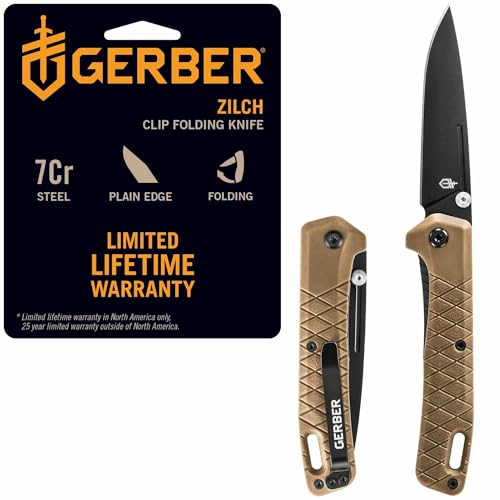
A 3.1-inch blade in a knife that weighs almost nothing and costs very little. The one I’d buy as a backup or a first knife.

A wooden-handled French folder with a long, thin blade that slices beautifully. Lighter than any clip knife here with a blade over 3 inches, if you can live without the clip.

A button lock and powder steel blade in a light FRN handle. The best mix of features and low weight I’ve found for little money.

The Bugout shrunk to a 2.82-inch blade and 1.5 ounces. Better proportioned for small hands and smart-casual pockets.
Lightweight Pocket Knives Compared
| Knife | Blade | Steel | Lock | Weight | Best for |
|---|---|---|---|---|---|
| Benchmade Bugout | 3.24″ drop point | CPM-S30V | AXIS | 1.85 oz | Ultralight daily carry |
| Spyderco Native 5 Lightweight | 2.95″ flat ground | CPM SPY27 | Back lock | About 2.5 oz | Secure grip, either hand |
| Gerber Zilch | 3.1″ drop point | Stainless | Frame lock | 2.2 oz | Budget, backup knife |
| Opinel No.08 Stainless | 8.5 cm (3.3″) Yatagan | Sandvik 12C27 mod. | Virobloc ring | About 1.6 oz | Food, picnics, tradition |
| CJRB Pyrite-Light | 3.34″ Wharncliffe | AR-RPM9 | Button lock | 2.82 oz | Features for little money |
| Benchmade Mini Bugout | 2.82″ drop point | CPM-S30V | AXIS | 1.5 oz | Small hands, dress pockets |
1. Benchmade Bugout 535 (CPM-S30V, Grivory): Best Overall
Who it’s for: daily carriers, hikers and backpackers who want a premium full-size knife at the lowest weight.
The Bugout is why “ultralight EDC” became a category. Benchmade fits a 3.24-inch CPM-S30V drop point into a thin Grivory (glass-filled nylon) handle and gets the whole knife down to 1.85 ounces. S30V keeps cutting well past the point where the budget steels in this guide need a stone and resists rust well, which matters on a knife you carry in sweaty pockets.
The AXIS lock is the other reason it’s my top pick. A small spring-loaded bar runs across the handle; pull it back with your thumb and the blade swings free, from either side, with no fingers in the way. The clip reverses for left-handers, and Benchmade’s LifeSharp service resharpens the knife free for life (you pay shipping), with the knife made in Oregon City, Oregon.
My reservation is the handle. It’s so thin that it flexes slightly when you squeeze it hard, and the plain Grivory feels inexpensive on a knife that isn’t. It’s a great carry knife, not a prying tool.
Key specs
- Blade: 3.24-inch drop point, CPM-S30V, 58 to 60 HRC
- Handle: Grivory, fully ambidextrous
- Lock: AXIS
- Weight: 1.85 oz (manufacturer)
- Reversible clip, lanyard hole; LifeSharp service
Pros
- Full-size blade at very low weight
- Premium, rust-resistant steel
- Smooth, ambidextrous lock
Cons
- Handle flexes under a hard squeeze
- Costs much more than the budget picks
My verdict: the lightweight knife to buy if you’ll carry it every day. If it’s going to sit in a drawer most of the week, the Zilch makes more sense.
2. Spyderco Native 5 Lightweight (CPM SPY27, FRN): Best Grip for the Weight
Who it’s for: people who find ultralight knives too skinny to hold, and left-handers.
Light knives often feel like a strip of plastic in the hand. The Native 5 Lightweight is the antidote: its FRN handle is thick and curved, with a finger choil in front and a thumb ramp on the spine, so your hand locks onto it. Spyderco’s Bi-Directional Texture adds grip in both directions without chewing up pockets.
The 2.95-inch blade is full flat ground in CPM SPY27, a newer stainless powder steel Spyderco uses for good edge holding and strong rust resistance. The back lock releases from the middle of the spine, and the clip moves to all four positions, so the knife suits either hand.
It’s the heaviest knife on this list at about 2.5 ounces, and the wide handle takes up more pocket space than the Bugout. That’s the price of the grip.
Key specs
- Blade: 2.95-inch full flat grind, CPM SPY27 stainless, plain edge
- Handle: FRN with Bi-Directional Texture, choil and thumb ramp
- Lock: back lock
- Overall length: 6.95 in; weight about 2.5 oz
- Clip: four-position (tip up or down, either side)
Pros
- Best grip of any light knife here
- Ambidextrous lock and clip
- Good stainless powder steel
Cons
- Bulkier handle in the pocket
- Not the lightest option
My verdict: the light knife for people who actually work with their knife. Pick the Bugout if low weight beats grip for you.
3. Gerber Zilch (3.1-Inch Blade, Coyote Brown): Best Budget
Who it’s for: anyone who wants a light full-size knife for very little money, or a spare for the car or pack.
For very little money, the Zilch puts a 3.1-inch blade in an ultralight package. Gerber lists it at 2.2 ounces. The handle is textured with an exposed barrel construction that saves weight, and the thumb stud can be removed or moved to suit the hand you open it with.
I like it most as a beater: a knife for cardboard, zip ties, packaging and yard jobs where you won’t worry about scratching it. It also makes a sensible first knife for someone who isn’t sure they’ll carry one.
The trade-offs are steel and refinement. Gerber doesn’t name the blade steel on the listing, and it won’t hold an edge like S30V or SPY27. The frame lock is also less friendly to left-handers than the back locks and AXIS lock here.
Key specs
- Blade: 3.1-inch plain edge, stainless steel
- Handle: textured, exposed barrel construction
- Lock: frame lock
- Weight: 2.2 oz (manufacturer listing)
- Removable/movable thumb stud; clip and lanyard carry
Pros
- Costs very little
- Full-size blade, very light
- Good backup or first knife
Cons
- Basic, unnamed steel
- Frame lock favors right-handers
My verdict: the best budget lightweight knife here. If you’ll use it every day, step up to the CJRB for better steel and a button lock.
4. Opinel No.08 Stainless (Walnut): Lightest Traditional
Who it’s for: picnickers, campers and anyone who cuts more food and string than cardboard.
The Opinel No.08 is one of the lightest full-size knives you can buy, at about 45 grams (around 1.6 ounces), and it’s been made in the French Alps for over a century. The 8.5 cm blade is very thin, which is why it slices sausage, apples and cheese better than most tactical-style folders.
This walnut version uses Opinel’s stainless blade (Sandvik 12C27 modified), so you don’t have to worry about rust the way you would with the carbon version. The Virobloc ring twists to lock the blade open or closed, which also makes it a safe knife to carry in a bag.
It’s not a modern EDC knife, though. There’s no clip, opening takes two hands, and the wood can swell and stick if it gets soaked. It’s also not a knife for prying.
Key specs
- Blade: 8.5 cm (about 3.3 in) Yatagan, Sandvik 12C27 modified stainless
- Handle: walnut
- Lock: Virobloc rotating ring (locks open and closed)
- Weight: about 45 g (1.6 oz)
- Made in France
Pros
- Lightest long blade here
- Superb slicer
- Locks closed for bag carry
Cons
- No clip, two-handed opening
- Wood can swell when wet
My verdict: the light knife for food and the outdoors, and a lovely gift. For one-handed daily carry, choose any of the clip knives here.
5. CJRB Pyrite-Light (AR-RPM9, Blue FRN): Best Value Button Lock
Who it’s for: budget buyers who want modern features (button lock, deep-carry clip, decent steel) without much weight.
The Pyrite-Light is the knife I point to when someone asks for a cheap knife that doesn’t feel cheap. CJRB, Artisan Cutlery’s budget line, put a button lock in an FRN handle: one press on the small plunger and gravity folds the blade home, whichever hand you hold it in, and nothing of yours sits in its path.
The 3.34-inch blade is AR-RPM9, Artisan’s own powder steel, run at 59 to 61 HRC. At 2.82 ounces it’s heavier than the Bugout or Zilch, but still well under the point where a knife starts to drag on a pocket.
The Wharncliffe blade shape is the thing to think about. Its straight edge and dropped point are excellent for boxes and precise cuts, but less handy for peeling and slicing food than a drop point.
Key specs
- Blade: 3.34-inch Wharncliffe, AR-RPM9, 59 to 61 HRC, stonewashed
- Handle: FRN, blue; steel deep-carry clip
- Lock: button lock
- Weight: 2.82 oz; closed 4.25 in, overall 7.60 in
Pros
- Button lock is safe and ambidextrous
- Better steel than most budget knives
- Deep-carry clip
Cons
- Heaviest knife on this list
- Wharncliffe is less handy for food
My verdict: the most knife for little money in this weight class. Go Bugout if you want even less weight and better steel.
6. Benchmade Mini Bugout 533 (CPM-S30V, Orange Grivory): Best for Small Hands
Who it’s for: people with smaller hands, and anyone who wants Bugout quality in a less noticeable size.
The Mini Bugout keeps everything about the full Bugout (S30V, AXIS lock, Grivory handle, Oregon build, LifeSharp) and shrinks the blade to 2.82 inches. Benchmade lists it at 1.5 ounces, so it’s lighter still, and the shorter handle fits small hands better than the full-size model.
It’s also my pick for workplaces where a 3.25-inch blade looks like too much. The orange handle makes it easy to find in a pack or on the ground, though black and other colors exist if you want something discreet.
The downside of the smaller size is grip for big hands: many will find their pinky hanging off the end. It shares the full Bugout’s slight handle flex too.
Key specs
- Blade: 2.82-inch drop point, CPM-S30V
- Handle: Grivory, orange, fully ambidextrous
- Lock: AXIS
- Weight: 1.5 oz (manufacturer)
- Reversible clip, lanyard hole; LifeSharp service
Pros
- Extremely light
- Premium steel and lock
- Discreet blade length
Cons
- Short handle for big hands
- Expensive for its size
My verdict: the best light knife for small hands. With average or large hands, the full Bugout is the better buy.
How to Choose a Lightweight Pocket Knife
Aim for under 3 ounces
Under 3 ounces is where a full-size folder stops being noticeable in a pocket. Under 2 ounces you need thin handles and few or no steel liners, which is how the Bugout and Opinel get so light.
Know what’s been cut to save weight
Light knives save weight with plastic handles, skeletonized or missing liners and thin blades, so check what you’re giving up. Thin blades slice better but aren’t for prying; plastic handles grip well but look plain. If you need a knife for prying and heavy work, a lightweight knife is the wrong tool.
Check the grip, not just the scale
A knife that is light but uncomfortable gets left at home too. Thick handles with a choil (the Native 5) feel secure; very slim handles (the Bugout) carry better but can feel skinny in a hard grip.
Choose the lock for your hand
Ambidextrous locks (AXIS, back lock, button lock) suit everyone; frame and liner locks mostly favor right-handers. If you like fast flipper openers, my best flipper knife under $50 guide has light, cheap options too. My folding knife lock types guide explains how each one works.
Spend on steel if you carry daily
Steel matters most on a knife you use every day. S30V and SPY27 hold an edge much longer than basic stainless, which means fewer sharpening sessions; budget steels are fine for occasional use.
Lightweight vs Small Knives
A lightweight knife isn’t the same as a small one. Everything in this guide has a blade of about 2.8 to 3.4 inches, so it handles normal pocket knife jobs, just with less weight. If you want something shorter that clips to keys or slips into a dress pocket, my best EDC knife under $100 guide covers small knives, keychain tools and featherweight multitools.
Hikers and backpackers should also look at my best knives for backpacking guide, which weighs folders against small fixed blades for the trail.
FAQ
What is the lightest pocket knife with a full-size blade?
The Opinel No.08 is the lightest knife here with a blade over 3 inches, at about 1.6 ounces. The Benchmade Bugout (1.85 ounces) is the lightest modern clip folder in that size that I recommend; the Mini Bugout is lighter still at 1.5 ounces, with a 2.82-inch blade.
How much should a good EDC knife weigh?
A good everyday carry knife weighs about 2 to 4 ounces. Under 3 ounces is light enough to forget about; heavy-duty folders often weigh 5 ounces or more.
Are lightweight knives weaker?
Lightweight knives are usually less suited to prying and abuse, but not weaker at cutting. A thin blade and plastic handle cut just as well, and often better. Buy a heavy-duty folder if you plan to pry or baton.
Is the Benchmade Bugout worth it?
The Bugout is worth it if you carry a knife every day and value low weight. You pay for S30V steel, the AXIS lock and LifeSharp service. If you only carry occasionally, the Gerber Zilch or CJRB Pyrite-Light do most of the job for much less.
Is FRN a good handle material?
Yes, FRN (fiberglass-reinforced nylon) is a good handle material for light knives. It’s tough, rustproof and very light, and textured FRN grips well. It feels less premium than G10 or Micarta.
Final Verdict
The Benchmade Bugout remains the lightweight pocket knife I’d buy first: a full-size premium blade at under 2 ounces. If grip matters more than the last half-ounce, the Spyderco Native 5 Lightweight is the one to get, and the Gerber Zilch is the smart budget choice.
Looking for something sturdier instead? My best folding knife under $100 guide includes heavier, tougher folders.

Gary Portman founded knivesadvice.com in 2019. He learned to cook in his family’s kitchen as a kid and has used kitchen, pocket and outdoor knives ever since, from paring and fillet knives to survival blades he carries camping and hiking. He writes the site’s buying guides, brand reviews and sharpening how-tos to help readers find the right knife for the job. More about Gary.