
When people ask me for a Japanese pocket knife, they usually mean one of two things. Some want the Higonokami, the simple folding knife Japanese kids once carried to school: a folded steel handle, a laminated carbon blade and no lock at all. Others want a modern clip folder that happens to be built in Seki, the city behind many of Japan’s knives.
Both are worth owning, but they’re very different tools. A Higonokami is a friction folder. You open it with the lever at the back of the blade (the chikiri) and keep your thumb on that lever while you cut, so nothing but your grip holds the blade open. It slices like a little razor, sharpens in minutes and asks you to dry it after use. A kiridashi, the third option here, is even simpler: a short, flat fixed blade with a chisel edge, used in Japan for woodwork and craft.
My pick is the Higo no Kami 10 in brass from Nagao Seisakusho, the last maker that still uses the Higonokami name. If you need a lock and a clip for daily carry, get the Spyderco Delica 4 instead.
My Top 6 Japanese Pocket Knife Picks

The real Higonokami in its classic form: a laminated carbon blade in a folded brass handle, made by Nagao Seisakusho. Thin, light and very easy to put a fine edge on.

The same simple design with a blade in Aogami (Blue Paper) steel, a carbon steel known for holding an edge longer. It’s a compact size that sits easily in a pocket.

A bigger Higonokami for people who want more blade for camp and kitchen jobs. SK carbon steel keeps it simple and affordable.

A tiny Higonokami with a blade of about an inch and a half. It hangs on a key ring and handles packages, string and fruit.
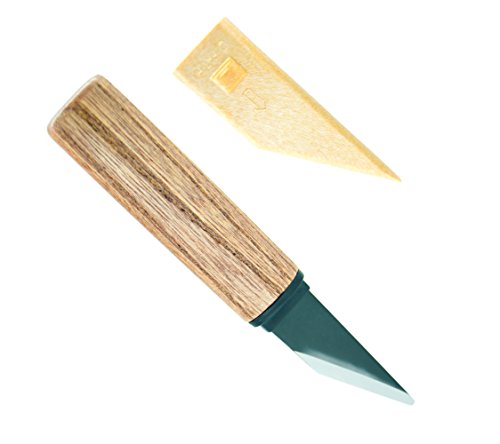
A short, single-bevel craft blade with a wooden handle and sheath. It’s the Japanese answer to the utility knife for marking, whittling and opening boxes.

Spyderco makes the Delica in Seki, Japan, and it’s the most practical knife here for daily carry: a locking blade, one-hand opening and a pocket clip.
Japanese Pocket Knives Compared
| Knife | Type | Steel | Lock | Size | Best for |
|---|---|---|---|---|---|
| Higo no Kami 10 | Friction folder | Warikomi (laminated) carbon | None (thumb on lever) | About 3″ blade | First Higonokami, gift |
| Higonokami Blue Paper 90mm | Friction folder | Aogami (Blue Paper) | None (thumb on lever) | 90 mm closed | Longer edge life |
| Higonokami SK 120mm | Friction folder | SK carbon | None (thumb on lever) | 120 mm closed | Camp food, bigger jobs |
| Higo no Kami Mame | Friction folder | Carbon | None | 40 mm blade | Key ring |
| Kiridashi | Fixed blade, chisel edge | Japanese steel | Not needed | Short blade | Craft, marking, whittling |
| Spyderco Delica 4 | Modern clip folder | VG-10 stainless | Back lock | 2.9″ blade | Daily carry |
1. Higo no Kami 10 (Warikomi Steel, Brass Handle): Best Overall
Who it’s for: anyone who wants the genuine Higonokami, whether as a light everyday cutter, a desk knife or a gift for a knife lover.
Higonokami isn’t a style that anyone can copy under the same name. It’s a trademark, and Nagao Seisakusho is the last workshop still making knives under it. Plenty of “Higonokami style” knives are sold online, but this is the real thing, and it’s still made the old way: a sheet of brass folded into a handle, a pivot pin and a blade with a lever at the back.
The blade is warikomi steel, meaning a hard carbon steel core is forged between softer outer layers. You get the edge of a hard steel with a blade that’s tougher and easier to sharpen than solid hard steel. Its blade is thin and about 3 inches long, so it slices apples, paper and cord very cleanly. The brass handle polishes up with use and darkens over time.
My reservations are the ones every Higonokami shares. There’s no lock, so the blade can close if you push the spine toward your hand or lose your thumb on the lever; it’s a knife for slicing, not stabbing or prying. Put the carbon edge away damp and it will spot with rust. Each knife is handmade, so small details vary from one to the next.
Key specs
- Blade: about 3 inches, warikomi (laminated) steel
- Handle: about 4 inches, brass, satin finish
- Opening: chikiri lever, friction folder (no lock)
- Maker: Nagao Seisakusho, Japan
Pros
- The genuine Higonokami from its last maker
- Thin blade slices very cleanly
- Easy to sharpen to a fine edge
- Classic look that ages well
Cons
- No lock: needs careful use
- Carbon edge rusts if left wet
- Handmade, so fit varies a little
My verdict: the Japanese pocket knife I’d buy first. Skip it if you need a locking knife for hard work, and get the Delica instead.
2. Higonokami Blue Paper Steel 90mm (Brass): Best Blue Steel
Who it’s for: people who already like the Higonokami idea and want a blade steel that holds its edge longer.
Aogami, or Blue Paper Steel, is one of the classic Japanese carbon steels. The “paper” part comes from the colored paper used to label it at the steel mill. It contains tungsten and chromium, which help it hold an edge longer than plain carbon steel, and it’s a favorite for Japanese kitchen knives. Here it’s in the same folded brass handle as the No.10, made by Nagao Seisakusho.
The 90 mm size closes to about 3.5 inches and opens to 165 mm, so it’s a compact, pocket-friendly Higo. The blade is about 3 mm thick at the spine, a little sturdier than you might expect from the look.
Blue steel is still carbon steel, so it needs the same care as any Higonokami: wipe it dry, keep a thin film of oil on it, and let a gray patina build up. Harder steel also takes a bit longer to sharpen than the plain carbon on cheaper Higos.
Key specs
- Blade steel: Blue Paper Steel (Aogami)
- Handle: brass
- Folded length: 90 mm; open length: 165 mm
- Blade thickness: around 3 mm
- Made by Nagao Seisakusho, Japan
Pros
- Holds an edge longer than plain carbon
- Compact, pocket-friendly size
- Same simple, durable design
Cons
- Rusts if neglected
- Slower to sharpen than SK steel
- No lock
My verdict: the best Higonokami for someone who will cut with it every day. If it’ll mostly sit in a drawer, the No.10 costs less and cuts just as well.
3. Higonokami SK Steel 120mm (Black): Best Large Higonokami
Who it’s for: campers and picnickers who want a Higonokami big enough to slice bread, cheese and sausage.
The 120 mm size is the largest standard Higonokami I’d recommend for carrying. Closed it’s about 4.7 inches long, and opened it reaches 220 mm, so the blade is close to 4 inches. That makes it a real food knife: long enough to cut across a baguette or a block of cheese, where smaller Higos run out of length.
This version has a black finish and a blade in SK steel, a Japanese carbon tool steel that’s simple, easy to sharpen and affordable. The blade is 2.2 to 2.8 mm thick, thin enough to slice cleanly.
Size has its downside. On a friction folder, a longer blade means more leverage working against your thumb on the lever, so keep cuts controlled. It’s also a bit long for a front pocket in dress clothes. If you want a camp knife that locks, see my backpacking knives guide.
Key specs
- Blade steel: SK carbon steel
- Handle: black finish (stainless steel per listing)
- Folded length: 120 mm; open length: 220 mm
- Blade thickness: 2.2 to 2.8 mm
- Made by Nagao Seisakusho, Japan
Pros
- Long enough for camp food
- Easy-sharpening carbon steel
- Affordable for a genuine Higonokami
Cons
- More leverage on a lockless blade
- Big for dress pockets
- Carbon steel needs drying
My verdict: the Higonokami for the picnic basket or camp kitchen. For a pocket knife you’ll carry daily, the 90 mm or No.10 are easier to live with.
4. Higo no Kami Mame 40mm: Best Keychain Size
Who it’s for: people who want a tiny traditional blade on their keys for tape, tags and fruit.
“Mame” means bean in Japanese, which is a fair description of this little Higonokami. The blade is 40 mm, about an inch and a half, so it’s more of a key-ring tool than a pocket knife. It’s a great way to try the Higonokami design without carrying a full-size knife, and it’s small enough to be welcome in most places a larger blade wouldn’t be.
What I like is that it’s still a real Higo, not a decorative charm. It opens with the same lever and takes the same keen edge, so it handles the small daily jobs (opening mail, cutting a loose thread) as well as any keychain knife.
The obvious limit is size: there’s not much handle to grip, and it’s no use for food prep or anything bigger than a small apple. The listing gives very few details, so don’t expect stated steel specs.
Key specs
- Blade: 40 mm (1.57 inches)
- Design: traditional Higonokami friction folder
- Carry: key ring size
- Made in Japan
Pros
- Tiny and light
- Genuine Higonokami design
- Good for small daily cuts
Cons
- Too small for real cutting jobs
- Few details in the listing
My verdict: a fun, useful key-ring knife and a nice small gift. Buy one of the bigger Higos if you want a knife you’ll actually work with.
5. Kiridashi Knife with Wood Handle and Sheath (Right-Handed): Best Kiridashi
Who it’s for: woodworkers, leatherworkers and crafters who want a precise little blade for marking, trimming and whittling.
A kiridashi is a short, flat blade with a chisel grind: one side is beveled and the other is flat. That makes it very precise for marking lines on wood, trimming leather or sharpening a pencil, because the flat side runs right along a ruler or a surface. In Japan it has long been a craft and school knife.
This one, from Seki in Gifu, has a wooden handle with a partial bolster and a sheath with a small tab that helps you draw the blade with one hand. It’s light, it’s sharp from the factory and it costs very little.
Check the hand before you buy: this listing is the right-handed version, which has its bevel on the side that suits a right hand. Lefties need a left-handed kiridashi. It’s also a fixed blade, so it rides in its sheath rather than folding.
Key specs
- Type: kiridashi (fixed blade, single bevel)
- Handle: wood with partial bolster
- Includes: sheath with draw tab
- Version: right-handed
- Made in Seki, Gifu, Japan
Pros
- Very precise chisel edge
- Light, simple and very affordable
- Sheath included
Cons
- Right-handed only (this version)
- Craft tool, not an all-round knife
My verdict: the best Japanese knife here for the workbench. If you want something to carry for general cutting, the Higonokami is the better buy.
6. Spyderco Delica 4 Lightweight (VG-10, Black FRN): Best Modern Japanese-Made Folder
Who it’s for: people who want a Japanese-made knife that locks, clips in a pocket and opens with one hand.
Spyderco is an American company, but it builds the Delica in Seki, Japan, a city that has made blades for centuries. The first Delica came out in 1990; this is the fourth generation. For a lot of people, it’s the knife that showed what a light, clip-carry folder could be.
The blade is VG-10, a Japanese stainless steel widely used in kitchen knives, with a full flat grind that makes it slice almost as well as a Higonokami. Unlike the Higos, though, it has a back lock, a thumb hole for one-hand opening and a clip that moves to four positions for either hand. Its FRN handle (fiberglass-reinforced nylon) is textured and hides steel liners inside.
My reservations are small. The look is love-or-hate, the FRN handle feels plain, and the thin tip isn’t meant for prying.
Key specs
- Blade: 2.90 inches, VG-10 stainless, full flat grind
- Handle: FRN with nested stainless steel liners
- Lock: back lock
- Overall length: 7.11 inches
- Carry: four-position pocket clip
Pros
- Locks open, opens with one hand
- Stainless steel, no rust worries
- Clip and lock work for either hand
Cons
- Looks don’t suit everyone
- Plain plastic-feeling handle
My verdict: the Japanese-made knife I’d choose for everyday carry. Go for a Higonokami if you want something traditional and are happy to look after carbon steel.
Higonokami, Kiridashi or Modern Folder?
A Higonokami suits you if you mostly slice: fruit, packages, cord, paper. It’s thin, light and easy to sharpen, but it has no lock, so it’s not the knife for hard, forceful work. Most people who love one carry it as a second, quieter knife.
A kiridashi is for the workbench. The single bevel gives precise control along a line, which is why carvers and leatherworkers use it, but it’s awkward for general cutting and doesn’t fold.
A modern Japanese-made folder like the Delica is the practical choice for daily carry, especially if you’ll cut with force or carry it at work. It locks, clips and resists rust. My best folding knife under $100 guide covers more modern folders like it.
How to Use a Friction Folder Safely
Keep your thumb on the lever
Your thumb on the chikiri is the lock on a Higonokami, so keep it there for every cut. Pressing the lever down holds the blade open; if you let go, the pivot friction alone won’t stop it closing under pressure.
Cut away from your fingers and slice, don’t push
Draw the blade through what you’re cutting instead of pressing straight down. Slicing puts little force on the pivot. Stabbing or pushing the tip into something puts the force against your thumb and can fold the blade.
Tighten the pivot if it gets loose
Higonokami knives rely on pivot tension, and a loose blade flops open in the pocket. A firm tap on the pivot pin with a small hammer on a hard surface tightens it, which is how the knives are traditionally adjusted. My folding knife lock types guide explains how friction folders compare with locking knives.
Caring for Carbon Steel Japanese Blades
All the Higonokami knives here have carbon steel blades, and carbon steel rusts if it’s put away wet. Wipe the blade after use, especially after cutting fruit, and oil it lightly every few weeks. Over time a gray or blue patina forms; it’s harmless and slows down rust. Orange spots are rust: remove them early with a little oil and fine abrasive. If you’re new to the difference, my carbon vs stainless steel guide explains why carbon steel takes a finer edge but needs more care.
These thin blades sharpen fast. A fine stone and a few passes on a leather strop bring them back to a very keen edge; my guide on how to strop a knife covers the strop step. For the kiridashi, sharpen the beveled side only and keep the flat back flat on the stone.
FAQ
What is a Higonokami knife?
A Higonokami is a traditional Japanese friction folding knife with a folded metal handle, a carbon steel blade and a lever (chikiri) that you hold down with your thumb to keep the blade open. It has no lock. Nagao Seisakusho is the last maker still using the Higonokami name.
What is a kiridashi used for?
A kiridashi is used for marking wood, trimming leather, whittling, opening packages and sharpening pencils. Its single-bevel chisel edge makes it very precise along a straight line.
Does a Higonokami lock?
No, a Higonokami doesn’t lock. Pivot friction and your thumb on the lever hold the blade open, so it’s best for slicing, not for prying or stabbing.
Is a Higonokami good for everyday carry?
Yes, for light everyday tasks like opening packages, cutting cord and slicing fruit. It’s thin and light in the pocket. For heavy or forceful work, carry a locking knife instead.
What steel are Japanese pocket knives made of?
Traditional Japanese pocket knives often use carbon steels such as Aogami (Blue Paper Steel) and SK steel, often laminated (warikomi). Modern Japanese-made folders like the Spyderco Delica use stainless steels such as VG-10.
Are Spyderco knives made in Japan?
Some are. Spyderco makes the Delica, Endura and Dragonfly in Seki, Japan, while other models are made in the USA, Taiwan or China. Check the listing or the blade markings for each model.
Final Verdict
The Higo no Kami 10 is the Japanese pocket knife I’d buy first: genuine, simple, very sharp and light enough to forget about. Choose the Blue Paper 90 mm if you want an edge that lasts longer, or the SK 120 mm for camp food. If the knife has to lock and clip for daily carry, the Seki-made Spyderco Delica 4 is the practical answer.
For more light knives to carry, see my best EDC knife under $100 picks, and if you’re curious how Japanese steel differs in the kitchen, read my German vs Japanese knives comparison.

Gary Portman founded knivesadvice.com in 2019. He learned to cook in his family’s kitchen as a kid and has used kitchen, pocket and outdoor knives ever since, from paring and fillet knives to survival blades he carries camping and hiking. He writes the site’s buying guides, brand reviews and sharpening how-tos to help readers find the right knife for the job. More about Gary.