
Case knives are good if you want a traditional American pocket knife: bone or synthetic handles, two or three blades, no clip, no lock on most models, made in Bradford, Pennsylvania. They’re not the brand for someone who wants a one-hand opener for hard daily use. For that, a modern clip folder makes more sense.
If one Case knife is going in your pocket, I’d make it the Case Trapper in amber bone with CV blades. It’s the pattern most people picture when they hear “Case knife.” If you’d rather have more blade choices in a shorter knife, the Medium Stockman is my second pick.
My Top 6 Case Picks
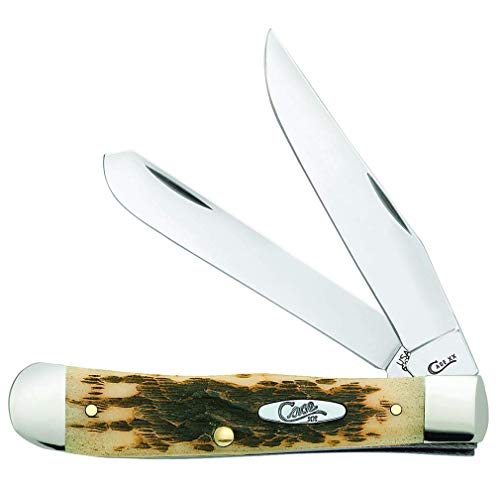
A clip blade and a spey blade, both full length, in chrome vanadium steel that sharpens quickly. It’s the Case pattern I’d hand to someone who has never owned a traditional knife.
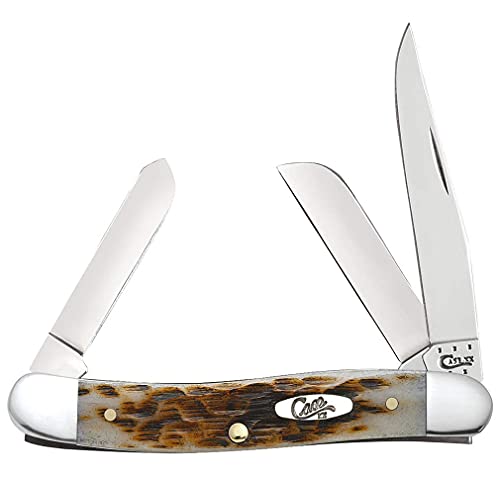
Three different blade shapes in a knife shorter than the Trapper. The sheepfoot alone makes it worth carrying for opening boxes and trimming twine.

Under three inches closed, so it disappears in a coin pocket. A gentleman’s knife for letters, tags and apples.

One wide skinner blade and a plain handle that doesn’t mind dirt. The Case to keep in a truck or a barn coat.

Case’s take on the modern clip folder: aluminum handle, pocket clip and S35VN steel. For the buyer who likes the brand but wants modern carry.

A stainless fixed blade with a synthetic handle and nylon sheath. A simple field knife that’s easy to clean after dressing game.
What Case Does Well
Real American-made traditional knives
W.R. Case & Sons has made knives in Bradford, Pennsylvania, since the early 1900s, and the listings for every pick on this page say “Made in Bradford, PA.” Few brands still build slipjoints in the US at prices most people can afford. Case has been owned by Zippo since 1993, but production stayed in Bradford.
Two steels, one simple choice
Most patterns come in Tru-Sharp stainless (marked SS) or Chrome Vanadium (marked CV). Stainless resists rust and suits a knife that gets damp. CV is a carbon steel: it sharpens fast, takes a keen edge and darkens over time. My carbon vs stainless steel guide explains the trade in more depth.
Handles you can’t get elsewhere
Jigged bone, smooth bone, stag-style BoneStag, colored synthetics and wood: Case makes the same pattern in dozens of handle options. That’s why collectors love the brand and why a Case knife makes such an easy gift.
A lifetime warranty
Case backs its knives with a limited lifetime warranty against defects. It doesn’t cover abuse or normal wear, but a loose spring or a cracked handle from a factory flaw is covered.
What Case Does Badly
Most models don’t lock
A Trapper, Stockman or Peanut is a slipjoint: tension from a back spring keeps the blade open, yet there is no lock behind it. Push hard on the spine the wrong way and the blade can fold toward your fingers. Use it for cutting, never for stabbing or prying. If you want to see how a slipjoint differs from a liner or back lock, my folding knife lock types guide covers it.
Factory edges and fit vary
What Case owners grumble about most is uneven quality from one knife to the next: an edge that isn’t very sharp out of the box, a blade that sits a little off center, or a small gap between springs. Most of it is cosmetic, and a few minutes on a stone fixes the edge, but don’t expect every knife to be perfect.
Two hands, no clip
Traditional Case blades open with a nail nick, so you need two hands. There’s no clip on the slipjoints either. They ride loose in a pocket or in a leather sheath, like knives did for most of the last century.
CV blades need care
Chrome vanadium will spot and rust if it’s put away wet. Wipe it dry, oil it now and then, and expect a gray patina. If that sounds like work, buy the SS version of the same pattern.
Case Lines Compared
| Line / pattern | Steel | Closed length | Lock | Made in | Best for |
|---|---|---|---|---|---|
| Trapper | CV or Tru-Sharp SS | 4 1/8″ | None (slipjoint) | USA | All-round traditional carry |
| Medium Stockman | Tru-Sharp SS or CV | 3 5/8″ | None (slipjoint) | USA | Three blades for different jobs |
| Peanut | CV or Tru-Sharp SS | 2 7/8″ | None (slipjoint) | USA | Small, light pocket carry |
| Sod Buster Jr | Tru-Sharp SS | 3 5/8″ | None (slipjoint) | USA | Farm, ranch and work use |
| Kinzua / Marilla | S35VN | 4 3/4″ | Frame lock | USA | Modern everyday carry |
| Ridgeback Hunter | Stainless | 8 1/2″ overall | Fixed blade | USA | Hunting and field dressing |
1. Case Trapper, Amber Bone, CV Blades: Best Case Knife Overall
Who it’s for: anyone who wants one classic American pocket knife, as a first traditional knife or a gift.
The Trapper has two long, slim blades that open from the same end: a clip point for general cutting and a spey blade with a rounded tip. Trappers used the spey for skinning; today it’s the blade you use when you don’t want a sharp point near what you’re cutting, like opening a bag of feed or scoring a hose.
I picked the CV version over stainless on purpose. Chrome vanadium is easy to bring back to a fine edge on a simple stone, which matters on a knife whose factory edge can be hit or miss. The amber jigged bone handle is the look most people associate with Case, and it gets better with years of pocket wear.
My reservation: at 4 1/8 inches closed it’s a long knife for a small pocket, and with no lock it isn’t a heavy-duty tool. If you want something smaller, the Peanut below is the better carry.
Key specs
- Blades: clip and spey, chrome vanadium (CV) carbon steel
- Closed length: 4 1/8 inches
- Handle: amber jigged bone
- Pattern: 6254, slipjoint (no lock)
- Made in Bradford, PA, USA; limited lifetime warranty
Pros
- Two full-length, useful blades
- CV steel sharpens very quickly
- Classic bone handle that makes a fine gift
- Made in the USA
Cons
- Carbon blades rust if left wet
- No lock and no clip
- Long for a small or front jeans pocket
My verdict: the Case to buy if you only buy one. Skip it if you need a locking blade for rough work.
2. Case Medium Stockman, Amber Bone, Stainless: Best Three-Blade
Who it’s for: people who like having a different blade for each kind of job, in a knife that still fits a pocket.
The Stockman is the old cattleman’s knife: a clip blade, a sheepfoot and a spey, with blades opening from both ends. The sheepfoot has a straight edge and no point, so it’s the blade I’d reach for to cut cord or open a box without stabbing what’s inside. The clip handles everything else, and the spey stays sharp for the jobs you save it for.
At 3 5/8 inches closed, it’s shorter than the Trapper but feels thick in the hand because of the three blades. This version uses Tru-Sharp stainless, so it’s the lower-maintenance choice if your knife lives in a damp truck or a sweaty pocket.
Fair warning: three small blades means three small nail nicks, and the spey can be stiff to open on a new knife. That usually loosens with use.
Key specs
- Blades: clip, sheepfoot and spey, Tru-Sharp stainless steel
- Closed length: 3 5/8 inches
- Handle: amber jigged bone
- Slipjoint (no lock)
- Made in Bradford, PA, USA; limited lifetime warranty
Pros
- Three blade shapes in one compact knife
- Stainless blades need little care
- Sheepfoot blade is great for safe, controlled cuts
Cons
- Thicker in the pocket than a two-blade knife
- Small blades are fiddly to open
- No lock
My verdict: the most useful Case pattern for chores. Pass if you only ever use one blade anyway.
3. Case Peanut, Yellow Synthetic, CV: Best Small Pocket Knife
Who it’s for: office carry, dress pants, or anyone who wants a knife they forget is there.
The Peanut is tiny: 2 7/8 inches closed, with a clip blade and a pen blade. It’s the knife for opening mail, cutting a tag, peeling an apple or trimming a loose thread. Nobody at a meeting will think twice when you take it out.
I chose the yellow synthetic CV version because it’s the classic Case combination and the easiest to spot when it falls into a dark bag. The CV blades are thin and sharpen in a minute on a fine stone.
The trade-off is obvious: small blades and a small handle. It’s not for breaking down boxes all day or for big hands that want a full grip.
Key specs
- Blades: clip and pen, chrome vanadium steel
- Closed length: 2 7/8 inches
- Handle: yellow synthetic
- Pattern: 3220, slipjoint (no lock)
- Made in Bradford, PA, USA; limited lifetime warranty
Pros
- Very small and light
- Easy to find in a bag thanks to the yellow handle
- Thin blades slice well for their size
Cons
- Too small for heavy cutting
- CV blades need wiping and oiling
- Small nail nicks are hard with short nails
My verdict: the best Case for discreet carry. Buy the Trapper instead if this would be your only knife.
4. Case Sod Buster Jr, Rough Black Synthetic: Best Work Knife
Who it’s for: farm, ranch, garden and shop users who want one sturdy blade and nothing fancy.
The Sod Buster is a single wide skinner blade in a plain, slightly curved handle. One big blade is easier to open, clean and sharpen than three small ones, and the wide belly does real work: cutting baling twine, feed sacks, rope and garden ties.
The Jr size is 3 5/8 inches closed, which I think is the better pocket size; the full Sod Buster is longer. The rough black synthetic handle gives a little more grip than smooth bone and doesn’t care if it gets scuffed. Stainless blades round out a knife you can abuse a bit without worrying about rust.
It’s still a slipjoint, so the same rule applies: cut, don’t pry.
Key specs
- Blade: skinner, Tru-Sharp stainless steel
- Closed length: 3 5/8 inches
- Handle: rough black synthetic
- Slipjoint (no lock)
- Made in Bradford, PA, USA; limited lifetime warranty
Pros
- One big, easy-to-sharpen blade
- Textured handle and stainless steel suit dirty work
- Costs less than most Case patterns
Cons
- Plain looks, not a collector’s knife
- No lock
- Only one blade shape
My verdict: the Case I’d throw in a truck and forget about. Skip it if you want the classic bone-handled look.
5. Case Kinzua EDC, S35VN Tanto: Best Modern Case
Who it’s for: buyers who like Case and American production but want a clip and a modern steel.
The Kinzua is Case stepping out of its comfort zone: an anodized aluminum handle, a pocket clip, and a tanto blade in S35VN, a premium powder steel that holds an edge much longer than Tru-Sharp or CV. It opens with a flipper on a ball bearing pivot and locks open with a frame lock.
It’s built in Bradford like the traditional knives, so you’re still buying an American-made Case. The tanto tip is strong, and the straight front edge is handy for scoring and cutting tape.
My reservations: it costs much more than the slipjoints, and in this price range you’re up against brands that only make modern folders and have been refining them for decades. If you have no attachment to Case, compare it with the picks in my EDC knife under $100 guide first. A tanto is also harder to sharpen than a simple drop point.
Key specs
- Blade: tanto, S35VN stainless steel
- Closed length: 4 3/4 inches
- Handle: OD green anodized aluminum with pocket clip
- Opening and lock: flipper, frame lock
- Made in Bradford, PA, USA; limited lifetime warranty
Pros
- Premium steel with long edge life
- One-hand flipper opening, locking blade and pocket clip
- US-made modern folder
Cons
- Costs much more than the traditional patterns
- Tanto edge is fussier to sharpen
- Strong competition from dedicated modern-folder brands
My verdict: a good modern knife for Case fans. Everyone else should shop the whole EDC field before choosing it.
6. Case Ridgeback Hunter, Black Zytel: Best Case Fixed Blade
Who it’s for: hunters who want a simple, washable Case fixed blade for field dressing.
Case is known for folders, but its fixed blades are worth a look. The Ridgeback Hunter is 8 1/2 inches overall with a stainless blade and a black Zytel (a tough nylon) handle, and it comes with a nylon sheath. That combination is easy to scrub clean after a deer, which matters more in the field than a pretty handle.
I’d choose it over Case’s leather-handled hunters for that reason: stacked leather looks great but needs care and doesn’t like blood and water. The Ridgeback is the low-fuss option.
The downside is that Case publishes few details beyond “stainless,” and the nylon sheath is basic. If you want a premium steel or a leather sheath, look at dedicated hunting brands.
Key specs
- Blade: stainless steel fixed blade
- Overall length: 8 1/2 inches
- Handle: black Zytel synthetic
- Sheath: nylon
- Made in Bradford, PA, USA; limited lifetime warranty
Pros
- Synthetic handle is easy to clean
- Stainless blade suits wet field work
- US-made fixed blade at a moderate price
Cons
- Few published steel details
- Basic nylon sheath
My verdict: a sensible Case for deer season. Skip it if you want a showpiece hunting knife.
Case vs Other Pocket Knife Brands
Case vs Buck
Buck is better known for lockbacks like the 110, while Case is mostly slipjoints. If you want a locking traditional-looking knife, Buck fits better. If you want a Trapper or Stockman with a bone handle, Case is the classic choice. Both make knives in the US.
Case vs Victorinox
A Swiss Army knife gives you tools (scissors, screwdrivers, a can opener), while a Case gives you blades and a traditional look. For a do-everything tool, choose Victorinox. For a knife you want to keep for decades and maybe pass down, choose Case.
Case vs cheap traditional knives
Imported slipjoints can look like a Case at a glance. The difference is in springs, steel and finish, and the warranty. Brands like the one in my Elk Ridge knives review are fine as gifts or backups, but they aren’t knives to inherit.
How to Read a Case Pattern Number
The numbers on a Case listing tell you what you’re buying. Take 6254 SS on many Trappers: the first digit is the handle material (6 means bone), the second is the number of blades (2), and the last digits are the pattern (54 is the Trapper). The letters after it are the steel: SS for Tru-Sharp stainless, CV for chrome vanadium.
So the Peanut on this page, 3220 CV, is a yellow synthetic handle (3), two blades (2), pattern 20 (Peanut), chrome vanadium steel. Once you know the code, you can compare listings in seconds.
Caring for a Case Knife
Keep the blades dry, add a drop of oil to the joints a few times a year, and wipe CV blades after cutting fruit or anything acidic. Lint collects in the spring channel, so a quick clean with warm soapy water and a soft brush helps (my guide to cleaning a pocket knife covers the steps). Don’t soak bone or wood handles, and never put a Case in the dishwasher.
For sharpening, a simple stone works well on both steels. Hold the angle steady and go light on the small blades. Work one blade at a time and finish with a few light strokes on a fine stone.
FAQ
Are Case knives made in the USA?
Yes. W.R. Case & Sons makes its knives in Bradford, Pennsylvania, and every Case on this page is listed as made there. Watch for third-party “Case style” knives from other brands, which are not the same thing.
What does Case XX mean?
XX is a Case trademark stamped on the tang. Case says it goes back to the early 1900s, when an X marked a blade that passed a heat-treating check, and XX marked one that passed a second check. Today it simply identifies a genuine Case knife.
Do Case pocket knives lock?
Most traditional Case knives don’t. Trappers, Stockmen, Peanuts and Sod Busters are slipjoints held open by a spring. Case also makes lockbacks and modern locking folders like the Kinzua and Marilla, so check the listing if you need a lock.
Is CV or stainless better on a Case knife?
CV sharpens faster and takes a keener edge but rusts if neglected. Tru-Sharp stainless resists rust and needs less care. Pick CV if you enjoy sharpening and keep the knife dry; pick SS for a low-maintenance knife.
Which Case knife is best for a first-time buyer?
The Trapper. It has two full-length blades, a comfortable size and the classic Case look. If it feels too long, the Medium Stockman or Peanut are smaller options.
Does Case have a warranty?
Yes, a limited lifetime warranty that covers factory defects in the steel, springs and handle. It doesn’t cover misuse, normal wear or sharpening damage, so contact Case directly about a claim.
Final Verdict
Case is still one of the best names for traditional American pocket knives. The Trapper in amber bone with CV blades is the one I’d buy first. The Medium Stockman suits people who want three blade shapes, and the Peanut is the pick for small, discreet carry.
If you’d rather have a modern folder with a clip and lock, see my best folding knives under $100, and for a wider look at the brands I rate, my best knife makers list.

Gary Portman founded knivesadvice.com in 2019. He learned to cook in his family’s kitchen as a kid and has used kitchen, pocket and outdoor knives ever since, from paring and fillet knives to survival blades he carries camping and hiking. He writes the site’s buying guides, brand reviews and sharpening how-tos to help readers find the right knife for the job. More about Gary.