
D2 shows up on more budget pocket knives than almost any other steel, usually with “premium tool steel” in the listing. That label is half right. D2 was made for industrial dies that punch and cut sheet material, so it is very good at resisting wear, which on a knife means an edge that keeps cutting cardboard and rope for a long time.
The other half is what the listings skip. D2 sits just under the chromium level usually needed to call a steel stainless, so a blade stored damp will spot and eventually rust. Its hard carbides also make it slower to sharpen than soft budget steels, and a cheap, poorly heat-treated D2 blade can chip. The name on the blade matters as much as the steel.
So is D2 good for a knife? Yes, for a pocket knife or small fixed blade from a maker that heat-treats it properly, and if you’re willing to wipe it dry. It’s a poor fit for a fishing knife or a kitchen knife that lives near the sink. If you want one D2 knife to start with, my pick is the CIVIVI Mini Praxis.
My Top 6 D2 Steel Knives
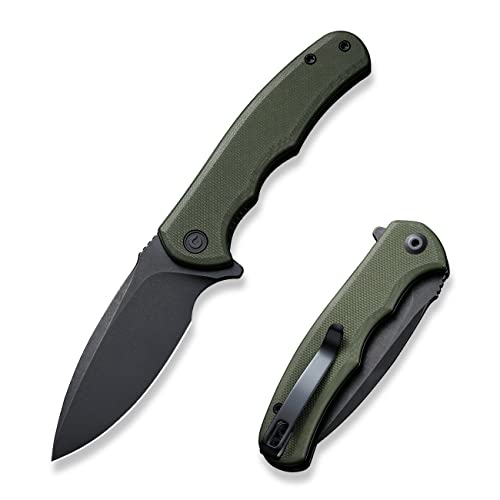
A smooth bearing flipper, a stonewashed D2 blade just under three inches and a G10 handle. CIVIVI gets D2 right, and this is the most sensible first taste of the steel.

Kershaw’s DuraLock crossbar lock, a 3.4-inch spear point and a slim aluminum handle. Closes from either side without your fingers near the edge.

A short, wide drop point on a sturdy frame lock with a thumb hole opener. Chunky, simple and strong enough for daily abuse.

Two D2 blades in a classic trapper pattern, made in Solingen. Proof that D2 works on old-school slipjoints as well as modern folders.

A 3.36-inch drop point in 3.2mm D2 stock with a sheath. A compact hunting and camp knife where D2’s edge holding pays off over a long day.

A 3.86-inch D2 blade, a crossbar-style lock and a bearing pivot. Big and heavy, but the closest a folder gets to a small fixed blade.
D2 Knives Compared
| Knife | Type | Blade | Lock | Handle | Best for |
|---|---|---|---|---|---|
| CIVIVI Mini Praxis | Flipper folder | 2.98″, stonewashed | Liner lock | G10 | First D2 knife, daily carry |
| Kershaw Iridium | Thumb stud folder | 3.4″ spear point | DuraLock crossbar | Aluminum | Either hand, slim pocket |
| CRKT Pilar III | Thumb hole folder | 2.97″ drop point | Frame lock | G10 and steel | Hard daily use |
| Böker Treebrand Trapper | Slipjoint | Two blades | None (slipjoint) | Traditional scales | Traditional carry |
| Kizer Cabox | Fixed blade | 3.36″ drop point | Sheath | G10 | Hunting, camp |
| CJRB Doubletap | Large folder | 3.86″ | Recoil Lock V2 | G10 | Outdoor work |
What Is D2 Steel?
D2 is a high-carbon, high-chromium tool steel from the AISI “D” family of cold-work steels, which were designed for dies, punches and shear blades that cut other materials at room temperature. Knife makers borrowed it because the same properties that let a die keep its edge over thousands of strokes help a pocket knife stay sharp.
Published compositions vary a little by mill, but D2 is roughly:
- Carbon: about 1.4 to 1.6 percent, which lets the steel get very hard and form carbides
- Chromium: about 11 to 13 percent, enough for some rust resistance, usually just short of the 13 percent often quoted for stainless
- Molybdenum: about 0.7 to 1.2 percent, for hardenability and strength
- Vanadium: up to about 1 percent, for finer grain and extra wear resistance
Much of that carbon and chromium joins up as chromium carbides, tiny, very hard particles in the steel. They’re why D2 resists wear so well, and also why it sharpens slowly and doesn’t take the finest polished edge.
D2 is an air-hardening steel, and knife makers usually run it somewhere around 58 to 61 HRC (the Rockwell C hardness scale used for knife steel). Most of the knives on this page list 59 to 61.
Is D2 Steel Good for a Knife?
Yes, D2 is a good knife steel when it’s properly heat-treated and used where it fits. It holds an edge noticeably longer than common budget steels like 8Cr13MoV, it’s reasonably tough at normal knife hardness, and it costs little, which is why so many affordable folders use it.
It isn’t the best at everything. Modern stainless steels such as 14C28N or Nitro-V shrug off moisture much better and take a keener edge, and powder steels like S30V or S35VN combine D2-like wear resistance with real stainless behavior. D2’s sweet spot is a dry-use pocket knife or small fixed blade where long edge life matters more than rust resistance.
Edge retention: D2’s main strength
D2 keeps cutting abrasive materials like cardboard, rope and plastic packaging longer than most steels at its price. If you open boxes all day, that’s the property you’ll notice first: fewer touch-ups between sharpenings.
Corrosion resistance: semi-stainless
D2 is usually called semi-stainless. It rusts much less than plain carbon steels like 1095, but more than true stainless. Sweat, salt water, acidic food and a damp sheath are the usual culprits. Coatings and stonewashed finishes help hide and slow spotting, but the steel underneath still needs drying. My carbon vs stainless steel guide explains why chromium content changes how a blade behaves.
Toughness: fine for slicing, not for prying
D2 is tough enough for cutting, whittling and normal camp work, but its large carbides make it less forgiving than tougher steels if you pry, baton hard or twist the tip in wood. On a bushcraft knife meant for heavy splitting, I’d choose a tougher steel. On a pocket knife, D2’s toughness is rarely the weak point.
Sharpening: slower than soft steels
D2 sharpens fine on diamond plates, good synthetic whetstones or a guided system, but it takes longer than soft budget steels, and it can feel stubborn on old oil stones or cheap pull-through sharpeners. The good news is that you sharpen it less often.
Why Two D2 Knives Can Perform Very Differently
“D2” on a listing tells you the alloy, not how well it was heat-treated. Heat treatment decides the final hardness and grain, and a poorly treated D2 blade can be soft and dull quickly or hard and chippy. That’s why I only pick D2 knives from makers with a track record (CIVIVI, Kershaw, CRKT, Böker, Kizer, CJRB) rather than from no-name sellers who print “D2” on every listing.
A published hardness like 59 to 61 HRC is a good sign. A listing that names D2 alongside another steel, or says nothing about the maker, is a reason to look elsewhere.
D2 vs Other Common Knife Steels
D2 vs 8Cr13MoV
D2 holds an edge clearly longer. 8Cr13MoV is softer, more stainless and very easy to sharpen, which is why it’s on so many cheap knives. If you hate sharpening, D2; if you never dry your knife, 8Cr13MoV.
D2 vs 14C28N
14C28N is a fine-grained Swedish stainless that takes a keener edge, resists rust far better and is a little tougher. D2 wins on wear resistance for long cardboard-and-rope sessions. For most daily carry, I lean 14C28N; for heavy cutting in dry conditions, D2.
D2 vs S30V and S35VN
These American powder steels match or beat D2’s edge holding while staying properly stainless, and they’re more refined. They also cost more, so D2 remains the value pick when budget matters.
D2 vs 1095
1095 is a simple carbon steel, tougher and easier to sharpen, but it rusts readily. D2 holds an edge longer and needs less care. For a hard-use outdoor blade that you’ll strop often, 1095 is fine; for a lower-fuss knife, D2.
How to Care for a D2 Knife
Dry it after every wet job
Wipe the blade after cutting fruit, fish or anything damp, and don’t leave it in a wet pocket or sheath. That one habit prevents most D2 rust.
Oil it now and then
A drop of mineral oil or knife oil spread thin on the blade every few weeks protects it, especially if you live near the coast. Food-safe mineral oil is the easy choice if you cut food.
Sharpen with diamonds or a good stone
Diamond plates cut D2’s carbides quickly; good synthetic whetstones work too, with patience. My guide on how to sharpen a pocket knife walks through the angle and the steps.
Deal with spots early
If a brown spot appears, rub it off with a bit of oil and a fine abrasive pad or eraser, then dry and oil the blade. Caught early, it leaves only a faint mark.
1. CIVIVI Mini Praxis Pocket Knife (D2, G10): Best D2 Knife Overall
Who it’s for: anyone who wants to try D2 in a small, well-made everyday folder.
The Mini Praxis is the knife I’d use to show someone what good D2 feels like. CIVIVI, WE Knife’s affordable brand, has a reputation for clean fit and finish, and it heat-treats D2 the way it should be. The 2.98-inch blade is stonewashed, a tumbled finish that hides scratches and makes small spots less obvious, which suits a steel that can mark.
It opens with a flipper on a ceramic ball bearing pivot, so the action is quick and smooth, and it locks with a liner lock. The G10 handle is light and stable in damp hands. The listing promises lifetime service against defects with a US service center.
At this size it’s an urban knife: mail, boxes, tags, an apple. It won’t replace a fixed blade at camp, and the liner lock means a careful thumb when closing.
Key specs
- Blade: 2.98-inch, D2, black stonewashed
- Handle: G10, pocket clip
- Lock: liner lock; flipper on ceramic ball bearing pivot
- Service: lifetime service against defects (listing), US service center
Pros
- Well-executed D2 at a low price
- Smooth, fast flipper action
- Stonewash hides wear and spotting
Cons
- Liner lock needs care when closing
- Too small for heavy outdoor work
My verdict: the easiest, cheapest way into D2 from a brand that does it properly. More options at this level are in my best flipper knife under $50 guide.
2. Kershaw Iridium Pocket Knife (D2, Aluminum): Best D2 Crossbar Lock
Who it’s for: left-handers and anyone who wants a slim D2 folder that closes with no fingers in the way.
The Iridium uses Kershaw’s DuraLock, a steel crossbar running across the handle. Pull it back from either side and the blade closes, which makes it fully ambidextrous and very safe to close. The pocket clip also swaps sides, so lefties lose nothing.
Kershaw finishes the 3.4-inch spear point with stonewashed flats and satin grinds, and calls D2 highly wear resistant with excellent edge retention, which matches what the steel is known for. The spear point is a symmetrical shape with a strong, centered tip: good for piercing packaging and general chores.
The anodized aluminum handle keeps it thin at 3.3 ounces, but aluminum is slicker than G10 when your hands are wet. Kershaw opens it with thumb studs on its KVT ball bearing system, and it’s a manual knife, not an assisted opener.
Key specs
- Blade: 3.4-inch spear point, D2, stonewashed flats and satin grinds
- Handle: gray anodized aluminum, reversible deep-carry clip
- Lock: DuraLock crossbar; thumb studs, KVT ball bearings
- Size: 4.5 inches closed, 3.3 ounces
Pros
- Fully ambidextrous lock and clip
- Slim for its blade length
- Safe, easy closing
Cons
- Aluminum handle is slippery when wet
- D2 still needs drying
My verdict: the D2 knife I’d hand a left-hander or a nervous first-time owner. Kershaw’s other models are in my best folding knife under $100 guide.
3. CRKT Pilar III Pocket Knife (D2, G10): Best Compact Frame Lock
Who it’s for: people who want a stout, short knife for daily work that won’t mind some abuse.
CRKT’s cheaper models often use soft steels, so the Pilar III in D2 is the version I’d choose. The 2.97-inch drop point is wide for its length, which puts a lot of steel behind the edge and makes the knife feel more solid than its size suggests.
It locks with a frame lock: part of the steel handle side flexes behind the blade, and CRKT uses a thick lock bar. Frame locks are strong and simple. The other handle side is G10 for grip, and the IKBS ball bearing pivot keeps opening smooth via the thumb hole.
The trade-off is shape. Chunky, short knives aren’t great slicers, and the closed knife is thick in a pocket. If you mostly cut food or want a slim profile, the Iridium or Mini Praxis suits you better.
Key specs
- Blade: 2.97-inch drop point, D2
- Handle: G10 and stainless steel
- Lock: frame lock; IKBS ball bearing pivot, thumb hole
- Carry: low-profile pocket clip
Pros
- Strong, simple lock
- Wide, sturdy blade
- Smooth thumb hole opening
Cons
- Thick and chunky in the pocket
- Short, wide blade slices less well
My verdict: the tough little D2 workhorse of this list. Skip it if you want a slicer or a slim carry.
4. Böker Treebrand Trapper (D2, Made in Germany): Best Traditional D2 Knife
Who it’s for: fans of traditional pocket knives who want an edge that lasts longer than old carbon or soft stainless blades.
Most D2 knives are modern clip folders, so this one stands out. Böker’s Solingen workshop makes this trapper pattern with two D2 blades, which gives a traditional knife much better edge holding than the soft stainless steels often used on slipjoints.
It’s a slipjoint, which means no lock: a backspring holds the blade open and closed, and you open each blade with a nail nick, using two hands. Some places treat non-locking knives more leniently (check your local rules), but you have to respect it on hard cuts, since the blade can fold if pushed backwards.
Böker lists it as made in Germany with a limited lifetime warranty. There’s no pocket clip, so it rides loose in a pocket or a slip.
Key specs
- Pattern: trapper slipjoint, two D2 blades
- Opening: nail nicks, two-handed
- Made in: Germany (Solingen)
- Warranty: limited lifetime (listing)
Pros
- D2 edge holding on a classic pattern
- Made in Germany
- Two blades for different jobs
Cons
- No lock and no one-hand opening
- No clip
My verdict: the D2 knife for traditionalists. Anyone who wants a lock and a clip should buy one of the modern folders above.
5. Kizer Cabox Fixed Blade Knife (D2, G10): Best D2 Fixed Blade
Who it’s for: hunters and campers who want a compact fixed blade that stays sharp through a day of cutting.
A fixed blade is where D2’s edge holding is most useful: skinning, food prep at camp and cutting cord, all in one outing, without stopping to sharpen. The Cabox has a 3.36-inch drop point, a shape with a strong tip and a curved belly that suits hunting and general camp work.
The blade is 3.2mm thick, which is a sensible middle ground: strong enough for camp chores without turning into a wedge. The G10 handle is grippy and doesn’t care about blood or water, and the whole knife weighs 4.26 ounces with an 8.12-inch overall length. It comes with a sheath and has a wide lanyard hole.
This is not a batoning or prying tool. D2’s carbides make it less forgiving than tougher steels on heavy splitting, so pair it with a hatchet or saw for wood.
Key specs
- Blade: 3.36-inch drop point, D2, 3.2mm thick
- Handle: G10, lanyard hole
- Size: 8.12 inches overall, 4.26 ounces
- Carry: sheath included
Pros
- Long edge life for hunting and camp
- Useful drop point shape
- Light and compact
Cons
- Not for batoning or prying
- Needs drying after wet or bloody work
My verdict: the D2 fixed blade I’d put in a hunting pack. Choose a tougher steel if you split wood with your knife.
6. CJRB Doubletap Pocket Knife (D2, G10): Best Large D2 Folder
Who it’s for: people who want a big folding knife for outdoor jobs and don’t mind the weight.
CJRB usually uses its own AR-RPM9 steel, but it chose D2 for the Doubletap, its heavy-duty folder. The 3.86-inch blade is listed at 59 to 61 HRC, and the long edge is where D2’s wear resistance earns its keep: more steel in contact, more cutting between sharpenings.
The Recoil Lock V2 works like a crossbar lock from either side, and a ceramic ball bearing pivot makes the manual action smooth. The G10 handle has a bright orange backspacer that you’ll either like or not.
The obvious catch is weight: 8.5 ounces and 5.2 inches closed. That’s belt-and-backpack territory, not something for a suit pocket.
Key specs
- Blade: 3.86-inch, D2, HRC 59 to 61
- Handle: textured G10, steel clip
- Lock: Recoil Lock V2; ceramic ball bearing pivot
- Size: 5.2 inches closed, 8.5 ounces
Pros
- Long D2 edge for outdoor work
- Ambidextrous lock
- Smooth bearing action
Cons
- Heavy and long for pocket carry
- Bold styling won’t suit everyone
My verdict: the D2 folder for people who want size first. For daily carry in town, go smaller.
FAQ
Does D2 steel rust?
Yes, it can. D2 is semi-stainless: it resists rust much better than carbon steels like 1095, but it can spot if left wet, sweaty or salty. A dry cloth after each job plus an occasional thin coat of oil keeps it clean.
Is D2 steel hard to sharpen?
It’s slower to sharpen than soft budget steels because of its hard chromium carbides, but it isn’t difficult. Diamond plates or good synthetic whetstones work well, and you’ll sharpen less often because the edge lasts.
Is D2 better than 440C?
D2 usually holds an edge longer than 440C, while 440C is more stainless. For a dry-use pocket knife, D2; for a knife that gets wet often, 440C or a modern stainless steel.
Is D2 good for kitchen knives?
It’s not my first choice. Kitchen knives meet water, acids and the sink all day, and D2’s semi-stainless nature means constant drying. Stainless steels like VG-10 or German X50CrMoV15 make more sense in the kitchen.
What does D2 stand for?
The “D” is the AISI group for high-carbon, high-chromium cold-work tool steels, and “2” is the grade within that group. It’s a tool steel name, not a brand or a quality rating.
Is D2 a good steel for an EDC knife?
Yes, D2 is one of the best value steels for everyday carry: long edge life, decent toughness and a low price. Pick a coated or stonewashed blade if you carry it in a sweaty pocket. For more small carry knives, see my best EDC knife under $100 guide.
Final Verdict
D2 is a good knife steel with one clear strength, edge holding, and one clear weakness, rust resistance. Buy it from a maker that heat-treats it well, keep it dry, and it will outlast the edge of most budget knives. The CIVIVI Mini Praxis is my favorite place to start; the Kershaw Iridium suits left-handers and anyone who wants the safest closing, and the Kizer Cabox brings D2’s edge to a compact fixed blade.
If you’re still deciding between steels, my folding knife lock types guide covers the other half of choosing a folder.

Gary Portman founded knivesadvice.com in 2019. He learned to cook in his family’s kitchen as a kid and has used kitchen, pocket and outdoor knives ever since, from paring and fillet knives to survival blades he carries camping and hiking. He writes the site’s buying guides, brand reviews and sharpening how-tos to help readers find the right knife for the job. More about Gary.