

Serrated or straight? That’s the real choice with steak knives, and I come down on the serrated side for most homes. Steak knives meet ceramic plates every night, and plates dull a straight edge fast; serrations keep biting long after.
That makes the HENCKELS Razor-Sharp set of 8 my pick for most tables. If you’d rather cut cleanly and don’t mind sharpening, the Messermeister Avanta is the best straight-edge set here.
My Top 7 Steak Knife Picks

Eight knives is enough for a family plus guests, the micro-serrated edges keep working on plates for years, and they’re riveted and dishwasher safe. It’s the set I’d buy without overthinking it.

A plain edge glides through a ribeye instead of sawing it, and the Avanta’s X50 steel is easy to resharpen. Bolsters and full tangs give it the feel of a proper kitchen knife.
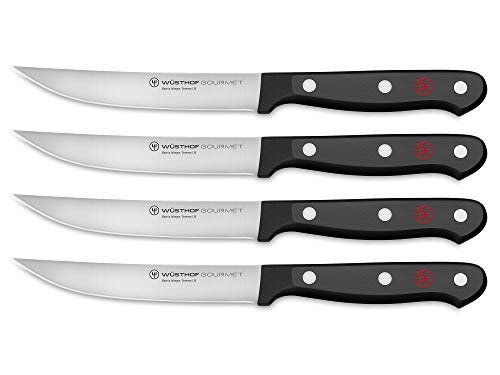
Solingen-made steak knives with the classic black riveted handle. They match WÜSTHOF kitchen knives and are the easiest way to get the brand on your table.

If steak night is an occasion in your house, these are the knives for it. Hammered Damascus blades, a keen 16 degree edge and contoured Pakkawood handles make every cut clean.
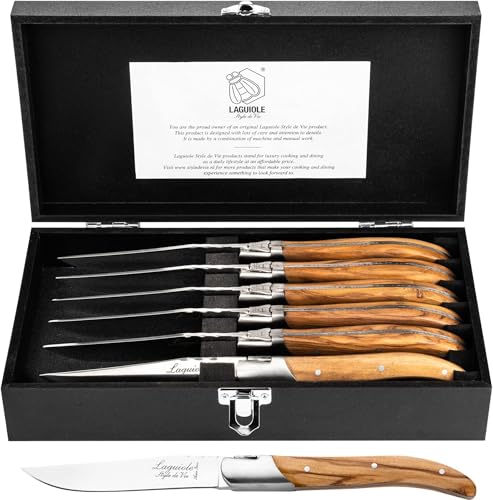
Six plain-edge knives with olive wood handles, the classic Laguiole profile and a gift box. They look wonderful laid out on a tablecloth.

A cheerful set with painted hornbeam handles and Sandvik 12C27 stainless steel from a French maker with a long history. Light, easy to sharpen and fun on a casual table.

Restaurant steak knives for home. The textured handle stays secure even with buttery fingers, and the serrated edge runs all the way to the heel.
Steak Knife Sets Compared
| Set | Knives | Edge | Handle | Best for |
|---|---|---|---|---|
| HENCKELS Razor-Sharp | 8 x 4.5″ | Micro-serrated | Triple-riveted, black | Families, everyday use |
| Messermeister Avanta | 4 x 5″ | Plain (fine) | Triple-riveted POM, bolster | Clean cuts, home sharpeners |
| WÜSTHOF Gourmet | 4 x 4.5″ | Plain | Triple-riveted synthetic | WÜSTHOF owners, gifts |
| Shun Premier | 4 x 5″ | Plain, 16 degrees | Contoured Pakkawood | Special dinners, Japanese knife fans |
| Laguiole Style de Vie | 6, 2.5 mm blades | Plain | Olive wood | Entertaining, table style |
| Opinel No. 125 | 4 | Plain | Painted hornbeam | Casual, colorful tables |
| Victorinox Pointed-Tip | 6 x 4.5″ | Serrated | Textured, non-slip | Secure grip, low upkeep |
1. HENCKELS Razor-Sharp Steak Knives, Set of 8: Best Overall
Who it’s for: households that want enough decent steak knives for everyone, with no upkeep.
Most people want steak knives that cut well, survive the dishwasher and never need a thought. This HENCKELS set does exactly that. The edge has large serrations with smaller serrations inside them, so it grabs the crust of a steak and keeps cutting even after months of scraping across plates. Eight knives in one box also means you won’t be one short when friends come over.
The black handles are triple riveted, which gives them a sturdier, more traditional feel than most budget sets. HENCKELS says they’re dishwasher safe, with hand washing recommended. For steak knives, I think the dishwasher is a fair compromise: serrations hide most of the dulling, and you’ll never sharpen these anyway.
The trade-off is the cut itself. Serrations saw rather than slice, so they tear the surface of a tender filet a little more than a sharp plain edge would. And when they do finally dull, serrated knives are hard to resharpen at home.
Key specs
- Eight 4.5-inch serrated steak knives
- Edge: large serrations containing micro-serrations
- Handle: triple riveted, black
- Dishwasher safe per HENCKELS; hand washing recommended
Pros
- Stays sharp on plates for a long time
- Enough knives for a full table
- Low maintenance
Cons
- Saws rather than slices tender cuts
- Difficult to resharpen at home
My verdict: the sensible default for nearly every kitchen. Skip it only if you care about a perfectly clean cut and are willing to sharpen.
2. Messermeister Avanta 5-Inch Fine Edge Steak Knives: Best Straight Edge
Who it’s for: steak lovers who want a clean, smooth cut and own a honing rod or sharpener.
A sharp plain edge is the nicest way to cut a good steak. It slides through the meat in a single draw, leaving a smooth face instead of the ragged one a saw edge leaves. Messermeister’s Avanta knives were designed for a leading North American culinary school, and they feel like proper kitchen knives: German X50 stainless steel, solid bolsters, full tangs and rounded triple-rivet handles.
The 5-inch blade is a touch longer than most steak knives, which helps with thick ribeyes and pork chops. Messermeister also points out that a fine edge is the most versatile, and that’s true at the table too: these cut chicken, roast vegetables and even bread without fuss.
The cost of a plain edge is upkeep. Plates and boards will dull these faster than serrated knives, so plan to hone them often and sharpen them now and then. X50 is a forgiving, easy-to-sharpen steel, which helps. And there are only four in the box.
Key specs
- Four 5-inch fine-edge (plain) steak knives
- Steel: German X50 stainless, rust resistant
- Full tang, solid bolsters, triple-rivet POM handles
Pros
- Cleanest cut of the affordable sets
- Easy to sharpen
- Substantial, balanced feel
Cons
- Needs regular honing to stay sharp
- Only four knives
My verdict: the best plain-edge set for people who already look after their knives. If you never sharpen anything, buy serrated.
3. WÜSTHOF Gourmet 4-Piece Steak Knife Set: Best German
Who it’s for: owners of WÜSTHOF kitchen knives, and anyone shopping for a gift with a famous name on it.
The Gourmet line is WÜSTHOF’s laser-cut, stamped range, which keeps it lighter and much more affordable than the forged Classic line. For steak knives that makes sense: you don’t need a heavy bolster to cut a sirloin, and a lighter knife is more comfortable to hold through a long dinner. The steel is a high-carbon stainless and the handles are the familiar black, triple-riveted synthetic that resists fading and heat.
These are made in Solingen, Germany, and carry WÜSTHOF’s limited lifetime warranty. If you like the look of the brand’s chef knives, these will match nicely in a drawer or block. My WÜSTHOF Classic vs Gourmet comparison explains what you give up against the forged line.
Two downsides: WÜSTHOF says hand wash only, which is a bit of a chore for steak knives, and four knives isn’t many for the money. A plain edge also means occasional sharpening.
Key specs
- Four 4.5-inch steak knives, laser-cut stamped
- Steel: high-carbon stainless
- Handle: triple-riveted polypropylene
- Made in Solingen, Germany; limited lifetime warranty; hand wash only
Pros
- Trusted German maker
- Light and comfortable
- Matches WÜSTHOF kitchen knives
Cons
- Hand wash only
- Few knives for the money
My verdict: a good choice for WÜSTHOF fans and gift givers. For pure value, the HENCKELS set does more for less.
4. Shun Premier 4-Piece Steak Knife Set: Best Luxury
Who it’s for: people who buy expensive steaks and want knives to match, or who already love Shun.
These are the most beautiful steak knives on my list, and the sharpest. The VG-MAX core and 68 layers of Damascus cladding take a very keen 16 degree edge, and Shun designed them to cut steak without tearing or sawing, so the juices stay in the meat. The hammered tsuchime finish reduces drag, and the contoured Pakkawood handles work for both left and right hands.
They’re handcrafted in Japan, and Shun offers free sharpening and honing, which is a real help for knives you’ll use on plates. My Shun knives review covers the brand’s service and lines in more detail.
They do need care. Hard Japanese steel can chip if it hits a bone or gets knocked around in a sink, so hand wash them, dry them and keep them away from the dishwasher. And they’re an indulgence: very expensive for a set of four.
Key specs
- Four 5-inch steak knives, plain edge
- Steel: VG-MAX core under 68 Damascus layers, hammered tsuchime finish
- Edge: 16 degrees
- Handle: contoured Pakkawood, ambidextrous; handcrafted in Japan; free sharpening
Pros
- Cleanest, sharpest cut on this list
- Stunning looks
- Free sharpening service
Cons
- Very expensive for four knives
- Can chip on bone; hand wash only
My verdict: a luxury set for steak enthusiasts and gifts. For everyday family dinners, it’s far more than you need.
5. Laguiole Style de Vie Luxury Line Steak Knives, Olive Wood: Best for Dinner Parties
Who it’s for: hosts who want their steak knives to look the part, and anyone buying a wedding or housewarming gift.
A quick bit of background: “Laguiole” is a traditional French knife style, named after a village, and many makers use the name. So judge each set on its own details, not on the word. This Laguiole Style de Vie set gives you the long, slender Laguiole shape, a solid 2.5 mm stainless blade and olive wood handles with a unique grain on each knife, all in a gift box.
The edges are smooth, not serrated, and the maker says they slice in one motion instead of tearing the fibers. I like that choice for a dinner-party knife: clean cuts look better on a nice plate. You can also buy matching forks, spoons and cheese knives from the same line if you want the full look.
Natural wood and a plain edge both mean hand washing and occasional sharpening. Wood handles dislike long soaks and the dishwasher, so wash them promptly and oil the handles now and then.
Key specs
- Six steak knives, plain (non-serrated) edge
- Blade: 2.5 mm stainless steel
- Handle: natural olive wood
- Gift box included
Pros
- Beautiful on the table
- Clean slicing edge
- Six knives in a gift box
Cons
- Wood handles need hand washing and oil
- Plain edges need sharpening over time
My verdict: the set for people who entertain. If the knives will live a hard daily life, the HENCKELS or Victorinox will hold up better.
6. Opinel No. 125 Bon Appetit Steak Knives, Set of 4: Best Colorful
Who it’s for: casual cooks who want something cheerful and well made, and Opinel fans.
Opinel has made knives in the French Alps since 1890, and the Bon Appetit set brings the same simple, honest design to the dinner table. The handles are painted hornbeam in bright colors (this version is the “Countryside” palette), and Opinel says 95% of its handle wood comes from sustainably managed French forests. Each guest can have their own color.
The blades are Sandvik 12C27, a Swedish stainless steel I like a lot for everyday knives: it holds a good edge, resists rust and sharpens easily. These are light, straightforward steak knives that also work fine for cheese, sausages and a picnic.
Like Opinel’s folding knives, the wood can swell if left soaking, so don’t leave them in the sink or put them in the dishwasher. They feel lighter and less formal than the German sets, which suits some tables better than others.
Key specs
- Four steak knives, plain edge
- Steel: Sandvik 12C27 stainless
- Handle: painted hornbeam wood, sustainably sourced in France
Pros
- Fun, colorful look
- Great everyday stainless steel
- Light and easy to sharpen
Cons
- Wood handles must be hand washed
- Casual rather than formal
My verdict: a bright, friendly set for relaxed meals. Choose the Laguiole if you want something more elegant.
7. Victorinox Pointed-Tip Serrated Steak Knives, Set of 6: Best Grip
Who it’s for: busy households, barbecue cooks and anyone who wants tough, no-fuss knives with a secure handle.
Victorinox knives are a staple of commercial kitchens, and this set is built in the same practical spirit. The blades are conical ground and ice tempered, and the serrated edge runs all the way to the bolsterless heel, so you can use every bit of the blade without the steak getting flattened or ripped. The pointed tip helps when you’re cutting meat off a bone.
The handle is why I’d pick these for a barbecue. It’s textured and non-slip even when wet, which matters when you’re eating ribs and corn with buttery hands. Victorinox backs the set with a lifetime guarantee against defects.
They’re plain to look at, and the textured handles feel more like kitchen tools than table cutlery. Like all serrated knives, they’re hard to resharpen at home.
Key specs
- Six 4.5-inch serrated steak knives, pointed tip
- Conical ground, ice tempered stainless blades
- Handle: textured, non-slip even when wet
- Lifetime guarantee against defects
Pros
- Most secure grip on this list
- Full-length serrated edge
- Built for commercial use
Cons
- Utilitarian looks
- Hard to resharpen
My verdict: the steak knives for backyard dinners and busy families. For a formal table, look at the Laguiole or WÜSTHOF.
Choosing Steak Knives: Edge, Handle and How Many
Serrated is easier, straight cuts cleaner
Serrated steak knives stay sharp much longer on plates and need no upkeep, which is why I recommend them for most homes. Plain (straight) edges cut more cleanly and are easy to resharpen, but they dull faster and need honing. If you already sharpen your kitchen knives, a plain-edge set is a pleasure.
4.5 to 5 inches is the right length
Most steak knives have 4.5 to 5-inch blades, which is long enough for a thick ribeye or a pork chop and short enough to handle easily at the table.
Pick a handle for how you eat
Textured synthetic handles are the most secure for barbecue and family meals; wood looks best but needs hand washing and oil; riveted synthetic handles are a good middle ground. If you have kids at the table, grip and safety matter more than looks.
Buy enough knives
Count the people you usually feed, then add guests. A set of six or eight saves you from mixing styles when friends come over. If you’re also buying a knife block, check whether it already includes steak knives; my best knife sets under $200 guide notes which ones do.
Dishwasher or not?
Hand washing always keeps edges sharper, but serrated steak knives cope with the dishwasher better than any other knife. Plain edges, wood handles and hard Japanese steel should always be washed by hand. My guide to dishwasher-safe knife sets covers what “dishwasher safe” really promises.
How to Keep Steak Knives Sharp Longer
- Cut on the meat, not the plate. Hold the steak with a fork and draw the knife through it, rather than pressing down hard into the ceramic.
- Use wooden boards for carving, and save steak knives for the table.
- Wash and dry them soon after dinner, especially plain edges and wood handles.
- Store them apart. A block, tray or knife guards keep the edges from knocking against other cutlery in a drawer.
- Hone plain edges every few uses, and sharpen serrated ones only with a narrow ceramic rod or a professional service.
FAQ
Are serrated or straight steak knives better?
Serrated steak knives are better for most homes because they stay sharp on plates far longer. Straight (plain) edges give a cleaner cut and are easier to sharpen, so they suit people who maintain their knives.
How many steak knives do I need?
Buy one for every person you regularly feed, plus a few for guests. Sets of 6 or 8 work for most families.
Can steak knives go in the dishwasher?
Many serrated steak knives are dishwasher safe, but hand washing keeps them sharper. Plain edges, wooden handles and Japanese steel should always be washed by hand.
How do you sharpen serrated steak knives?
Sharpen serrated steak knives with a narrow ceramic rod, working each serration on the beveled side, or use a professional sharpening service. Regular pull-through sharpeners damage the serrations.
Are expensive steak knives worth it?
Only if you value a perfectly clean cut or beautiful knives. A good serrated set at a modest price cuts steak well for years; premium sets like Shun add sharpness and looks, not essential function.
What is a Laguiole steak knife?
A Laguiole steak knife follows a traditional French design with a slim, curved handle and long, pointed blade. Laguiole is a style rather than one brand, so quality varies between makers.
Final Verdict
The HENCKELS Razor-Sharp set of 8 is the steak knife set I’d recommend to most people: enough knives, an edge that lasts and almost no upkeep. Choose the Messermeister Avanta if you want cleaner cuts and don’t mind honing, or the Shun Premier set when steak night deserves something special.
Cooking the steak yourself? See which knives I recommend for the prep in my best knife for cutting meat guide.

Gary Portman founded knivesadvice.com in 2019. He learned to cook in his family’s kitchen as a kid and has used kitchen, pocket and outdoor knives ever since, from paring and fillet knives to survival blades he carries camping and hiking. He writes the site’s buying guides, brand reviews and sharpening how-tos to help readers find the right knife for the job. More about Gary.