

Dexter-Russell is the knife brand you see in fish markets, oyster bars and meat rooms rather than on wedding registries. Its roots go back to 1818 in Massachusetts, and it still builds commercial cutlery in Southbridge: white plastic handles, thin flexible blades, model numbers instead of marketing names.
That background explains both its strengths and its gaps. Dexter-Russell makes some of the best working knives for specific jobs: filleting fish, boning chicken, shucking oysters, slicing roasts. Its general kitchen knives are fine but plain, and against a Victorinox or Mercer chef’s knife they don’t stand out. If you want one brand to stock a whole home kitchen, look elsewhere; if you need a knife that does one messy job well and goes back in a drawer, Dexter is hard to beat.
The one I’d start with is the Dexter-Russell Basics 7-inch narrow fillet knife, a simple flexible blade that anglers and cooks have trusted for decades. For shellfish, the Sani-Safe New Haven oyster knife is still my favorite oyster knife.
My Top 6 Dexter-Russell Picks

Thin, flexible and narrow enough to follow a fish’s ribs, with a textured handle that holds when it’s slimy. It is the Dexter that does the brand’s signature job for very little money.

A narrow flexible boning blade for chicken, pork tenderloin and silverskin. Hollow ground so it takes an edge quickly, and Dexter lists it as made in the USA.

The bent carbon steel tip slips into the hinge and pops the shell with a twist. Short, stiff and safer than prying with a kitchen knife.

A wider, firmer fillet blade for salmon, stripers and other large fish, with a soft grip and an edge guard for the tackle box.
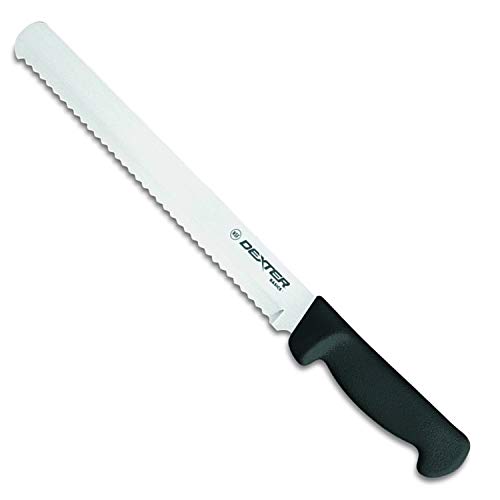
A long scalloped blade that handles crusty bread and cooked roasts. Plain black handle, hollow-ground edge, no frills.

A flexible curved boning knife, a wide trimming knife and a 10-inch steak knife, all with Sani-Safe handles. A tidy trio for anyone who processes their own meat.
What Dexter-Russell Does Well
Specialist knives for wet, messy jobs
Dexter’s catalog is built around tasks: fillet knives in several widths and flexes, boning knives, oyster and clam knives, scalloped slicers, cimeters. When you need a knife for one job, there’s a good chance Dexter makes exactly that shape.
Handles that stay put
Sani-Safe handles are textured polypropylene; SofGrip and SOFGRIP use a soft rubber-like grip. Both are made to be held with fish slime or raw fat on your hands, and to survive commercial washing. As I say across this site, grip beats fancy steel on any knife used with wet hands.
American manufacturing with a long history
Dexter-Russell traces its history to Henry Harrington’s cutlery shop in Southbridge in 1818 and John Russell’s Green River Works, founded in 1834. The two merged in 1933, and the company took the Dexter-Russell name in 2001. Many current Dexter listings, including the boning knife and the SOFGRIP fillet knife here, say made in the USA.
Thin blades that sharpen easily
Dexter’s DEXSTEEL and Basics blades are high-carbon stainless steels ground thin, often hollow ground. They take an edge quickly on a rod or stone, which matters in a job where knives are sharpened every day.
What Dexter-Russell Does Badly
Bare-bones looks
White polypropylene and stamped blades won’t impress anyone. Dexter’s Traditional line with rosewood handles is more attractive, but most of the range looks like what it is: restaurant equipment.
Few published specs
Dexter rarely publishes hardness numbers or edge angles. You get the line name, the steel family and the blade shape, and that’s it.
A confusing catalog
Sani-Safe, SofGrip, SOFGRIP, Basics, V-Lo, iCut-Pro, iCut-Forge, Traditional, Dexter Outdoors, Dextreme: the same blade shape can appear in four lines with different handles and long model numbers. The table below sorts out the main ones.
Softer steel needs frequent touch-ups
Thin, softer stainless is easy to sharpen, but it also loses its edge sooner than a hard Japanese blade. Plan on honing a Dexter fillet or boning knife before most sessions.
Dexter-Russell Lines Compared
| Line | Blade | Handle | Typical knives | Best for |
|---|---|---|---|---|
| Basics | Stamped high-carbon stainless, hollow ground | Textured polypropylene | Fillet, boning, slicer, cook’s knife | Lowest-cost Dexter for home cooks |
| Sani-Safe | DEXSTEEL high-carbon stainless (oyster tips in carbon steel) | Textured polypropylene, NSF | Oyster, paring, boning, butcher | Commercial kitchens, shellfish |
| SofGrip / SOFGRIP | DEXSTEEL high-carbon stainless | Soft rubber grip | Fillet, boning, slicers, utility | Long sessions with wet hands |
| V-Lo | DEXSTEEL high-carbon stainless | Soft-grip, slip-resistant | Fillet, boning, slicer, cook’s knife | Restaurant prep |
| Traditional | High-carbon stainless | Rosewood or beech | Chinese chef’s knives, cleavers, boning | A classic wooden-handled look |
| iCut-Pro / iCut-Forge | Forged stainless | Santoprene or POM | Chef’s knives, santoku, paring | Forged kitchen knives |
| Dexter Outdoors | DEXSTEEL high-carbon stainless | SOFGRIP or DexGrip | Fillet knives with sheath or guard | Anglers |
1. Dexter-Russell Basics P94812 7-Inch Narrow Fillet Knife: Best Dexter Knife Overall
Who it’s for: anglers and home cooks who fillet trout, walleye, panfish and similar fish.
A good fillet knife needs three things: a thin flexible blade, a narrow profile that follows the ribs, and a handle you can hold when everything is slippery. This Basics knife has all three and nothing else. The 7-inch length is the sweet spot for most freshwater fish and for trimming chicken or pork.
It’s the knife I’d name first when someone asks why Dexter-Russell has such a loyal following. It is simple, light and cheap enough that you can keep one in the boat bag and one in the kitchen. My guide to the best fish fillet knives puts it next to the other fillet knives I recommend for the dock and the kitchen.
What it lacks is any kind of sheath, and the plain white handle looks like a fish-market tool. For large saltwater fish, step up to the wider SOFGRIP below.
Key specs
- Blade: 7 inches, narrow and flexible
- Steel: stain-free high-carbon stainless
- Handle: textured polypropylene
- Hand wash
Pros
- Follows ribs and backbones closely
- Secure grip with slimy hands
- Easy to resharpen
Cons
- No sheath included
- Too flexible for big, thick fish
- Plain look
My verdict: the Dexter almost everyone should own. Skip it only if your usual catch is too big for a 7-inch blade.
2. Dexter-Russell Basics P94818 6-Inch Narrow Flexible Boning Knife: Best Dexter Boning Knife
Who it’s for: cooks who debone chicken, trim pork and remove silverskin.
Flex decides what a boning knife is good at, and this one is narrow and flexible. That suits poultry, small joints and peeling silverskin off a tenderloin, where a thin blade bends with the meat. For heavy beef work you’d want something stiffer.
Dexter describes Basics as its most affordable line, with a 400-series stain-free high-carbon blade that is hollow ground for quick resharpening. The listing also says made in the USA. If you’re unsure whether you need a boning knife or a fillet knife, my boning vs fillet knives guide explains the difference.
Key specs
- Blade: 6 inches, narrow, flexible
- Steel: 400-series stain-free high-carbon
- Hollow ground edge
- Handle: slip-resistant polypropylene; NSF; made in USA
Pros
- Great for chicken and silverskin
- Sharpens quickly
- Costs very little
Cons
- Too flexible for beef and pork shoulders
- Straight narrow blade takes practice around joints
My verdict: an easy add to any kitchen that cooks a lot of poultry. Beef cooks should look at a stiff boning knife.
3. Dexter-Russell Sani-Safe 2.75-Inch New Haven Oyster Knife: Best Oyster Knife
Who it’s for: anyone who shucks oysters at home, from a dozen a year to a weekly habit.
The New Haven pattern has a short, stiff blade with a bent tip. You push the tip into the hinge, twist, and the shell pops; the bend gives you leverage without having to stab. I named this the best overall pick in my oyster knives guide, and I haven’t changed my mind.
The tip is carbon steel, which is tough but can rust if left wet, so dry it right after shucking. There’s no hand guard either, so use a folded towel or a cut-resistant glove on the hand holding the oyster.
Key specs
- Blade: 2.75 inches, New Haven pattern with bent tip
- Tip: carbon steel
- Handle: textured Sani-Safe polypropylene
Pros
- Opens oysters with a twist, not force
- Non-slip grip when wet
- Short blade gives good control
Cons
- Carbon tip must be dried promptly
- No guard, so protect your other hand
My verdict: the oyster knife I’d buy first. Only very small, thin-shelled oysters call for something different.
4. Dexter Outdoors SOFGRIP 8-Inch Wide Fillet Knife: Best for Big Fish
Who it’s for: anglers who clean salmon, stripers, redfish and other large fish.
Dexter Outdoors is the company’s fishing brand, and this knife solves the main problem with the Basics fillet knife: big fish. The wide 8-inch blade has a firmer profile, so it powers through thick fillets and tough skin instead of wobbling. My saltwater fillet knife guide covers more options for large catches.
The SOFGRIP handle is soft and slip-resistant, and the included edge guard protects the blade in a tackle box. Dexter lists it as made in the USA from its DEXSTEEL high-carbon stainless.
The firmer blade gives up some of the bend you want on small panfish, and like every Dexter, it should be hand washed and dried right away.
Key specs
- Blade: 8 inches, wide, firm profile
- Steel: DEXSTEEL high-carbon stainless
- Handle: SOFGRIP slip-resistant
- Edge guard included; made in USA
Pros
- Handles big, thick fillets
- Comfortable soft grip
- Comes with an edge guard
Cons
- Too stiff for small fish
- Costs more than the Basics fillet knife
My verdict: the Dexter for saltwater anglers and salmon fishers. For trout and panfish, the Basics 7-inch is the better tool.
5. Dexter-Russell Basics P94804B 10-Inch Scalloped Slicer: Best Dexter Slicer
Who it’s for: cooks who want one long scalloped knife for bread and roasts.
A scalloped edge has rounded teeth that grip crust and seared surfaces without tearing what’s inside. This 10-inch Basics slicer handles a loaf of sourdough or a cooked roast, and the hollow-ground blade keeps friction down on long strokes.
It’s the plainest knife on this list: black polypropylene handle, stamped blade, 15 inches overall. Wide scallops like these tear less crumb than small pointed teeth.
Scallops are hard to sharpen at home, and for tender roast meat a straight-edged slicer gives cleaner slices. Think of this as a bread knife that can also carve in a pinch.
Key specs
- Blade: 10 inches, scalloped, hollow ground
- Steel: high-carbon stainless
- Handle: textured black polypropylene; 15″ overall
Pros
- Long enough for big loaves
- Grips crusts without tearing
- Inexpensive
Cons
- Scallops are hard to sharpen at home
- Not ideal for tender roasts
My verdict: a dependable cheap bread knife. If you mostly slice meat, choose a straight-edged slicer instead.
6. Dexter-Russell 3-Piece Sani-Safe Butcher Combo Set: Best Dexter Meat Set
Who it’s for: hunters and home butchers who portion and trim their own meat.
Three Sani-Safe shapes from commercial meat rooms come in this box. The curved boning knife is flexible, the trimming knife has a wide 6-inch blade, and the 10-inch steak knife portions steaks and chops. The edges are hollow ground and the handles are the same textured white polypropylene as Dexter’s oyster knife.
It’s a portioning and trimming set, not a complete kit. There’s no long slicer for cooked meat, so pair it with the slicer above or a carving knife. My butcher knife sets guide shows bigger kits if you want more pieces.
Key specs
- 6″ curved flexible boning knife
- 6″ wide trimming knife
- 10″ steak knife
- Hollow ground edges; Sani-Safe handles
Pros
- Three shapes meat processors actually use
- Same grippy handles throughout
- Easy to sharpen
Cons
- No slicer for cooked meat
- Costs more than buying one knife
My verdict: a smart trio if you process deer or buy whole cuts. Casual cooks only need the boning knife.
Dexter-Russell vs Mercer, Victorinox and Bubba
Dexter-Russell vs Mercer Culinary: both are restaurant-supply brands. Mercer has the broader home-kitchen range and a better forged chef’s knife (Genesis); Dexter is stronger in fish, oyster and butchering knives, and many of its knives are made in the USA.
Dexter-Russell vs Victorinox: for a chef’s knife, I’d take the Victorinox Fibrox Pro; my Victorinox chef knife review explains why. For a fillet or oyster knife, Dexter is the more natural choice.
Dexter Outdoors vs Bubba: Bubba’s fillet knives are built around big non-slip handles for saltwater boats. Dexter’s are simpler, lighter and cost less. For bank or kitchen filleting, Dexter is enough.
How to Pick the Right Dexter
Start from the job, not the line
Decide what you’ll cut first: fish, poultry, oysters, bread or meat portions. Then choose the line by handle: Sani-Safe or Basics for a hard textured grip, SofGrip for softer comfort over long sessions.
Match flex to the food
Flexible blades suit fish and poultry; stiffer blades suit pork, beef and big fish. Dexter lists flex in most product names, so read it before you buy.
Choose the length for your catch or cut
Six to 7 inches covers panfish, trout and chicken. Eight inches and wider suits salmon and saltwater fish. Ten inches is for slicers and steak or portioning knives.
Plan for a sharpener
Dexter knives are made to be sharpened often. A honing rod before each session and a stone or guided sharpener every few weeks keep them working.
FAQ
Are Dexter-Russell knives good?
Yes, especially for specialist jobs. Their fillet, boning, oyster and butcher knives are standard tools in commercial kitchens and fish markets. Their chef’s knives are fine but have stronger competition from Victorinox and Mercer.
Where are Dexter-Russell knives made?
Dexter-Russell is based in Southbridge, Massachusetts, and many of its knives are labeled made in the USA, including Basics boning knives, Sani-Safe paring knives and Dexter Outdoors fillet knives. Check each listing, since not every model says so.
How old is Dexter-Russell?
The company traces its history to Henry Harrington’s cutlery shop in Southbridge in 1818. It merged with John Russell’s Green River Works company in 1933 and has used the Dexter-Russell name since 2001.
What is the difference between Sani-Safe and SofGrip?
The handle. Sani-Safe uses a hard textured polypropylene handle made for sanitation; SofGrip uses a softer rubber grip that is more comfortable over long sessions. Blades are similar DEXSTEEL high-carbon stainless.
Is Dexter Outdoors the same as Dexter-Russell?
Yes. Dexter Outdoors is Dexter-Russell’s fishing and outdoor brand, selling fillet knives with guards and sheaths for anglers.
Are Dexter-Russell knives dishwasher safe?
Hand wash them. Dexter’s own listings say to hand wash and towel-dry immediately, and carbon steel parts such as oyster knife tips can rust if left wet.
Final Verdict
Dexter-Russell is the brand to buy when you need a knife for a specific, messy job. The Basics 7-inch fillet knife is the one I’d recommend first, the Sani-Safe New Haven is my pick for oysters, and the SOFGRIP 8-inch wide fillet knife handles big fish. Add the Basics boning knife for poultry, and the butcher combo if you process your own meat.
Working on meat as much as fish? My guide to the best knife for trimming meat shows more boning and trimming options.

Gary Portman founded knivesadvice.com in 2019. He learned to cook in his family’s kitchen as a kid and has used kitchen, pocket and outdoor knives ever since, from paring and fillet knives to survival blades he carries camping and hiking. He writes the site’s buying guides, brand reviews and sharpening how-tos to help readers find the right knife for the job. More about Gary.