
Fifty dollars is enough for a genuinely good everyday carry knife, as long as you choose by lock, size and maker rather than by the steel name in the listing. Most budget lists are wall-to-wall flippers. I’ve mixed it up here: a button lock, a lockback, a crossbar-style lock, a liner lock, a French ring lock and one small fixed blade, so you can pick the one that fits your hands and habits.
My top pick is the CJRB Pyrite-Light; the Buck 112 Slim Select is the one to get if you want American made.
My Top 7 EDC Knife Picks Under $50

A button lock that’s safe and easy from either side, a powder steel blade and a light FRN handle. It feels like a much more expensive knife in the pocket.

The famous Buck 112 lockback, slimmed down with nylon scales and a deep-carry clip. Tough, easy to sharpen and built in Idaho.

SOG’s XR lock works the same from either side and doubles as a quick way to flick the blade open. A sturdy all-rounder in G10 and D2.
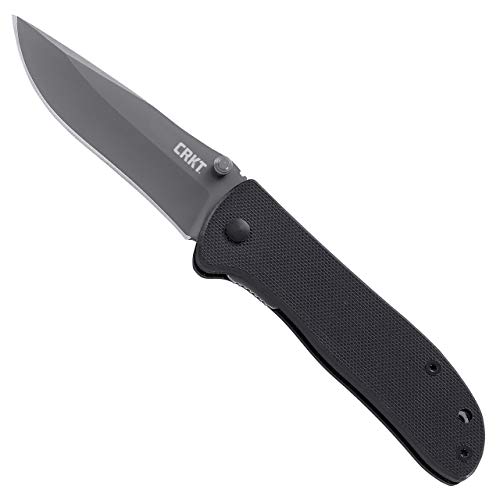
A plain, slim thumb stud folder that has quietly stayed in CRKT’s line for years. Nothing fancy, everything you need.

A short cleaver-shaped blade, flat-edged with a blunt-ish nose: excellent for tape, cardboard and packaging, and less pointy-looking than most folders.

A French classic with a carbon steel blade that sharpens in seconds and a ring lock. It costs very little and slices better than most knives here.

A tiny fixed blade with a Kydex sheath that carries on a belt or around the neck, plus hidden tweezers and a toothpick. No lock to fail.
EDC Knives Under $50 Compared
| Knife | Blade | Steel | Lock | Weight | Best for |
|---|---|---|---|---|---|
| CJRB Pyrite-Light | 3.34″ Wharncliffe | AR-RPM9 | Button lock | 2.82 oz | Daily carry, either hand |
| Buck 112 Slim Select | 3″ clip point | 420HC | Lockback | 2.5 oz | Made in USA, tradition |
| SOG Terminus XR | Drop point | D2 | XR lock | Not listed | Ambidextrous carry |
| CRKT Drifter | 2.88″ drop point | 8Cr14MoV | Liner lock | Not listed | Slim, simple carry |
| Kershaw Wharf | 2.8″ cleaver | 8Cr13MoV | Liner lock | 2.9 oz | Boxes, packaging |
| Opinel No.08 Carbone | 3.35″ clip point | XC90 carbon | Virobloc ring | Not listed | Food, picnics, tradition |
| Kizer Drop Bear | 2.57″ drop point | D2 | Fixed blade | Under 2.77 oz | Neck or belt carry |
1. CJRB Pyrite-Light (AR-RPM9, Green FRN): Best Overall
Who it’s for: anyone who wants one cheap knife that does most daily jobs well and works the same in either hand.
The Pyrite-Light is the knife I’d buy first at this budget. CJRB (Artisan Cutlery’s budget brand) built it around a button lock: press the button on the handle and the blade swings closed under its own weight, with your fingers nowhere near the edge. That’s easier and safer than a liner lock, and it doesn’t care which hand you use.
The blade is AR-RPM9, a powder steel CJRB runs at 59 to 61 HRC, so it holds an edge longer than the 8Cr-class steels most knives at this level use. The FRN handle keeps the whole knife at 2.82 ounces, and the deep-carry clip hides most of it in the pocket.
My one reservation is the blade shape. The 3.34-inch Wharncliffe has a straight edge and a dropped point, superb for boxes, tape and fine point work, less natural for slicing an apple or peeling fruit.
Key specs
- Blade: 3.34-inch Wharncliffe, AR-RPM9, 59 to 61 HRC, flat grind
- Handle: FRN, green; steel deep-carry clip
- Lock: button lock
- Weight: 2.82 oz; closed 4.25 in, overall 7.60 in (listing)
Pros
- Button lock is easy and safe from either side
- Better steel than most budget knives
- Light for its size
Cons
- Wharncliffe shape is less handy for food
- FRN feels plain next to G10
My verdict: the best all-round EDC knife I can name at this budget. Pick the Buck if you want a pointier, more traditional blade.
2. Buck 112 Slim Select (420HC, Nylon, Made in USA): Best Made in USA
Who it’s for: buyers who want an American-made knife with a classic shape and a lock they trust.
The Buck 112 Ranger is one of the best-known lockbacks ever made, but the original is heavy and has no clip. The Slim Select keeps the shape and the lock and swaps the brass and wood for molded nylon, which cuts the weight to 2.5 ounces and adds a deep-carry clip. It’s still made in the USA.
A lockback (back lock) holds the blade with a bar along the spine; you press it at the back of the handle to close. It’s strong, simple and works from either side. The 3-inch modified clip point is a good everyday shape for food, cord and packaging.
The steel is 420HC, which Buck heat-treats well. It’s tough and sharpens very quickly, but it dulls sooner than the AR-RPM9 in the CJRB. The nylon handle also feels a little plain.
Key specs
- Blade: 3-inch modified clip point, 420HC stainless
- Handle: molded nylon, black; deep-carry clip
- Lock: lockback; one-handed opening
- Weight: 2.5 oz; made in the USA (listing)
Pros
- Strong, simple lockback
- Very easy to sharpen
- Made in the USA, backed by Buck’s warranty
Cons
- Edge needs touching up more often
- Nylon handle feels basic
My verdict: a modern carry version of a true American classic. Skip it only if edge life matters more to you than easy sharpening.
3. SOG Terminus XR (D2, G10): Best Ambidextrous Lock
Who it’s for: lefties, plus anyone after a sturdy folder that’s identical from both sides.
The Terminus XR is built around SOG’s XR lock: a spring-loaded bar that slides in a slot through the handle. Thumb it backward and the blade is free to close. Like other crossbar-style locks, it works the same for either hand and keeps every finger clear of the closing edge. Pull it back while flicking and the blade swings open too, so you get three ways to open: thumb stud, XR flick or kick.
It’s a more rugged knife than the others here, with a G10 handle and a stonewashed D2 blade. D2 holds an edge well but isn’t fully stainless, so wipe it after wet jobs. The clip swaps sides.
It also feels heavier in the hand than the CJRB or the Buck. If you want the lightest carry, those two are better.
Key specs
- Blade: drop point, D2, stonewashed
- Handle: G10, black; swappable clip
- Lock: XR lock (crossbar style); thumb stud, XR and kick opening
- Fully ambidextrous design (listing)
Pros
- Lock and opening work from either side
- Grippy G10, sturdy build
- Good edge life
Cons
- D2 can spot if left wet
- Bulkier than the lighter picks
My verdict: the left-hander’s pick at this budget, and a tough one for anyone. Go for the CJRB if low weight matters more.
4. CRKT Drifter (8Cr14MoV, G10): Best Classic Liner Lock
Who it’s for: people who like a slim, quiet, traditional-looking modern folder.
The Drifter is a reminder that a budget knife doesn’t need a flipper tab, bearings or a tactical look. It’s a slim 2.88-inch drop point with a thumb stud, a liner lock and G10 scales. Opening is a simple thumb push, and the drop point blade suits almost any small job.
The blade is 8Cr14MoV, a budget stainless that’s easy to sharpen, with a gray titanium nitride coating that adds corrosion protection and hides wear. Defects are covered by CRKT’s limited lifetime warranty.
The liner lock needs a little care when closing (your thumb pushes the liner aside, close to the edge’s path), and the steel needs regular touch-ups if you cut lots of cardboard.
Key specs
- Blade: 2.88-inch drop point, 8Cr14MoV, gray TiN coating
- Handle: G10; pocket clip
- Lock: liner lock; thumb stud opening
- Warranty: limited lifetime against defects (listing)
Pros
- Slim and unthreatening
- Grippy G10 at a low price
- Simple, reliable design
Cons
- Budget steel dulls sooner
- Liner lock less friendly than a button or lockback
My verdict: a quiet, sensible knife for people who don’t want their EDC to look like a weapon. Choose the CJRB for longer edge life.
5. Kershaw Wharf (8Cr13MoV, Cleaver Blade): Best for Boxes and Packages
Who it’s for: warehouse workers, online shoppers and anyone whose knife mostly opens boxes.
The Wharf’s cleaver blade is the reason it’s here. A straight edge and a squared-off front make it very good at long cuts through tape and cardboard, and the blade looks friendly rather than pointy, which helps in an office or a shop. A finger notch (choil) behind the edge lets you grip closer to the work, and the spine jimping gives your thumb something to press on.
It opens with Kershaw’s assisted opening (a spring finishes the opening once you start it; not an automatic knife, though carry laws vary, so check yours). A liner lock holds it, and the reversible deep-carry clip goes on either side. The glass-filled nylon handle keeps it at 2.9 ounces.
The 8Cr13MoV blade is easy to sharpen but dulls quickly on cardboard, which is exactly this knife’s job. Plan on regular touch-ups.
Key specs
- Blade: 2.8-inch cleaver, 8Cr13MoV, stonewashed; finger choil, spine jimping
- Handle: glass-filled nylon, gray
- Lock: liner lock; assisted opening
- Weight: 2.9 oz; overall 6.7 in; reversible deep-carry clip (listing)
Pros
- Cleaver blade is excellent for packaging
- Friendly, office-safe look
- Clip works for either hand
Cons
- Budget steel dulls fast on cardboard
- Blunt front is poor for piercing or detail work
My verdict: the best box opener here by a distance. If you want a more general knife, take the CJRB or the Buck.
6. Opinel No.08 Carbone (Carbon Steel, Beech): Best Traditional Folder
Who it’s for: people who cut food, cord and wood more than boxes and want a knife that slices beautifully.
The No.08 is the size Opinel sells most, and the carbon steel version is the one I’d carry for food. The XC90 carbon blade is ground very thin, so it slices bread, cheese and fruit better than anything else here, and a few strokes on a stone bring it back. It’s made in Savoie, France, with a beech handle.
The Virobloc ring locks the blade open (and closed in your pocket) with a quarter turn. It’s a different kind of lock from the rest of this list: simple and reliable, but a two-hand job.
Carbon steel needs care: it darkens and will rust if left wet, so wipe it after cutting food. There’s no clip, and the beech can swell if soaked.
Key specs
- Blade: 3.35-inch (8.5 cm), XC90 carbon steel
- Handle: beech wood
- Lock: Virobloc safety ring
- Made in Savoie, France (listing)
Pros
- Thin blade slices brilliantly
- Very easy to sharpen
- Costs very little
Cons
- Carbon steel rusts if neglected
- No clip, two-hand opening and locking
My verdict: the best slicer and the best bargain on this list. Choose a clip-carry folder if you need one-hand access.
7. Kizer Drop Bear Fixed Blade (D2, Olive G10): Best Fixed Blade EDC
Who it’s for: people who’d rather carry a tiny fixed blade than trust a folding lock.
A fixed blade has no pivot to loosen and no lock to fail, and the Drop Bear makes one small enough for daily carry. The 2.57-inch D2 blade rides in a Kydex sheath with adjustable tension that you can wear horizontally on a belt, vertically or around the neck with the included paracord. It weighs under 2.77 ounces.
The olive G10 handle hides a pair of tweezers and a toothpick, a small touch that’s genuinely handy for splinters. Kizer offers lifetime service against defects.
A fixed blade is more conspicuous than a folder, and a sheath is bulkier in a pocket. The D2 blade also needs drying after wet jobs.
Key specs
- Blade: 2.57-inch drop point, D2, 58 to 62 HRC
- Handle: olive G10 with tweezers and toothpick
- Sheath: Kydex, adjustable tension; belt or neck carry (paracord included)
- Weight: under 2.77 oz; lifetime service against defects (listing)
Pros
- No lock or pivot to fail
- Very small and light
- Useful tweezers and toothpick
Cons
- More conspicuous than a folder
- D2 needs drying after wet use
My verdict: the pick for people who want strength and simplicity over pocket convenience. Most office carriers will be happier with a folder.
How I’d Choose an EDC Knife on a Budget
Pick the lock first
The lock decides how safe and easy the knife is to close, so choose it before anything else. Button locks, lockbacks and crossbar-style locks work from either hand and keep fingers clear of the edge as it closes; liner locks are cheap and slim but need a careful thumb. My folding knife lock types guide explains each one in detail.
Choose about 3 inches of blade
About 3 inches is the everyday sweet spot: long enough for food, rope and boxes, short enough to carry comfortably and within most local limits. Go closer to 2 to 2.5 inches if you work in an office. For smaller knives and keychain tools, see my best EDC knife under $100 guide.
Don’t overpay for a steel name
At this price, the steel matters less than the maker. 8Cr13MoV, 420HC and AR-RPM9 from known brands are all perfectly usable; D2 keeps cutting longer, though it can rust. Be wary of unknown brands listing premium steels at prices that don’t add up.
Check weight and clip
An EDC knife you leave at home is useless, so weight and clip matter. Under about 3 ounces disappears in a pocket, and a reversible clip suits left-handers.
Manual or assisted opening
Assisted openers finish opening with a spring once you start them; manual knives don’t. Assisted knives are treated differently from automatics in many places, but laws vary, so check yours. True automatics are a separate category, which my automatic knives under $50 guide explains. If you want more flipper and assisted choices at this budget, my best flipper knife under $50 guide covers them.
The Cheapest Picks Worth Carrying
If you want to spend as little as possible, three of these knives cost very little: the Opinel No.08 Carbone, the Kershaw Wharf and the CJRB Pyrite-Light. Of those, the Opinel slices best, the Wharf opens boxes best, and the CJRB is the best all-rounder. I’d take any of them over the cheapest no-name knives, which often promise premium steels and fail on heat treatment, lock strength or fit.
Keeping a Budget EDC Knife Sharp
Budget steels dull faster, so a quick touch-up every week or two keeps them working. A small ceramic rod or pocket sharpener is enough for most of these blades; carbon steel and 420HC come back fastest. My guide on how to sharpen a pocket knife walks through it, and a drop of oil on the pivot every few months keeps folders opening smoothly.
FAQ
What is the best EDC knife under $50?
The CJRB Pyrite-Light is my pick for the best EDC knife under $50. It combines a button lock that works from either side, a powder steel blade and a light FRN handle. If you want American made, the Buck 112 Slim Select is the alternative.
Is a knife under $50 good enough for everyday carry?
Yes, a knife under $50 from an established brand is good enough for everyday carry. You give up some edge life and smoothness compared with premium knives, but a good budget knife cuts just as well when sharp.
What size knife is best for everyday carry?
A blade of about 2.5 to 3.5 inches is best for most everyday carry. Around 3 inches handles food, rope and boxes. Shorter blades suit offices and strict local rules.
Is D2 steel good on a cheap EDC knife?
D2 is good on a cheap EDC knife from a known brand. It holds an edge longer than most budget steels but isn’t fully stainless, so wipe it dry after wet jobs. Unknown-brand “D2” knives are a gamble.
Is the Opinel good for EDC?
The Opinel No.08 is good for EDC if you carry it in a pocket or bag and mostly cut food, cord or wood. It has no clip and needs two hands to open and lock, so it’s slower than a modern clip folder.
Are fixed blade knives good for everyday carry?
Small fixed blades are good for everyday carry if you can wear them on a belt or neck. They’re stronger and simpler than folders, but more conspicuous and less pocket-friendly.
Final Verdict
The CJRB Pyrite-Light is the knife I’d recommend first under $50: a safe button lock, better steel than its price suggests and a light handle. For an American-made classic, the Buck 112 Slim Select is the one, and left-handers should look at the SOG Terminus XR. If you only spend a little, the Opinel No.08 Carbone is the bargain of the group.
Ready to spend a bit more? My best folding knife under $100 guide covers the next step up.

Gary Portman founded knivesadvice.com in 2019. He learned to cook in his family’s kitchen as a kid and has used kitchen, pocket and outdoor knives ever since, from paring and fillet knives to survival blades he carries camping and hiking. He writes the site’s buying guides, brand reviews and sharpening how-tos to help readers find the right knife for the job. More about Gary.