
Kai is the Japanese company that makes Shun, and the knives it sells under its own name are the plainer, cheaper way into the same Seki know-how. They suit cooks who want a thinner, sharper knife than a budget German brand but don’t want to fuss over hard steel and Damascus. Skip Kai if you want a showpiece, or a heavy blade for bones and frozen food.
The lines to know are Kai PRO, Wasabi, Luna and Seki Magoroku, Kai’s everyday line in Japan. Quality is solid across all four, but the steels differ a lot, from German stainless in Luna to a three-layer Japanese blade in Seki Magoroku Akane. For most kitchens I’d start with the Kai PRO 8″ Chef’s Knife; on a tight budget, the Luna 8″ chef’s knife is the cheapest Kai worth owning.
My Top 6 Kai Picks

The Kai I’d buy first. A full-tang, riveted knife with a hammered blade and a 16 degree edge, practical rather than pretty, and backed by Kai’s free sharpening.

Wasabi is the most Japanese-feeling Kai line: a light blade and a symmetrical bamboo-blend handle that sits as well in a left hand as a right.

A three-layer gyuto from Kai’s home line in Japan, with a tough heat-resistant handle. The most knife per dollar in Kai’s catalog, if you like a longer, flatter blade.

Soft German steel, a soft-grip handle and a sheath. Not Japanese steel, but the friendliest Kai for a first apartment or a careless household.
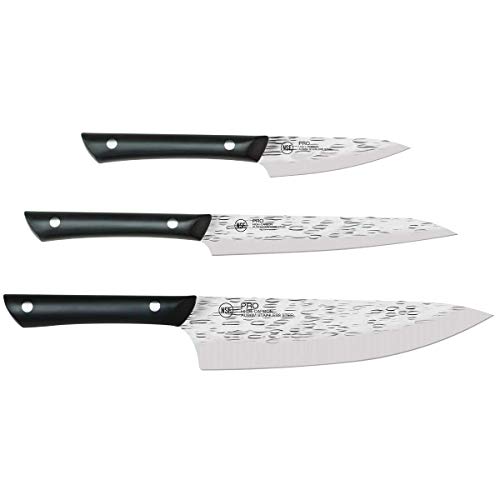
My top pick plus a utility and a paring knife, all in the same hammered Kai PRO style. Three knives that cover a home kitchen.

A flat-edged vegetable knife that pairs with the Kai PRO chef’s knife. Add it once the chef’s knife is in the drawer and your cutting board is mostly produce.
What Kai Does Well
A century of blades in Seki
Kai has been making blades in Seki, Japan, since 1908, and it also owns Shun. You’re buying from one of the biggest names in Japanese cutlery, not a new online brand, and the fit and finish on even the cheap lines reflects that.
Free sharpening on the US lines
Kai PRO, Wasabi and Luna come with Kai’s free sharpening and honing support. For beginners, that’s the most useful thing about the brand, because most home knives go dull and stay dull.
Thin 16 degree edges at sensible prices
Kai PRO, Luna and Pure Komachi 2 are hand sharpened to 16 degrees per side, finer than most German knives. That’s the main reason a Kai feels sharper than a similar-priced German knife on tomatoes and onions.
Practical handles
Kai’s handles are POM, polypropylene blends and molded resin rather than wood. None of them look as fancy as pakkawood, but they don’t swell, crack or mind a wet sink.
What Kai Does Badly
The steels are modest
Kai PRO uses AUS6M and Luna uses German DIN 1.4116, both softer steels that sharpen easily but lose their edge faster than the VG-MAX in a Shun. Plan on honing often and sharpening a few times a year.
Confusing, region-split lines
Kai sells different lines in different countries, so the Seki Magoroku knives are imports and Kai’s US support may not cover them. Old line names (Inspire, older Wasabi sets) also linger on listings. Check the exact line before you buy.
Plain looks
Apart from the hammered Kai PRO finish, these are workmanlike knives. If you want Damascus layers and a showpiece handle, you’re shopping for a Shun, not a Kai.
Kai Lines Compared
| Line | Steel | Edge | Handle | Finish | Best for |
|---|---|---|---|---|---|
| Kai PRO | AUS6M stainless | 16 degrees | Riveted POM, full tang | Hammered (tsuchime) | Most home cooks |
| Wasabi | High-carbon stainless | Not published | Polypropylene and bamboo, symmetrical | Satin | Japanese-style feel, either hand |
| Luna | German DIN 1.4116 stainless | 16 degrees | Molded resin, soft grip | Half hammered, half grazed | Lowest price, rough use |
| Pure Komachi 2 | 3Cr13MoV stainless, colored coating | 16 degrees | Molded polypropylene | Color coated | Color coding, gifts |
| Seki Magoroku Akane | Three layers, molybdenum vanadium core | Not published | Polyacetal, heat resistant | Plain | Made in Japan on a budget |
1. Kai PRO 8″ Chef’s Knife: Best Overall
Who it’s for: a home cook who wants one reliable Japanese-style chef’s knife and free sharpening behind it.
Kai PRO is the line that shows what Kai does best: no-nonsense knives with a Japanese edge and a Western build. The 8″ chef’s knife has AUS6M stainless steel, a hand-sharpened 16 degree edge, a hammered blade finish and a POM handle riveted to a full tang.
I like it because it asks so little. AUS6M is soft enough that the edge rolls rather than chips, a honing rod brings it back, and the hammered dimples stop potato slices from clinging. The riveted handle also feels more planted than the lighter Wasabi.
The trade-off is edge life. This steel won’t stay sharp as long as a Shun or a MAC, so hone it every week or two. I also rate it in my chef knife under $100 guide as a first Japanese knife.
Key specs
- Blade: 8″, AUS6M stainless steel, hammered tsuchime finish
- Edge: hand sharpened, 16 degrees
- Handle: contoured POM, riveted, full tang
- Free sharpening and honing from Kai
Pros
- Forgiving steel, easy to resharpen
- Hammered finish helps food release
- Sturdy riveted full-tang build
Cons
- Needs honing more often than harder Japanese steels
- Plain handle for the money
My verdict: the safest Kai to buy. Want an edge that lasts much longer between sharpenings? Look at a Shun.
2. Kai Wasabi 6.5″ Santoku Knife: Best Japanese-Style Handle
Who it’s for: left-handed cooks, and anyone who likes a light knife with a traditional Japanese grip.
Wasabi is the Kai line that looks and feels most Japanese. The handle is a symmetrical blend of polypropylene and bamboo powder in a traditional shape, so it doesn’t favor either hand, and the blade is high-carbon stainless steel that Kai says is easy to sharpen.
I picked the santoku because that’s where the light Wasabi build shines. A santoku is shorter and flatter than a chef’s knife, made for push cuts and chopping rather than rocking, and the Wasabi’s low weight makes quick work of onions, peppers and boneless chicken.
My reservation is the handle feel: without rivets or a bolster, it’s lighter and less substantial than the Kai PRO, which some cooks dislike. If you rock-chop herbs, the chef’s knife suits you better.
Key specs
- Blade: 6.5″ santoku, high-carbon stainless steel
- Handle: polypropylene and bamboo blend, symmetrical Japanese style
- Suits left and right hands
- Free sharpening and honing from Kai
Pros
- Light and quick for everyday chopping
- Handle works for either hand
- Easy to sharpen
Cons
- Flat edge is poor for rocking cuts
- Lighter feel than the riveted Kai PRO
My verdict: the Kai for cooks who want a Japanese feel. Prefer a heavier knife? Stick with the Kai PRO.
3. Kai Seki Magoroku Akane 210mm Gyuto: Best Made in Japan
Who it’s for: cooks who want a knife made in Japan and are happy with a gyuto’s longer, flatter profile.
Seki Magoroku is the line Kai sells to everyday kitchens in Japan, named after a famous Seki swordsmith. The Akane gyuto has a three-layer blade, a hard molybdenum vanadium stainless core between two softer stainless layers, so the edge stays keen while the sides are easy to grind.
The 210mm length is the usual home gyuto size. The handle is polyacetal, a resin rated up to 284°F, and Kai even lists the knife as dishwasher safe. I’d still wash it by hand, since dishwashers dull any edge.
The catch is support. This is an import made for the Japanese market, so don’t count on Kai’s US sharpening service for it. My best gyuto knife guide compares it with pricier gyutos.
Key specs
- Blade: 210mm (8.3″) gyuto, three layers, molybdenum vanadium stainless core
- Handle: polyacetal, heat resistant to 284°F
- Dishwasher safe per Kai
- Made in Japan
Pros
- Made in Japan by Kai
- Three-layer blade for a keener core
- Tough handle that won’t crack or swell
Cons
- Japan-market import, US service unclear
- Plain looks, basic handle
My verdict: my favorite budget Kai for a real Japanese knife. If free US sharpening matters to you, the Kai PRO is safer.
4. Kai Luna 8″ Chef’s Knife: Best Budget
Who it’s for: students, first kitchens and households where knives get tossed in the sink.
Luna is Kai’s cheapest line, and Kai is open about the steel: high-carbon DIN 1.4116, a German stainless. It’s soft and tough, so it shrugs off rough use and takes an edge on almost any sharpener, but it won’t stay sharp long.
What makes it more than a generic budget knife is the 16 degree hand-sharpened edge, the half-hammered blade (dimples on top, grazed finish below) and a molded handle with soft-grip overlays that stays secure with wet hands. It also comes with a sheath, handy for a drawer.
Be clear on what you’re getting: a well-made budget knife from a Japanese company, not a Japanese-steel knife.
Key specs
- Blade: 8″, high-carbon DIN 1.4116 stainless steel
- Edge: hand sharpened, 16 degrees
- Handle: molded resin with soft-grip overlays
- Sheath included; free sharpening and honing from Kai
Pros
- Cheapest Kai worth owning
- Tough, forgiving steel
- Secure grip when wet
Cons
- Soft steel dulls quickly
- German steel, not Japanese
My verdict: a great first knife or spare. If it becomes your daily knife, step up to the Kai PRO.
5. Kai PRO 3 Piece Starter Set: Best Set
Who it’s for: someone kitting out a kitchen, or buying a practical wedding or housewarming gift.
The set is my top pick, the 8″ chef’s knife, plus a 6″ utility knife and a 3.5″ paring knife, all in the same AUS6M steel with 16 degree edges and riveted POM handles. Those three cover nearly everything a home cook does.
I prefer small sets like this to big blocks: you pay for knives you’ll use instead of a dozen steak knives and a pair of shears. The matching handles also mean the whole set feels the same in your hand.
There’s no block or storage, so budget for a magnetic strip or edge guards. A bread knife isn’t included either; Kai PRO sells one on its own.
Key specs
- Knives: 8″ chef’s, 6″ utility, 3.5″ paring
- Steel: AUS6M stainless, hammered finish
- Edges: hand sharpened, 16 degrees
- Handles: riveted POM, full tang; free sharpening and honing
Pros
- Only the knives you’ll use
- Matching handles and steel
- Includes my top pick
Cons
- No block or storage
- No bread knife
My verdict: the best way to buy Kai as a set. If you only need one knife, buy the chef’s knife alone.
6. Kai PRO 6″ Nakiri Knife: Best Vegetable Knife
Who it’s for: Kai PRO owners whose prep is mostly carrots, cabbage and greens.
A nakiri has a straight edge and a square tip. Because the edge lands flat along its length, it cuts all the way through carrots and cabbage instead of leaving slices joined at the bottom. This Kai PRO version shares the chef’s knife’s AUS6M steel, hammered finish and riveted handle.
It’s a second knife, not a first. With no point it can’t score, trim or debone, and the flat edge doesn’t rock. For vegetable prep, though, it’s quicker and more precise than a chef’s knife. My best nakiri knife guide has pricier options.
Key specs
- Blade: 6″ nakiri, AUS6M stainless steel, hammered finish
- Edge: hand sharpened, 16 degrees, flat profile
- Handle: riveted POM, full tang
- Free sharpening and honing from Kai
Pros
- Clean, full cuts on vegetables
- Matches the Kai PRO chef’s knife and set
- Food releases well
Cons
- No tip for detail work
- Not for meat or bone
My verdict: a great add-on for produce lovers. As your only knife, choose the chef’s knife.
Kai vs Other Brands
Kai vs Shun
Shun is Kai’s premium brand. It uses harder VG-MAX steel with Damascus cladding, so it stays sharp much longer but chips more easily and costs much more. Kai’s own lines are simpler and tougher. My Shun knives review covers the premium side.
Kai vs Tramontina
Tramontina is a Brazilian budget brand with German-style, softer knives and a thicker edge. Kai’s thinner 16 degree edges cut more cleanly; Tramontina is the cheaper, more rugged choice for a knife that gets abused.
Kai vs Victorinox
The Victorinox Fibrox is the budget knife I compare everything to: stamped, light and grippy. The Kai PRO feels more solid with its riveted full tang and has a finer edge; the Victorinox is cheaper and suits rougher kitchens.
FAQ
Are Kai knives good quality?
Yes. Kai is a long-established Seki maker, and even its cheap lines are well finished. The steels are modest, so expect easy sharpening rather than long edge life. My short answer is in are Kai knives good?
Is Kai the same company as Shun?
Yes. Kai owns Shun and makes Shun knives in Seki, Japan. Shun is the premium brand; Kai PRO, Wasabi, Luna and Seki Magoroku are Kai’s more affordable lines.
Is Seki Magoroku good?
Yes, for the money. Seki Magoroku is Kai’s everyday line in Japan, and knives like the Akane gyuto are made in Japan with a three-layer blade. They’re imports in the US, so check what sharpening support you get.
Do Kai knives come with free sharpening?
Kai’s US lines (Kai PRO, Wasabi, Luna) are backed by free sharpening and honing. Japan-market imports like Seki Magoroku may not be. My guide on how to sharpen Kai knives covers doing it yourself.
Which Kai knife line is best?
Kai PRO for most people, Wasabi for a light Japanese-style handle, Seki Magoroku for a made-in-Japan blade, and Luna for the lowest price.
What else does Kai make?
Kai Housewares makes far more than kitchen knives: kitchen shears, scissors, razors and nail clippers, plus pocket knives through Kai USA.
Final Verdict
Kai’s own knives are honest, practical tools from the company behind Shun. Most cooks should buy the Kai PRO 8″ Chef’s Knife; the Seki Magoroku Akane gyuto is the best way to get a made-in-Japan blade on a budget, and the Luna 8″ is the one to buy when the price matters most.
Comparing Kai with other Japanese makers? My best Japanese knife sets guide puts them side by side.

Gary Portman founded knivesadvice.com in 2019. He learned to cook in his family’s kitchen as a kid and has used kitchen, pocket and outdoor knives ever since, from paring and fillet knives to survival blades he carries camping and hiking. He writes the site’s buying guides, brand reviews and sharpening how-tos to help readers find the right knife for the job. More about Gary.