
Salt water is hard on knives. It pits ordinary stainless steel within a season, big fish fight a thin blade, and a fillet table on a rocking boat is no place for a slippery handle. A saltwater fillet knife needs a coated or highly corrosion-resistant blade, a bit more length and backbone, and a grip that holds when it’s covered in slime.
The one I’d buy first is the Bubba 9-inch Tapered Flex.
My Top 6 Saltwater Fillet Knife Picks

Bubba is one of the best-known names among saltwater anglers, and I understand why. The titanium-coated blade shrugs off salt, the trigger-grip handle stays put in wet hands, and 9 inches handles snapper, redfish and mahi without fuss.

I picked the KastKing for anglers who want a real saltwater knife for less than the Bubba. German G4116 stainless, a grippy polymer handle and a sheath that locks the knife in. It’s the one I’d buy two of, one for the boat and one for the truck.
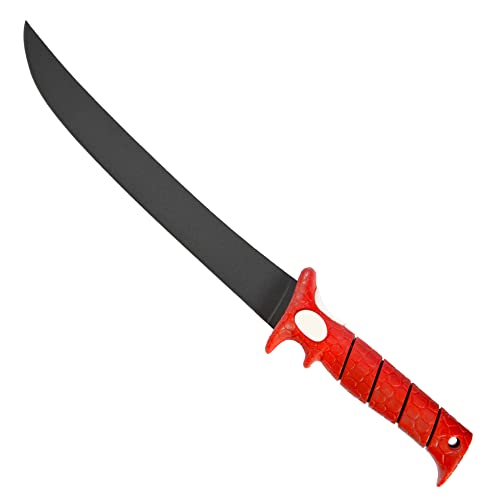
Tuna, wahoo, cobia and big kingfish need reach. A 12-inch blade crosses a thick loin in one stroke, and the curve keeps the edge in contact with the meat. This is my pick for offshore anglers who bring home big fish.

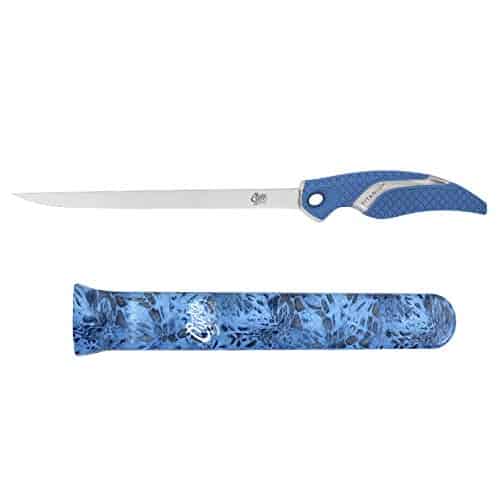
If your knife lives in a wet tackle box and rarely gets dried, I’d give it this Cuda. The titanium-bonded 4116 blade is made for salt and fresh water, and the scale-pattern grip is one of the better ones at its price.
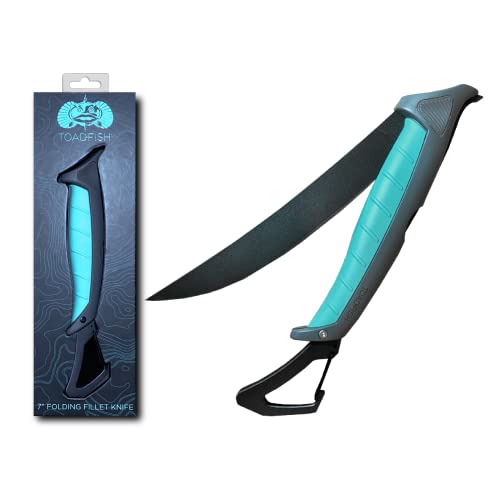
Kayak and small-boat anglers, this one’s for you. The blade folds back into the handle, so there’s no loose sheath to drop overboard, and a serrated spine cuts frozen bait. I like how much thought went into it.

Two edges on one blade: a scalloped back edge for opening up scaly fish and a fine lower edge for the fillet. I picked it for snapper and sheepshead fans who are tired of scales eating their edge. Made in the USA, too.
Saltwater Fillet Knives Compared
| Knife | Blade | Steel / coating | Carry | Best for |
|---|---|---|---|---|
| Bubba Tapered Flex | 9″ | 8Cr13MoV, titanium coated | Sheath | Most inshore and offshore fish |
| KastKing Speed Demon Pro | 9″ | G4116, black finish | Locking sheath | Value, spare knives |
| Bubba Flex Curved | 12″ | 8Cr13MoV, titanium coated | Sheath | Tuna, wahoo, cobia |
| Cuda Fillet Flex | 9″ | 4116, titanium bonded | Sheath | Wet tackle boxes |
| Toadfish Stowaway | 7″ | Japanese stainless, coated | Folds into handle | Kayaks, small boats |
| Dexter Dextreme Dual Edge | 8″ | Dexsteel | Vented sheath | Heavily scaled fish |
1. Bubba 9-Inch Tapered Flex Fillet Knife: Best Overall
Who it’s for: inshore and nearshore anglers who clean redfish, snapper, grouper, flounder and mahi and want one knife for all of them.
Bubba knives were designed around saltwater fishing, and it shows in the details. The 9-inch blade is thin 8Cr13MoV stainless with a titanium coating, which adds a layer of protection against salt and lets the blade slide through meat with less drag. The tapered flex shape is stiffer at the heel and more flexible toward the tip, which is exactly what I want on saltwater fish: backbone for the first cut along the spine, give at the end for working over the ribs.
The handle is the part people remember. It has a trigger-style grip for your index finger and safety guards that keep your hand off the blade and away from sharp fin spines. When everything on the boat is wet and slimy, that matters more than any steel spec.
My reservation: 8Cr13MoV is a mid-range steel. It sharpens easily, but it won’t hold an edge through a whole limit of big fish, so keep a hone handy. The handle is also large, so try to hold one first if you have small hands. And the warranty is only one year, which is short for a knife at this price.
Key specs
- Blade: 9-inch 8Cr13MoV stainless steel, titanium coated, tapered flex
- Overall length: 15 inches; full tang
- Handle: non-slip grip with trigger grip and safety guards, lanyard hole
- Synthetic sheath; 1-year limited warranty
Pros
- Coated blade built for salt water
- Excellent grip and hand protection when wet
- Stiff heel, flexible tip: versatile on many fish
- Good length for most saltwater species
Cons
- Mid-range steel needs frequent honing
- Big handle can feel bulky in small hands
- Only a one-year warranty
My verdict: the saltwater fillet knife I’d buy if I could have only one. If budget is tight, the KastKing does most of the same job.
2. KastKing Speed Demon Pro 9-Inch Fillet Knife: Best Value
Who it’s for: weekend saltwater anglers who want a solid 9-inch fillet knife at a low price, or a spare for the boat.
KastKing is a fishing tackle brand first, and the Speed Demon Pro is its value line done right. The 9-inch blade is G4116 German stainless with a black finish, the polymer handle is grippy and comfortable, and the sheath is clever: it locks the handle in so the knife doesn’t fall out when the sheath is upside down in a bag, and you can still pull it out quickly.
G4116 is a soft, very corrosion-resistant stainless, the same family of steel many German kitchen knives use. That suits salt water well. The other side of it: it dulls sooner than harder steels and needs regular touch-ups. For most weekend anglers, that’s an easy trade.
What I’d keep in mind: the handle is plainer than Bubba’s, without the trigger grip or the big guards. KastKing makes this knife in several lengths, so you can also build a matched set.
Key specs
- Blade: 9-inch G4116 German stainless steel, black finish
- Handle: non-slip super polymer grip
- Sheath that locks the handle in
Pros
- Very good value
- Corrosion-resistant steel suits salt water
- Secure, quick-release sheath
- Available in several lengths
Cons
- Soft steel needs regular sharpening
- No trigger grip or large guard
My verdict: the smartest buy on this list for occasional saltwater anglers. Charter captains and heavy users will appreciate the Bubba’s grip more.
3. Bubba 12-Inch Flex Curved Fillet Knife: Best for Big Fish
Who it’s for: offshore anglers who clean tuna, wahoo, cobia, large kingfish and big amberjack.
On a big pelagic fish, a 9-inch blade runs out of length. You end up sawing through thick loins, and every sawing stroke leaves a ragged surface and wastes meat. A 12-inch blade lets you make long, single strokes, and that’s the whole reason this knife is on my list.
It shares the 9-inch Bubba’s titanium-coated 8Cr13MoV blade and its non-slip trigger-grip handle with guards, but the blade is curved. The curve keeps more of the edge in contact with the fish as you work down a long fillet or separate a loin from the skin. At 18 inches overall it’s a serious tool, and the included sheath is a must.
I wouldn’t buy it as an only knife. It’s awkward on anything smaller than a big snapper, and it takes more room in the boat. Pair it with a 7 to 9-inch blade. And if some of that tuna is headed for sashimi, slice it with a proper yanagiba rather than a fillet knife; my best sushi knife guide explains why.
Key specs
- Blade: 12-inch 8Cr13MoV stainless steel, titanium coated, curved, flexible
- Overall length: 18 inches; full tang
- Handle: non-slip grip with trigger grip and safety guards, lanyard hole
- Synthetic sheath; 1-year limited warranty
Pros
- Reach to cross thick loins in one stroke
- Curve keeps the edge working on long cuts
- Same excellent wet grip as the 9-inch Bubba
Cons
- Too long for small and medium fish
- Takes up a lot of space on a small boat
My verdict: buy it as your big-fish knife if you fish offshore. Inshore anglers won’t need it.
4. Cuda 9-Inch Titanium Bonded Fillet Flex: Best Corrosion Resistance on a Budget
Who it’s for: anglers whose knife lives in a damp tackle box or on a boat between trips, and who know they won’t always dry it.
The Cuda is the knife I’d pick for anglers who are hard on their gear. The 9-inch blade is German 4116 stainless with a titanium bonding, and Cuda markets it specifically for both fresh and salt water. 4116 is already a rust-resistant steel; the bonded surface adds another layer between the steel and the salt.
The blade is precision ground to flex, the knife is full tang, and the handle has a raised scale pattern that gives your fingers something to grip when wet. Cuda is a fishing tools brand, and you can tell the knife was made by people who’ve cleaned fish on a boat.
The cons are the usual ones for a knife at this price. 4116 is soft and needs frequent touch-ups, and the flex is on the soft side for big, firm fish like amberjack. On those, I’d rather have the Bubba.
Key specs
- Blade: 9-inch German 4116 stainless steel, titanium bonded, precision ground flex edge
- Construction: full tang
- Handle: non-slip scale-pattern grip
- Made for freshwater and saltwater use
Pros
- Strong corrosion resistance for the money
- Grippy scale-pattern handle
- Full tang build
Cons
- Soft steel loses its edge quickly
- A bit too flexible for big, firm fish
My verdict: a low-cost knife that forgives neglect. If you clean big fish every week, step up to the Bubba.
5. Toadfish Stowaway 7-Inch Folding Fillet Knife: Best Folding
Who it’s for: kayak, paddleboard and small-boat anglers who fish inshore for trout, redfish, snapper and flounder.
The big idea here is that the blade folds back through the handle, so the handle becomes its own sheath. On a kayak, that’s a real advantage: there’s no sheath to lose overboard and nothing sharp loose in a crate. A carabiner clip lets you hang it on a belt loop, a cooler handle or a PFD.
The 7-inch blade is coated Japanese stainless, and the spine is serrated. That’s a detail I like: you saw frozen bait or cut plugs with the serrated back, then flip the knife and fillet with the plain edge, so the fillet edge isn’t wasted on bait. Toadfish describes the blade as stiff enough for trout, redfish and snapper, and that sounds right for an inshore knife of this length.
The limits: 7 inches is short for large offshore fish, and any folding knife needs rinsing at the hinge after use or slime and salt build up there. It’s also a fillet knife, not a pocket knife: for everyday carry, my best folding knife under $100 guide is the better place to look.
Key specs
- Blade: 7-inch Japanese stainless steel, black coated; serrated spine for bait
- Folds into its own handle; carabiner clip
- Handle: textured, non-slip
Pros
- No separate sheath to lose
- Serrated spine for frozen bait
- Clips to a belt, cooler or PFD
- Good inshore length
Cons
- Too short for big offshore fish
- Hinge needs a rinse after every trip
My verdict: the best saltwater knife for a kayak. Boat owners with room for a sheath can get more blade from the Bubba or KastKing.
6. Dexter Outdoors Dextreme Dual Edge 8-Inch Flexible: Best for Heavy Scales
Who it’s for: anglers who clean heavily scaled fish like snapper, sheepshead, grouper and black drum and want to protect the fillet edge.
Dexter-Russell has made knives in the USA for a very long time, and its Dexter Outdoors line puts that experience into fishing knives. The Dextreme Dual Edge is the most interesting of them. The upper edge of the blade is scalloped, and Dexter designed it to cut through scales and tougher spots; the lower edge is a normal fine fillet edge. Flip the knife over, and you switch from one to the other.
Why does that matter on salt water? Scales on a big sheepshead or snapper are hard enough to dull a fine edge fast. Using the scalloped side for the first cuts leaves the main edge sharp for the delicate work along the ribs and under the skin. The DexGrip handle is ambidextrous, which helps when you flip the knife, and the sheath is vented so the blade can dry.
My reservations: Dexter says hand wash only, don’t soak it, and dry it right away, so it needs a bit more care than the coated knives above. And a sharp scalloped spine means you can’t press on the back of the blade with your finger.
Key specs
- Blade: 8-inch flexible Dexsteel high-carbon stainless steel, dual edge (scalloped upper edge, fine lower edge)
- Handle: DexGrip ambidextrous handle
- Vented plastic sheath with belt clip
- Made in the USA; hand wash only
Pros
- Scalloped edge saves the fillet edge on scaly fish
- Ambidextrous handle
- Vented sheath helps the blade dry
- American-made
Cons
- Needs prompt drying, no soaking
- Can’t push on the spine with your finger
My verdict: a smart choice if scales are what dull your knives. If you fish mostly smooth-skinned fish like mahi or tuna, the Bubba is simpler.
What Makes a Fillet Knife Right for Salt Water
Corrosion resistance comes first
Choose a coated blade or a very rust-resistant stainless steel. Salt water attacks steel much faster than fresh water, and a knife that goes back in a sheath wet can show rust spots after one trip. Titanium coatings (Bubba, Cuda) and soft, high-chromium stainless steels (4116, 420J2) handle salt best. If spots do appear, my guide on how to remove rust from stainless steel knives shows how to clean them off.
Length: go longer than for freshwater fish
Most saltwater anglers need a 9-inch blade. Saltwater fish are often bigger and thicker than freshwater fish, and a blade that’s too short forces you to saw. I use 7 inches as the minimum for inshore species, 9 inches as the all-rounder, and 12 inches for tuna and other big pelagics.
A bit more backbone
Pick a medium flex or tapered blade over an ultra-flexible one. Big saltwater fish have firm flesh and heavy bones, and a very soft blade bends away instead of cutting. A tapered blade, stiff at the heel and flexible at the tip, gives you both.
Grip and guard
Choose a handle with real texture and a guard. On a moving boat with slime everywhere, a slip is how fillet table injuries happen, and many saltwater fish have sharp fin spines and gill plates. Bare wood and smooth plastic handles are a poor fit here.
A sheath that drains
Prefer a vented sheath or a folding design. A closed sheath holds salt water against the blade for days. Vented sheaths, like the Dexter’s, or a knife that folds into its handle, like the Toadfish, dry much faster.
Manual or electric for big catches
A manual knife handles most saltwater fish fine; an electric one helps with large numbers of fish or very thick skin. If you regularly clean a full cooler of snapper or a big tuna, my best electric fish fillet knives guide covers the cordless options.
How to Care for a Fillet Knife After Saltwater Trips
- Rinse in fresh water as soon as you’re done, including the handle and the sheath. Salt left to dry is what causes pitting.
- Wash with mild soap to remove slime and fish oil, which trap salt against the steel.
- Dry completely, including the hinge on folding knives, before the knife goes back in its sheath.
- Store the sheath open or vented side down at home so it dries out too.
- Wipe on a thin film of food-safe oil if the knife will sit for weeks between trips.
FAQ
What is the best fillet knife for saltwater fishing?
For most saltwater anglers, a 9-inch coated fillet knife with a non-slip handle is best, and my top pick is the Bubba 9-inch Tapered Flex. It resists salt, grips well when wet and has the length for most inshore and nearshore fish. Offshore anglers should add a 12-inch blade for tuna-sized fish.
What size fillet knife is best for saltwater fish?
A 9-inch blade suits most saltwater fish, from redfish and snapper to mahi. Choose 7 inches for small inshore species like speckled trout and flounder, and 10 to 12 inches for tuna, wahoo and cobia.
Do I need a special fillet knife for saltwater fish?
Not a special one, but a better-protected one. Any stainless fillet knife works in salt water if you rinse and dry it after every trip. Coated blades, rust-resistant steels and vented sheaths simply make that easier and forgive the times you forget.
Will a stainless fillet knife rust in salt water?
Yes, it can. Stainless steel resists rust, but it isn’t rust-proof, and salt left on the blade causes small pits and spots. Rinse in fresh water and dry the blade after each trip, and the knife will last for years.
Should a saltwater fillet knife be stiff or flexible?
Medium flex or tapered is best. Firm saltwater fish push back against an ultra-flexible blade, while a fully stiff blade is hard to steer over the ribs. A tapered blade, stiff at the heel and flexible near the tip, does both jobs.
Can I use a saltwater fillet knife on deer or other game?
For some jobs, yes. A flexible fillet blade is good at skinning and lifting silverskin, but it bends at joints and around heavy bones. For processing a whole deer, a semi-stiff 6-inch boning knife is the better tool, as I explain in my boning knife for deer guide.
Final Verdict
My first choice for salt water is the Bubba 9-inch Tapered Flex: coated blade, superb wet grip and the right length for most fish. On a budget, the KastKing Speed Demon Pro 9-inch gets you most of the way there, and offshore anglers who keep big fish should add the Bubba 12-inch Flex Curved.
Fishing fresh water as well? My guide to the best fish fillet knives covers lake and kitchen knives, and the best fillet knife for salmon guide helps with salmon from river to table.

Gary Portman is the founder and main author of Knivesadvice.com. With his extensive knowledge and experience, he is committed to assisting people in choosing the perfect knife for their needs. Through his articles, Gary shares valuable insights on various aspects of knives. With his expertise, readers can make informed decisions and find a knife that is tailored to their preferences and requirements. You can find more info about Gary here.