
Buck is the brand I point people to when they want an honest, American-made knife that will outlive them. The steel isn’t exotic and the classic models are heavy, but the knives are tough, easy to sharpen and backed by one of the best warranties in the business.
Skip Buck if you want a light, fast-opening modern folder with premium steel. For everyone else, the knife to buy is still the Buck 110 Folding Hunter, and the 110 Slim Select is the version for pocket carry.
My Top 6 Buck Picks

The lockback that made Buck a household name, and still the one I’d give as a gift that gets handed down. Brass, ebony and a blade that locks up like a fixed knife.

The same blade shape and lock as the classic 110, in a nylon handle that weighs far less and comes with a clip. This is the 110 for people who actually want it in their pocket.

A six-inch clip point with a guard, a full tang and a leather sheath. The camp and hunting knife that has hung off American belts for generations.
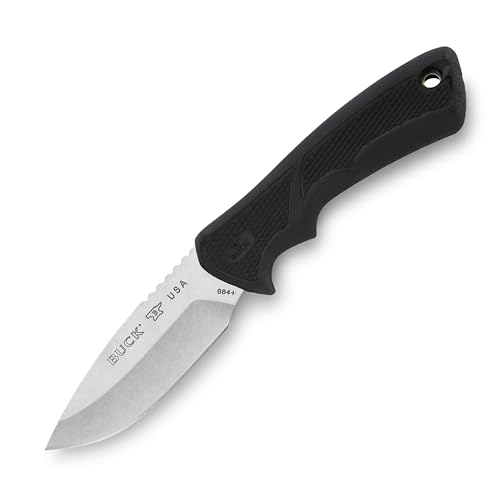
A rubber-handled drop point that weighs next to nothing and grips well when your hands are wet. The Buck I’d hand a new deer hunter.

The cheapest way into a USA-made Buck: a light lockback with thumb studs on both sides. Easy to lose, easy to replace, and good enough that you won’t mind using it hard.

Three small blades in a woodgrain slipjoint, the kind of knife a grandfather carried. Pick this one for whittling, opening mail and light chores, not for heavy work.
What Buck Does Well
Knives built to last decades
Buck’s classic models are simple, overbuilt designs with few parts to fail. A 110 that has spent forty years in a truck still locks up tight, which is why so many of them turn up in estate sales still working.
The Forever Warranty
Buck has backed its knives with a lifetime warranty since the company started in 1902, according to its own listings. It covers defects in materials and workmanship, not abuse, but it means a broken spring or a loose lock is Buck’s problem, not yours.
Steel that is easy to live with
Most Buck knives use 420HC stainless, a steel that is soft by modern standards. Buck’s heat treatment, worked out with heat-treat specialist Paul Bos, gets more out of it than most brands do. In practice it resists rust, takes a sharp edge on any sharpener and rarely chips.
Real American manufacturing
The core Buck lines, including the 110, 112, 119 and BuckLite Max II, are listed as handcrafted in the USA. Buck makes them in Post Falls, Idaho, after moving there from California in 2005.
What Buck Does Badly
Heavy classic models
The brass and wood 110 weighs over seven ounces. That’s fine on a belt, but it pulls a pair of jeans down if you put it in a pocket. The Slim Select versions fix this, but they lose the look that makes the classics special.
Two-handed, old-school opening
The 110, 112 and the traditional slipjoints open with a nail nick, so you need two hands. Anyone used to a thumb stud or flipper will find them slow.
Steel that dulls sooner than premium folders
420HC is tough and easy to sharpen, but it loses its bite sooner than S30V or MagnaCut. Expect to touch up a Buck more often than a Benchmade, which is the trade-off for its low price and easy sharpening. My guide to sharpening a pocket knife covers the routine.
Not every Buck is made in the USA
Some budget models and most of the small traditional slipjoints are imported and use different steels. The listing tells you: if it doesn’t say made or handcrafted in the USA, assume it isn’t.
Buck Lines Compared
| Line | Steel | Lock | Handle | Made in | Best for |
|---|---|---|---|---|---|
| Classic folders (110, 112) | 420HC | Lockback | Ebony, brass bolsters | USA | Belt carry, hunting, gifts |
| Slim Select / Slim Pro | 420HC | Lockback | Nylon or G10, clip | USA | Pocket carry |
| Classic fixed blades (119, 120, 105) | 420HC | Fixed | Phenolic or DymaLux | USA | Camp, hunting |
| BuckLite Max / Vanguard | 420HC | Fixed | Rubber | USA | Field dressing |
| Bantam | 420HC | Lockback | Nylon | USA | Budget EDC, work |
| Traditional slipjoints (Trio, Stockman) | 420J2 | None (slipjoint) | Woodgrain or bone, nickel silver | Not stated | Light chores, gifts |
1. Buck 110 Folding Hunter: Best Buck Knife
Who it’s for: hunters, belt carriers and gift shoppers who want something that gets passed down.
The 110 is the knife most people picture when they hear “Buck”. Its lockback design changed the hunting knife market in the 1960s, and copies of it are still sold by dozens of brands. I put it at the top of the American makers in my best knife makers list, and nothing in Buck’s current catalog has taken its place.
The 3.75-inch clip point is long enough for field dressing a deer and fine enough for camp food. When it’s open, the lock feels as solid as a fixed blade. The ebony and brass handle looks better with age, and the leather sheath is the right way to carry it.
The catch, which I also flagged in my folding knives under $100 guide: this is not a modern pocket knife. It’s heavy, it has no clip and it opens with two hands.
Key specs
- Blade: 3.75″ clip point, 420HC stainless
- Lock: lockback; nail nick opening
- Handle: ebony with brass bolsters
- Closed: 4.875″; weight 7.2 oz
- Leather sheath; handcrafted in the USA; Forever Warranty
Pros
- Lock is rock solid
- Looks better the older it gets
- Easy to sharpen
Cons
- Too heavy for most pockets
- Two-handed opening
- No pocket clip
My verdict: the Buck to own if you only own one, as long as it rides on your belt. For a pocket, buy the Slim Select below.
2. Buck 110 Slim Select: Best for Pocket Carry
Who it’s for: people who love the 110’s shape but want a knife they’ll actually carry every day.
Buck took the 110’s blade and lock and put them in a slim nylon handle with a clip. The result weighs 2.8 ounces against the classic’s 7.2, which is the difference between a belt knife and a pocket knife.
The long clip point is a good slicer, and the lockback is as dependable as the original’s. The nylon handle feels plain and a bit hollow next to brass and ebony, but it shrugs off scratches, sweat and rain.
It’s a long knife when closed, close to five inches, so it rides deep in jeans but can feel big in dress trousers. If that’s a problem, the 112 Slim Select is the shorter version.
Key specs
- Blade: 3.75″ clip point, 420HC stainless
- Lock: lockback
- Handle: nylon, pocket clip
- Closed: 4.875″; weight 2.8 oz
- Handcrafted in the USA; Forever Warranty
Pros
- Light enough for any pocket
- Same trusted lock as the 110
- Costs much less than the classic
Cons
- Plain, slightly hollow handle
- Long when closed
My verdict: the most practical Buck folder you can buy. Choose the classic 110 only if you want the brass and wood.
3. Buck 119 Special (DymaLux Handle): Best Fixed Blade
Who it’s for: campers and hunters who want one big, classic belt knife.
The 119 Special dates back to 1942 and has barely changed. It has a 6-inch clip point, a full tang, an aluminum guard and pommel, and a leather sheath. This version swaps the black phenolic handle for DymaLux, a resin-filled wood laminate with a warmer look.
It’s a great camp knife for food, feather sticks and general cutting, and the stainless steel won’t rust if you forget to dry it. For field dressing, though, six inches is more blade than most hunters need; a 3 to 4 inch blade is easier to control inside a deer.
The leather sheath looks right on the knife but needs drying and the odd coat of conditioner if it gets soaked.
Key specs
- Blade: 6″ clip point, 420HC stainless, full tang
- Handle: DymaLux Cocobolo Heritage, aluminum guard and pommel
- Overall: 10.5″; weight 7.5 oz
- Leather sheath; handcrafted in the USA
Pros
- Classic look and proven design
- Stainless, low maintenance
- Guard protects your hand
Cons
- Long for field dressing
- Leather sheath needs care when wet
My verdict: the Buck fixed blade for camp and tradition. Hunters who mainly gut and skin should look at the BuckLite Max II instead.
4. Buck 684 Small BuckLite Max II: Best Lightweight Hunter
Who it’s for: deer hunters, anglers and anyone who wants a light fixed blade that grips when wet.
This is the Buck I’d recommend for actual field work. The 3.25-inch drop point is the right size for gutting and skinning deer, and the drop point tip is less likely to puncture something you don’t want to puncture. My deer boning knife guide covers the next step, when the meat comes off the bone.
The Dynaflex rubber handle with finger grooves holds well with bloody or wet hands, and the whole knife weighs 2.8 ounces. It’s also one of the least expensive USA-made Buck fixed blades.
The polyester sheath is basic and the handle is on the small side for large hands; the 685 Large version fixes that.
Key specs
- Blade: 3.25″ drop point, 420HC stainless, full tang
- Handle: Dynaflex rubber, finger grooves, jimping
- Overall: 7.5″; weight 2.8 oz
- Polyester sheath; handcrafted in the USA
Pros
- Grips well when wet
- Right size for deer
- Very light
Cons
- Basic sheath
- Small handle for big hands
My verdict: the most useful Buck for hunters, and very little money for an American-made knife.
5. Buck 284 Bantam BBW: Best Budget
Who it’s for: anyone who wants a cheap, light work knife from a real American maker.
The Bantam is the knife I’d keep in a glovebox, a toolbox or a fishing bag. It weighs 1.5 ounces, opens with a thumb stud on either side of the blade and closes with a lockback set in the middle of the handle.
The 2.75-inch drop point handles boxes, cord and packaging, and it’s 420HC like Buck’s more expensive knives. The nylon handle is the weak point: it feels cheap and light, and the clip is basic.
The mid-handle lock takes a moment to learn, but it’s easy for left-handed users too.
Key specs
- Blade: 2.75″ drop point, 420HC stainless
- Lock: mid lockback; ambidextrous thumb studs
- Handle: textured nylon, pocket clip
- Closed: 3.75″; weight 1.5 oz
- Handcrafted in the USA; Forever Warranty
Pros
- Very light
- One-handed opening for either hand
- Same steel as pricier Bucks
Cons
- Handle feels cheap
- Basic clip
My verdict: a beater knife with a lifetime warranty. Buy two and leave one in the truck.
6. Buck 373 Trio: Best Traditional
Who it’s for: traditional knife fans, whittlers and anyone shopping for a small gift.
The Trio packs three blades into a 3.25-inch handle: a clip point for general cutting, a spey blade for sweeping strokes and a sheepsfoot for controlled cuts. It’s a smaller version of Buck’s 371 Stockman.
The woodgrain handle and nickel silver bolsters look the part, and at 1.9 ounces it disappears in a pocket. The 420J2 steel is very rust resistant and sharpens fast, but it’s softer than the 420HC in Buck’s other knives and dulls sooner.
It’s a slipjoint, so no blade locks. That makes it legal to carry in more places, but it also means it can close on your fingers if you push it the wrong way. My guide to folding knife locks explains the difference.
Key specs
- Blades: 2.5″ clip, 1.69″ spey, 1.75″ sheepsfoot; 420J2 stainless
- Lock: none (slipjoint)
- Handle: woodgrain, nickel silver bolsters
- Closed: 3.25″; weight 1.9 oz
Pros
- Three blades for different jobs
- Small and light
- Classic look for a gift
Cons
- No lock
- Softer steel dulls sooner
- Not listed as made in the USA
My verdict: a charming small knife for light jobs. If you need a lock, buy the Bantam.
Buck vs Other Brands
Buck vs Kershaw
Kershaw makes faster, lighter, more modern folders with assisted opening and pocket clips. Buck makes simpler, heavier knives in a more traditional style. For everyday pocket carry I’d lean Kershaw; for hunting or a gift, Buck.
Buck vs Benchmade
Benchmade uses harder premium steels and offers free lifetime sharpening, but its knives cost much more. A Buck dulls sooner but is cheaper to buy and easier to sharpen at home. Benchmade is the better daily carry; Buck the better value.
Buck vs Elk Ridge
Elk Ridge sells cheap imported knives that look the part but use soft steel and uneven quality control. A Bantam costs little more than many Elk Ridge knives and will last far longer. My Elk Ridge knives review goes into the details.
FAQ
Are Buck knives good?
Yes. Buck knives are tough, easy to sharpen and backed by a lifetime warranty, and the core lines are made in the USA. Their steel is not premium, so they need sharpening more often than high-end folders.
Where are Buck knives made?
Buck’s main lines are made in Post Falls, Idaho. Some budget and traditional models are imported; the listing says when a knife is made or handcrafted in the USA.
What is the Buck Forever Warranty?
It’s Buck’s lifetime warranty against defects in materials and workmanship, offered since 1902. It doesn’t cover misuse such as prying, or normal wear like a dull edge.
Is the Buck 110 a good everyday carry knife?
Not for most people. The classic 110 is heavy, has no clip and opens with two hands, so it works best on a belt. The 110 Slim Select is the version built for everyday pocket carry.
What steel does Buck use?
Most Buck knives use 420HC stainless steel with Buck’s own heat treatment. Traditional slipjoints often use 420J2, and a few premium models use harder steels such as S30V.
How do I sharpen a Buck knife?
Any good sharpener works, because 420HC sharpens quickly. Use a guided system or stones and keep the factory angle; avoid cheap pull-through sharpeners on the classic folders, which can chew up the edge.
Final Verdict
Buck is still the best maker of affordable, traditional American knives. The 110 Folding Hunter is the classic to own, the 110 Slim Select is the one to carry in a pocket, and the BuckLite Max II is the Buck that earns its keep during hunting season.
Want a modern pocket knife to sit next to your Buck? My best EDC knives under $100 has the clip-carry options.

Gary Portman founded knivesadvice.com in 2019. He learned to cook in his family’s kitchen as a kid and has used kitchen, pocket and outdoor knives ever since, from paring and fillet knives to survival blades he carries camping and hiking. He writes the site’s buying guides, brand reviews and sharpening how-tos to help readers find the right knife for the job. More about Gary.