
The handle is the part of a knife you actually touch, so it decides more of the daily experience than most buyers expect. Steel gets the attention, but a handle that turns slick with wet hands, weighs down a pocket or cracks after one cold winter will bother you long before the edge dulls.
Each material trades grip, weight, toughness, looks and care differently. G10 and Micarta are the safe synthetic choices, titanium and aluminum keep a folder slim and light, and wood and bone bring warmth at the cost of upkeep. For most pocket knives, textured G10 is the best all-round handle, and the knife I’d use to show why is the CJRB Feldspar in G10. If you want a handle that grips better the more you use it, try Micarta.
My Top 6 Picks, One per Handle Material

Textured G10 scales with the steel liners set into them, so the handle stays thin but grips hard in wet or cold hands. G10 at its most practical.
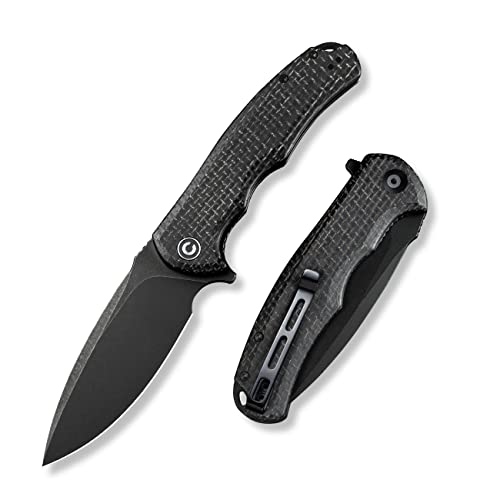
A full-size flipper whose Micarta scales feel warm and dry in the hand and pick up more grip as they age. The easiest way to see why people love Micarta.

Dense olive wood on the classic French folder. Natural wood at its best: light, warm and handsome, with a little care to keep it that way.
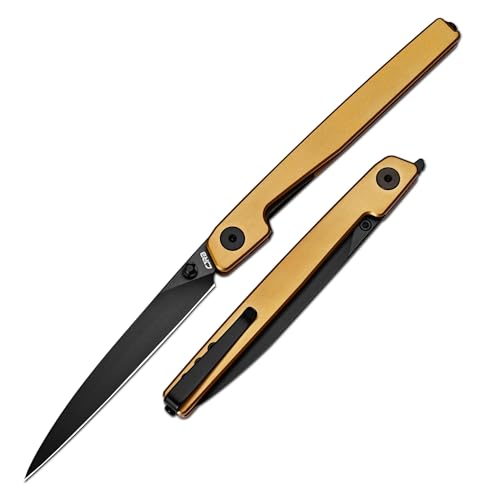
A slim titanium-handled folder that weighs about as much as a pen. Titanium shows its strength-to-weight advantage here better than on any heavy frame lock.

Victorinox’s ridged Alox aluminum scales on a plain one-blade Swiss knife. Thin, light and nearly indestructible in a pocket.

The grippy TPE handle is the reason this knife is in so many busy kitchens. It holds on with wet, greasy hands better than polished wood or plastic.
Handle Materials Compared
| Knife | Handle material | Knife type | Blade steel | Best for |
|---|---|---|---|---|
| CJRB Feldspar Large | G10 | Thumb stud folder | AR-RPM9 | Everyday carry, wet hands |
| CIVIVI Praxis | Micarta | Flipper folder | 9Cr18MoV | Comfort, long use |
| Opinel No.08 | Olive wood | Traditional folder | 12C27 stainless | Picnics, gifts, light jobs |
| CJRB Lanky | Titanium | Slim folder | CPM S90V | Office carry, low weight |
| Victorinox Alox Medium | Aluminum (Alox) | Single-blade Swiss knife | Stainless | Slim pocket carry |
| Victorinox Fibrox Pro 8″ | TPE | Chef’s knife | Stainless | Wet, busy kitchens |
Knife Handle Materials Chart
A quick reference. Grip assumes the usual texture each material comes with; a polished G10 kitchen handle grips less than the textured G10 on most folders.
| Material | Grip when wet | Weight | Durability | Care needed | Typical cost | Common on |
|---|---|---|---|---|---|---|
| G10 | Very good (textured) | Light | Excellent | None | Low to mid | Folders, fixed blades |
| Micarta | Very good, improves with use | Light | Excellent | Very little | Mid | Folders, bushcraft knives |
| Carbon fiber | Fair to good | Very light | Good (edges can chip) | None | Mid to high | Premium folders |
| FRN / Grivory / Zytel | Good | Very light | Very good | None | Low | Budget and lightweight folders |
| Titanium | Fair (slick) | Light for a metal | Excellent (scratches) | None | High | Frame locks, premium folders |
| Aluminum | Fair (slick, cold) | Light | Good (dents, wears) | None | Low to mid | Slim folders, Swiss knives |
| Stainless steel | Poor | Heavy | Excellent | None | Low | Budget and small folders |
| Natural wood | Good when dry | Light | Fair (swells, cracks) | Oil, keep dry | Low to high | Traditional folders, kitchen knives |
| Stabilized wood / Pakkawood | Good | Medium | Very good | Little | Mid | Kitchen knives |
| Bone and stag | Good (jigged) | Medium | Fair (can crack) | Keep dry | Mid to high | Traditional slipjoints |
| POM / Delrin | Fair | Medium | Very good | None | Low to mid | German kitchen knives, traditional folders |
| Rubber / TPE | Excellent | Light | Good (can cut or wear) | None | Low | Commercial kitchen knives |
Synthetic Handles: G10, Micarta, Carbon Fiber and FRN
G10
G10 is layers of fiberglass cloth soaked in epoxy resin and pressed into a hard sheet. It barely absorbs water, doesn’t care about heat or cold, is very strong for its weight and can be machined with a sharp texture, which is why it’s the default on modern folders and fixed blades. The downsides are small: aggressive textures can wear pocket linings, and it feels a little plasticky to some people.
Micarta
Micarta is layers of fabric or paper (linen, canvas or denim) set in resin. The name started as a Westinghouse trade name and is now used loosely for the whole material family. It feels warmer and softer than G10, and as the surface wears, the fabric texture opens up and grips better, especially in wet hands. It does soak up some oil and sweat, so light colors darken over time. Many bushcraft and outdoor knife fans prefer it for exactly that lived-in feel.
Carbon fiber
Carbon fiber is woven carbon strands in resin. It’s lighter and stiffer than G10 and looks premium, which is mostly why it’s there. Smooth carbon fiber can be slick, and the edges can chip if knocked hard on concrete. It’s a style upgrade more than a practical one.
FRN, Grivory and Zytel
FRN (fiberglass-reinforced nylon) is molded plastic with glass fibers inside; Grivory and Zytel are brand names for similar materials. It’s cheap, tough, very light and can be molded with grip patterns, so it suits budget and featherweight knives. It can feel hollow, and it flexes more than G10 on long, thin handles.
Metal Handles: Titanium, Aluminum and Steel
Titanium
Titanium handles are strong, light for a metal and completely rust-proof, which makes them the standard for frame locks, where part of the handle itself springs across to lock the blade. They scratch easily and are slick when wet, and they cost more than synthetics. Most “titanium knives” are steel blades with titanium handles; my folding knife lock types guide explains how the frame lock uses that handle.
Aluminum
Aluminum (usually anodized 6061-T6) is lighter and much cheaper than titanium, and anodizing adds color. It feels cold in winter and slick when wet unless it’s ridged or has inserts, and it dents and shows wear on edges. On slim knives it’s a fine, light choice.
Stainless steel
Bare stainless steel handles are the heaviest and the most slippery of all common materials. They’re cheap and tough, so you see them on budget folders and small keychain knives, but I’d avoid them on any knife you’ll use with wet or greasy hands.
Natural Handles: Wood, Bone and Stag
Wood
Natural wood is warm, light and good-looking, and dense hardwoods like olive, walnut and rosewood grip well when dry. Wood moves with moisture, though: soaked and dried repeatedly, it can swell, crack or loosen around pins. Keep it out of water and rub in a little food-safe oil now and then. Used that way, wood is fine outdoors: a beech-handled Opinel still tops my best knives for backpacking list, because light, dry trail jobs suit it. Stabilized wood (impregnated with resin) and Pakkawood (wood veneer and resin pressed together) solve most of that, which is why they’re common on kitchen knives.
Bone, stag and Delrin
Bone and stag are traditional slipjoint materials, often jigged (carved with a pattern) for grip. Every piece looks different, which collectors love. They can crack if dropped or left to dry out in heat. Delrin, an acetal plastic, imitates bone or wood on many traditional folders and is far tougher.
Kitchen Knife Handles: What Changes
In the kitchen, hands are wet and greasy and knives go through hot water, so the priorities shift. Grip and water resistance come before weight.
- Rubber or TPE (Victorinox Fibrox, Mercer Millennia): the best grip when wet; standard in commercial kitchens.
- POM (polyoxymethylene, on many German forged knives): tough, doesn’t absorb water, smooth but not slippery when dry.
- Pakkawood and stabilized wood (many Japanese and premium knives): handsome and water-resistant, a little smoother when wet.
- Polished G10: very durable, but smooth rather than grippy on kitchen knives.
- Stainless steel (Global-style): hygienic and seamless, the most slippery when wet.
Handle shape matters as much as material in the kitchen: a Western handle sits differently in the hand than a Japanese wa handle, which I explain in my German vs Japanese knives comparison.
How to Choose a Knife Handle Material
Wet, cold or greasy work: G10, Micarta or rubber
Choose textured G10 or Micarta for outdoor and work knives, and rubber or TPE for kitchen knives. They hold on when hands are wet, gloved or cold, which is when a slip does the most damage.
Lowest weight: FRN, titanium or carbon fiber
For the lightest pocket carry, molded FRN is the cheapest route and titanium or carbon fiber the premium one. My best EDC knife under $100 guide has several featherweight options.
Hard use and abuse: G10 or Micarta
For knives that get dropped, chipped and left in a truck, G10 and Micarta outlast almost everything. Wood and bone are the materials I’d keep away from hard use.
Looks and tradition: wood, bone or stag
For a gift or a knife you’ll keep for decades, natural materials age beautifully if you accept a bit of care. They’re best on knives that see light, dry jobs.
Budget: FRN or aluminum
On tight budgets, FRN and aluminum give the most for little money. Avoid bare stainless steel handles unless the knife is tiny.
Caring for Each Handle Type
Synthetics and metals need nothing more than soap and water. Rinse grit out of textured G10 and Micarta with a soft brush now and then, and dry the knife fully before closing it. Wood and bone need more: keep them out of soaking water, dry them right away and oil wood lightly a few times a year.
1. CJRB Feldspar Large (AR-RPM9, Green G10): Best G10 Handle
Who it’s for: anyone who wants a no-nonsense everyday folder with a handle that never slips.
The Feldspar shows G10 doing what it’s best at. The scales are textured for grip, and CJRB sets the steel liners into the G10 rather than sandwiching them, which keeps the handle thinner and more comfortable without losing strength. In wet or cold hands, it stays put.
It’s a plain, honest design: a 3.53-inch drop point in AR-RPM9 powder steel, thumb studs, a liner lock and a reversible deep-carry clip. Nothing flashy, and that’s the point. It’s the kind of knife you stop noticing in the pocket.
The trade-off is size. At over three and a half inches of blade it’s a full-size knife, a bit much for a suit pocket, and the textured G10 can be rough on pocket fabric.
Key specs
- Blade: 3.53-inch drop point, AR-RPM9 powder steel
- Handle: green G10 with inset liners
- Lock: liner lock; thumb stud opening
- Clip: reversible, deep carry
Pros
- Grippy, durable G10 in a thin handle
- Reversible clip for either hand
- Simple, practical design
Cons
- Large for office carry
- Texture can wear pocket linings
My verdict: if you want to know why G10 is everywhere, carry one of these for a week. Choose a smaller knife if you mostly open mail.
2. CIVIVI Praxis (9Cr18MoV, Micarta): Best Micarta Handle
Who it’s for: people who want a handle that feels warm, natural and grippy without the upkeep of wood.
Micarta is the handle I’d pick for comfort over a long day of cutting, and the Praxis shows it well. The scales feel softer and drier than G10, and as the surface wears, the fabric texture comes up and the grip improves. It also darkens a little with handling, which some people love and some don’t.
The knife itself is a full-size flipper with a 3.75-inch 9Cr18MoV blade, a ball-bearing pivot for a smooth opening and a reversible deep-carry clip. CIVIVI also sells the Praxis with G10 and wood scales, so it’s a neat way to compare materials on one design; the G10 version is in my best flipper knife under $50 guide.
The steel is a solid budget stainless, not a premium one, so expect to sharpen it more often than a powder steel.
Key specs
- Blade: 3.75-inch, 9Cr18MoV stainless
- Handle: Micarta scales
- Lock: liner lock; flipper on ball-bearing pivot
- Clip: reversible deep carry; lifetime guarantee against defects (listing)
Pros
- Warm, comfortable Micarta that grips better with age
- Smooth bearing action
- Same design in G10 and wood if you prefer
Cons
- Micarta darkens and absorbs oils
- Big for small pockets
My verdict: the friendliest introduction to Micarta. Go for the G10 version if you want the handle to look new for years.
3. Opinel No.08 Stainless (Olive Wood): Best Wood Handle
Who it’s for: anyone who wants a beautiful natural handle for picnics, the kitchen table and light outdoor jobs.
Opinel has put wood handles on its folders for well over a century, and the olive version is the one I’d pick to show off natural wood. Olive is a hard, dense wood with a yellow-to-orange color and swirling grain, so every knife looks a little different, and it feels warm and smooth in the hand.
The blade is Sandvik 12C27 stainless, a fine-grained steel that takes a sharp edge and resists rust, and the Virobloc ring locks it open or closed. There’s no clip; it rides loose in a pocket or bag.
The weakness is the material’s nature. Wood moves with moisture, and Opinel handles are known to swell and stiffen the blade if soaked. Keep it out of the sink and wipe on a little oil every few months.
Key specs
- Blade: No.08 size, Sandvik 12C27 modified stainless
- Handle: olive wood, polished
- Lock: Virobloc safety ring (open and closed)
- Made in France (listing)
Pros
- Beautiful, warm natural wood
- Light and simple
- Keen, rust-resistant blade
Cons
- Wood can swell if soaked
- No pocket clip, two hands to open
My verdict: the nicest way to carry a wood-handled knife without spending much. Choose G10 or Micarta if the knife will see rain and dishwater.
4. CJRB Lanky (CPM S90V, Titanium): Best Titanium Handle
Who it’s for: office and city carriers who want a strong metal handle that weighs next to nothing.
Titanium’s strength-to-weight ratio is the reason to choose it, and the Lanky makes that obvious. The whole knife weighs 1.36 ounces, about a pen’s worth, yet the slim titanium handle is rigid and will never rust. The smooth metal finish looks clean and dressy.
The blade is a 3.58-inch Wharncliffe in CPM S90V, a high-vanadium steel with very long edge life that is slow to sharpen. The straight edge and fine point suit boxes, tape and packaging more than food. It opens by thumb stud or flipper and locks with a liner lock.
The titanium trade-offs apply: smooth Ti is slicker than G10 when wet, it scratches easily, and it sits well above the synthetic picks here in cost.
Key specs
- Blade: 3.58-inch Wharncliffe, CPM S90V, black PVD coating
- Handle: titanium
- Lock: liner lock; thumb stud and flipper
- Weight: 1.36 oz (listing)
Pros
- Extremely light for a metal-handled knife
- Rust-proof, slim, dressy
- Very long edge life
Cons
- Slick when wet, scratches
- S90V is slow to sharpen; Wharncliffe isn’t a food knife
My verdict: the clearest case for titanium in a pocket. Skip it if you work with wet hands or want a blade shape for food.
5. Victorinox Alox Medium Pocket Knife (Single Blade): Best Aluminum (Alox) Handle
Who it’s for: people who want the slimmest, toughest pocket knife with nothing extra on it.
Alox is Victorinox’s name for its aluminum alloy scales, and they’re the reason Swiss knife fans prize the Alox models. The ridged surface gives aluminum more grip than smooth anodized handles, and the scales are much thinner and tougher than the usual red plastic, so the knife stays slim and doesn’t crack.
This version strips the Swiss knife down to one large blade. It’s Swiss made and does rope, packaging, fruit and small whittling jobs well.
Aluminum’s limits still apply. It’s cold in winter, the ridges are only a modest grip in wet hands, and the finish wears and scratches over the years. Some owners see that as character.
Key specs
- Blade: one large stainless blade
- Handle: ridged Alox aluminum scales, silver
- Functions: 1
- Made in Switzerland (listing)
Pros
- Thin, tough metal scales
- Ridges grip better than smooth aluminum
- Simple and slim
Cons
- Cold and only moderately grippy when wet
- No clip, nail-nick opening
My verdict: the best example of aluminum done right. If you want tools as well, Victorinox makes Alox models with more functions.
6. Victorinox Fibrox Pro 8″ Chef’s Knife (TPE Handle): Best Kitchen Knife Handle
Who it’s for: home and professional cooks who care more about a secure grip than a pretty handle.
The Fibrox Pro is here because of the handle. It’s thermoplastic elastomer (TPE), a slightly rubbery plastic that grips with wet, greasy hands better than wood, polished G10 or steel. That matters most when you’re breaking down chicken or working fast, which is why so many busy kitchens use it.
The handle is also dishwasher safe according to the listing, though hand washing still keeps the edge sharper longer. The stainless blade is light and thin and holds up to daily use. I’ve written a full Victorinox chef knife review if you want the detail on the blade.
The downside is looks. It’s a plain, utilitarian black handle, and it won’t impress anyone on a magnetic strip.
Key specs
- Blade: 8-inch stainless chef’s knife (7.9 inches per listing)
- Handle: TPE, textured, non-slip
- Care: dishwasher safe (listing); hand wash recommended for the edge
- Made in Switzerland; lifetime warranty against defects (listing)
Pros
- Best wet grip of any common kitchen handle
- Tough, low maintenance
- Light and well balanced
Cons
- Plain, utilitarian look
- Rubbery texture can hold onto grime if not washed well
My verdict: if grip is what you want from a kitchen handle, nothing on this list beats it. Choose Pakkawood or POM if looks matter more.
FAQ
What is Micarta?
Micarta is a composite made of layers of linen, canvas or paper soaked in resin and pressed hard. It’s strong, light and doesn’t rot, and it gets grippier as the surface wears. The name began as a Westinghouse brand name and is now used for the whole material family.
Is G10 or Micarta better for a knife handle?
Neither is better overall; they suit different people. G10 is slightly tougher, absorbs nothing and keeps its look, so it suits hard use and wet work. Micarta feels warmer, grips better as it ages and develops character, but it darkens with oil and sweat.
What is the best knife handle material?
For most pocket and outdoor knives, textured G10 is the best all-round handle material: grippy, light, tough and care-free. For kitchen knives, rubber or TPE gives the best wet grip, while POM and Pakkawood balance grip and looks.
Are titanium knife handles worth it?
Titanium handles are worth it if you want a strong, rust-proof metal handle that stays light, especially on frame lock knives. They cost more than G10, scratch easily and are slicker when wet, so they’re a premium choice rather than a practical upgrade.
Is a wood handle good for a pocket knife?
A wood handle is good for a pocket knife used for light, mostly dry jobs. It’s warm and attractive, but natural wood can swell or crack if soaked. Stabilized wood avoids most of that problem.
What is FRN on a knife?
FRN stands for fiberglass-reinforced nylon, a molded plastic with glass fibers for strength. It’s light, tough and cheap, and it’s used on many budget and lightweight knives. Grivory and Zytel are brand names for similar materials.
Final Verdict
The best handle is the one that grips when your hands are at their worst. For most pocket and outdoor knives, that’s textured G10, and the CJRB Feldspar is a good example of it done well. If you want warmth and a handle that ages with you, the Micarta CIVIVI Praxis is my pick; if weight matters most, the titanium CJRB Lanky. In the kitchen, the TPE handle on the Victorinox Fibrox Pro beats prettier materials for grip.
For more knives built around the handle-and-weight trade-off, my best folding knife under $100 guide is the next place to look.

Gary Portman founded knivesadvice.com in 2019. He learned to cook in his family’s kitchen as a kid and has used kitchen, pocket and outdoor knives ever since, from paring and fillet knives to survival blades he carries camping and hiking. He writes the site’s buying guides, brand reviews and sharpening how-tos to help readers find the right knife for the job. More about Gary.